Shipping cotton internationally requires careful container selection to avoid moisture damage, contamination, and physical harm to the bales. Cotton’s absorbent nature makes it vulnerable to "container rain" (condensation) and contamination, leading to financial losses. Here's what you need to know:
- Best Choice: 40-foot High Cube containers offer 76.3 cubic meters of space, 10–13% more than standard 40-foot containers, allowing for more cotton bales without higher freight rates.
- Moisture Protection: Use desiccants (like calcium chloride) to manage humidity, check container seals, and avoid loading during wet conditions.
- Durability: Inspect containers for rust, odors, and damaged seals to prevent contamination.
- Cost Considerations: Leasing is ideal for short-term needs, while purchasing suits long-term shipping. Maximize space with Full Container Load (FCL) shipping.
Quick Tip: High Cube containers are ideal for bulk cotton shipments due to their larger capacity and cost-effectiveness. Protect the cargo from moisture and inspect containers thoroughly before use.
Practically Cotton Bales Export container Stuffing by Paresh Solanki Start your Export Business

sbb-itb-0e617ca
Container Types for Cotton Exports
Choosing the right container for shipping cotton means understanding the different options available. Each type is designed to meet specific shipping needs, ensuring your cargo is transported safely and efficiently.
Standard Dry Containers
Standard dry containers are a dependable choice for cotton shipments. A 20-foot container offers about 33.2 cubic meters of space, while a 40-foot container provides approximately 67.7 cubic meters, with a maximum payload capacity of around 26,700 kg. Made from corrosion-resistant Corten steel, these containers can handle tough weather conditions, dust, and humidity. They come equipped with double doors and secure locking mechanisms for added safety. However, these containers lack built-in ventilation or insulation, which makes them less suitable for shipments requiring strict humidity control. If moisture management is critical, you might need to explore other container options.
High Cube Containers
High Cube containers provide an extra foot of height (9′6″ compared to the standard 8′6″). This increased height boosts the internal volume to about 76.3 cubic meters - roughly 13% more than a standard 40-foot container. This makes High Cube containers a great fit for lightweight yet bulky cargo like raw cotton. Interestingly, the freight rates for 40-foot High Cube containers are typically the same as those for standard 40-foot units. Just be sure to confirm the door opening height (approximately 8′6″) to ensure your cotton bales can be loaded without issues.
Open Top and Flat Rack Containers
Open top containers replace the solid roof with a removable tarpaulin, making it easier to load heavy or oversized cotton bales from above using a crane. These containers provide about 66 cubic meters of space and can handle a payload of up to 26,600 kg. Flat rack containers, on the other hand, are ideal for irregular or oversized loads. With no side walls or roof and collapsible or fixed end panels, they can accommodate payloads as heavy as 45,000 kg. If you’re using open top containers, it’s crucial to ensure the tarpaulin is properly secured and sealed at the origin terminal to protect against weather exposure.
Reefer and Ventilated Containers
Reefer containers are commonly used for perishable goods but can also operate in "dry mode" to provide a controlled environment for cotton shipments. They maintain temperatures ranging from –22°F to 86°F (–30°C to +30°C), with some advanced models capable of reaching as low as –76°F (–60°C). Ventilated containers, on the other hand, use passive airflow systems to manage humidity and reduce the risk of mold - an essential feature for organic cotton shipments on high-humidity routes. To maximize their effectiveness, consider using desiccants and carefully plan the loading process to allow for consistent airflow throughout the cargo.
What to Consider When Selecting Containers
Choosing the right container for shipping cotton isn’t just about size - it’s about ensuring the safety and quality of your cargo through every stage of transit. Let’s break down the key factors you need to evaluate.
Durability and Structural Integrity
The container’s construction is your first line of defense against damage. Most export containers are made from Corten steel, a material known for its strength and resistance to corrosion. The corrugated walls provide the structural support needed to handle the weight of heavy cotton bales and the rough conditions of sea transport.
Before accepting a container, step inside and close the doors. If you see any light coming through, it’s a sign of holes or failed seals that could let in moisture or pests. Pay extra attention to the door gaskets - these rubber seals should be fully intact. To test their effectiveness, slide a piece of paper between the door and the frame; if it moves too easily, the seal isn’t secure enough to keep moisture out.
Inspect the container’s interior thoroughly. Look for rust, oil stains, or odors, as these could contaminate the cotton. Since cotton absorbs smells, avoid containers previously used for chemicals, oils, or rubber. Also, check that the wooden flooring is dry and free of any residue from prior shipments to prevent moisture transfer.
Once you’re confident in the container’s physical condition, it’s time to focus on how well it handles moisture.
Moisture Protection
Moisture is a major threat to cotton, causing mold, discoloration, and fiber damage. A common issue, known as "container rain" or "sweat", happens when warm, humid air condenses on the cold steel walls due to temperature changes.
Use a moisture meter to check the floor’s moisture content. For safe shipping, it should read below 18–20%. If the reading is too high, either request a different container or allow it to air out for 48 hours.
To combat moisture during long voyages, use calcium chloride-based desiccants. These absorb large amounts of moisture and turn it into a stable gel that won’t leak or re-evaporate, unlike silica gel, which has limited capacity. Spread the desiccants evenly throughout the container rather than clustering them in one area.
When loading, keep cotton bales away from the container walls to minimize contact with condensation. Avoid loading during rain or periods of high humidity. Maintaining a relative humidity level below 60% inside the container is critical to prevent mold and corrosion.
Once moisture management is addressed, focus on optimizing costs through efficient planning.
Cost-Efficiency
Making the most of your container’s space can significantly reduce shipping costs. 40-foot High Cube containers are ideal for cotton shipments because they offer an extra 12 inches of height, allowing 10–12% more stacking space compared to standard containers. While 20-foot containers are better suited for dense, heavy machinery, the larger 40-foot containers are more economical for lighter, bulkier items like cotton bales.
Decide whether leasing or purchasing containers fits your needs better. Leasing is a good option for short-term or emergency shipments, as it eliminates maintenance and repair responsibilities. On the other hand, buying containers is more cost-effective for long-term trade lasting three or more years. If budget constraints are a concern, used containers can lower upfront costs, though they may need refurbishing to meet shipping standards.
Plan your load arrangement carefully to maximize capacity. Using Full Container Load (FCL) shipping ensures optimal space utilization and better economic value. Investing in proper container preparation and moisture protection can save you money in the long run by reducing the risk of damage and costly insurance claims, as moisture issues are a leading cause of claims for cotton shipments.
Container Type Comparison for Cotton Shipments
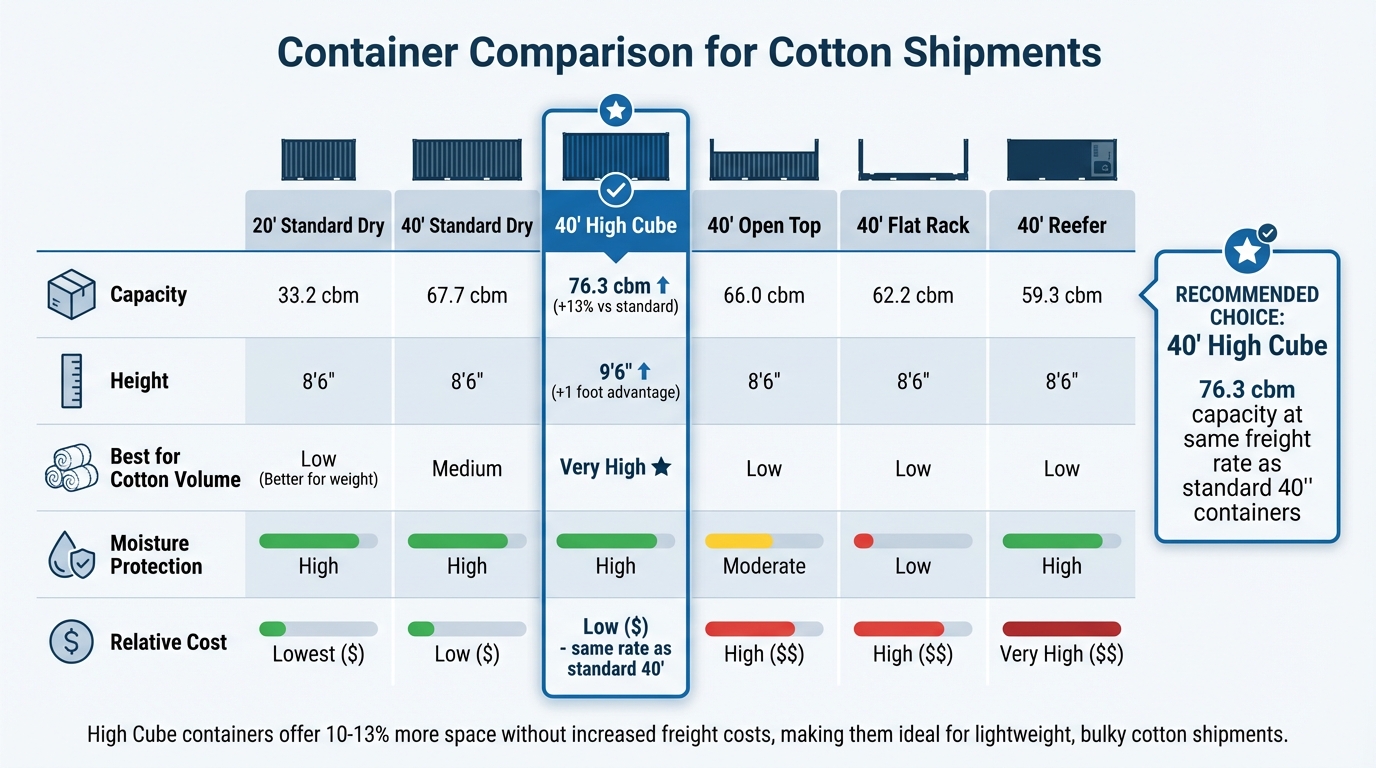
Cotton Shipping Container Comparison: Capacity, Cost and Protection Guide
When deciding on the right container for shipping cotton, it's essential to weigh the options side-by-side to determine which offers the best balance of capacity, cost, and protection.
Building on earlier discussions about container features and moisture management, 40-foot High Cube containers stand out as the top choice for cotton exports. With a capacity of 76.3 cubic meters, they provide about 13% more space than standard 40-foot containers, which hold 67.7 cubic meters. The added vertical space (9'6" versus 8'6") allows for more cotton bales per shipment, and they typically ship at the same freight rate as their standard counterparts.
While standard dry containers are reliable, their smaller sizes limit their practicality for cotton. For instance, the 20-foot standard container offers just 33.2 cubic meters, making it better suited for dense, heavy goods rather than bulky cotton bales.
Specialized containers like Open Top and Flat Rack are less ideal for cotton. Open Top containers use tarpaulin covers instead of solid roofs, offering only moderate moisture protection while being more expensive. Flat Rack containers, designed for oversized cargo, provide minimal weather protection and require extensive lashing, making them unsuitable for cotton shipments.
Container Comparison Table
Here's a quick overview of the key features of each container type:
| Container Type | Capacity (cbm) | Height (ft) | Best for Cotton Volume | Moisture Protection | Relative Cost |
|---|---|---|---|---|---|
| 20' Standard Dry | 33.2 | 8'6" | Low (Better for weight) | High | Lowest |
| 40' Standard Dry | 67.7 | 8'6" | Medium | High | Low |
| 40' High Cube | 76.3 | 9'6" | Very High | High | Low |
| 40' Open Top | 66.0 | 8'6" | Low | Moderate | High |
| 40' Flat Rack | 62.2 | 8'6" | Low | Low | High |
| 40' Reefer | 59.3 | 8'6" | Low | High | Very High |
This table highlights why 40-foot High Cube containers are the go-to option for maximizing cotton shipment efficiency while keeping costs manageable.
Conclusion
Choosing the best export container for cotton shipments boils down to three key considerations: durability, moisture protection, and cost-efficiency. As Carlos Freitas, Commercial Director at AG Surveyors, explains:
"The cotton buyer chooses the bales he wants to buy from the farm, long before shipment takes place... The role of logistics is to ensure that the selected bales arrive per contract."
This process begins with selecting a container that safeguards the cotton from the time it’s loaded until it reaches its final destination.
When it comes to container selection, High Cube containers stand out. A 40-foot High Cube container offers 76.3 cubic meters of space - about 10% more than a standard 40-foot container - without increasing the freight rate. For cotton, which is limited by volume rather than weight, this extra space allows for more bales per shipment, reducing per-unit costs.
Protecting against moisture is equally critical. Since moisture damage is the leading cause of financial claims in cotton shipping, sealed containers with intact door seals and clean interiors are a must. Standard dry containers, which account for 90% of sea freight, are a practical choice, offering reliable protection without the added expense of specialized units.
Finally, ensure the container's structural integrity. Before committing, inspect for rust, holes, and blocked vents. For larger shipments, confirm that the container size aligns with the requirements of the destination port and inland transport routes, especially if using 45-foot High Cube containers. A well-chosen container not only preserves the quality of the cotton but also minimizes risks during transit and optimizes overall returns.
FAQs
How many cotton bales fit in a 40' High Cube?
A 40' High Cube container can usually accommodate 78 to 83 cotton bales. The precise number varies based on the dimensions of the bales and how efficiently they are packed to optimize space while ensuring the bales remain secure.
How much desiccant should I use per container?
The amount of desiccant you need depends on the size of the container and how much moisture you’re trying to control. For a standard 20-foot container, you’ll typically need about 4–6 kg of desiccant, while a 40-foot container usually requires 8–12 kg.
If you’re looking for a more detailed guideline, consider this: use 1 desiccant bag for every 33 cubic feet of space in environments with moderate humidity. For more precise calculations, aim for at least 1.2 units per cubic foot. Adjust these amounts as needed based on the specific conditions you’re dealing with.
What container defects are deal-breakers for cotton?
Defects such as broken locks or faulty seals pose serious risks to cotton shipments. These issues can leave the cargo vulnerable to theft, moisture, or air exposure, which can harm the cotton's quality during transit. It's essential to carefully inspect containers to confirm they meet necessary safety and durability standards.