Short answer: Gin turnout, also called lint turnout, is the percentage of seed cotton weight that comes out of the gin as lint. To calculate it, divide the pounds of lint by the pounds of seed cotton delivered. Picker-harvested cotton typically turns out around 35%. In USDA research on the Texas High Plains, stripper cotton averaged about 30% with a field cleaner and about 25% without one. Because lint is what becomes bales, every point of turnout changes how many bales a load of seed cotton makes.
What turnout measures
Seed cotton is what comes off the field: lint, seed and whatever trash came along, such as burs, sticks, leaf and dirt. The gin separates those streams. UF/IFAS Extension defines turnout as "the proportion of lint in seed cotton as determined by ginning."
The rest of the weight is mostly seed and foreign matter. In USDA Agricultural Research Service studies of Southern High Plains cotton (Wanjura et al., 2012), the seed in each bale of lint averaged about 341 to 354 kg (roughly 750 to 780 lb), whatever the harvest method. The big difference between harvest methods was trash.
sbb-itb-0e617ca
The math, with an illustrative example
The formula is simple:
Turnout (%) = lint weight ÷ seed cotton weight × 100
The example below is made up to show the math. The numbers aren't from any real gin or field.
Say a load of seed cotton weighs 10,000 pounds.
| Turnout | Lint (lb) | Bales at 480 lb | Bales at 491.5 lb* |
|---|---|---|---|
| 25% | 2,500 | 5.2 | 5.1 |
| 30% | 3,000 | 6.3 | 6.1 |
| 35% | 3,500 | 7.3 | 7.1 |
| 38% | 3,800 | 7.9 | 7.7 |
491.5 lb was the 2025 U.S. average net weight per running bale (USDA NASS, Cotton Ginnings 2025 Summary).
Two takeaways:
- Each turnout point is 1% of seed cotton weight. On 10,000 lb of seed cotton, one point equals 100 lb of lint.
- The same seed cotton weight can make very different numbers of bales. That's why module weight alone doesn't tell you what a module is worth.
Typical turnout ranges
Turnout depends heavily on how the cotton was harvested.
| Harvest method | Average lint turnout | Foreign matter per bale |
|---|---|---|
| Spindle picker | 34.7% | about 154 lb (70 kg) |
| Brush-roll stripper, field cleaner on | 29.7% | about 381 lb (173 kg) |
| Brush-roll stripper, field cleaner bypassed | 25.1% | about 810 lb (368 kg) |
Source: Wanjura et al., 2012 Beltwide Cotton Conferences, averages of seven harvesting and ginning studies on Southern High Plains cotton.
The authors note these values "follow closely with turnout values reported in earlier publications." A companion 2011 USDA-ARS study described the typical ranges as 25%, 30% and 35% for non-field-cleaned stripped cotton, field-cleaned stripped cotton and picked cotton.
For picker-harvested cotton in the Southeast, UF/IFAS Extension puts turnout commonly between 35% and 40%. It says a commercial gin generally operates near 38%, a reasonable figure for estimating yield. The best number to use, UF/IFAS adds, is turnout from previous harvests of the same variety at the same gin.
Why stripper cotton turns out lower
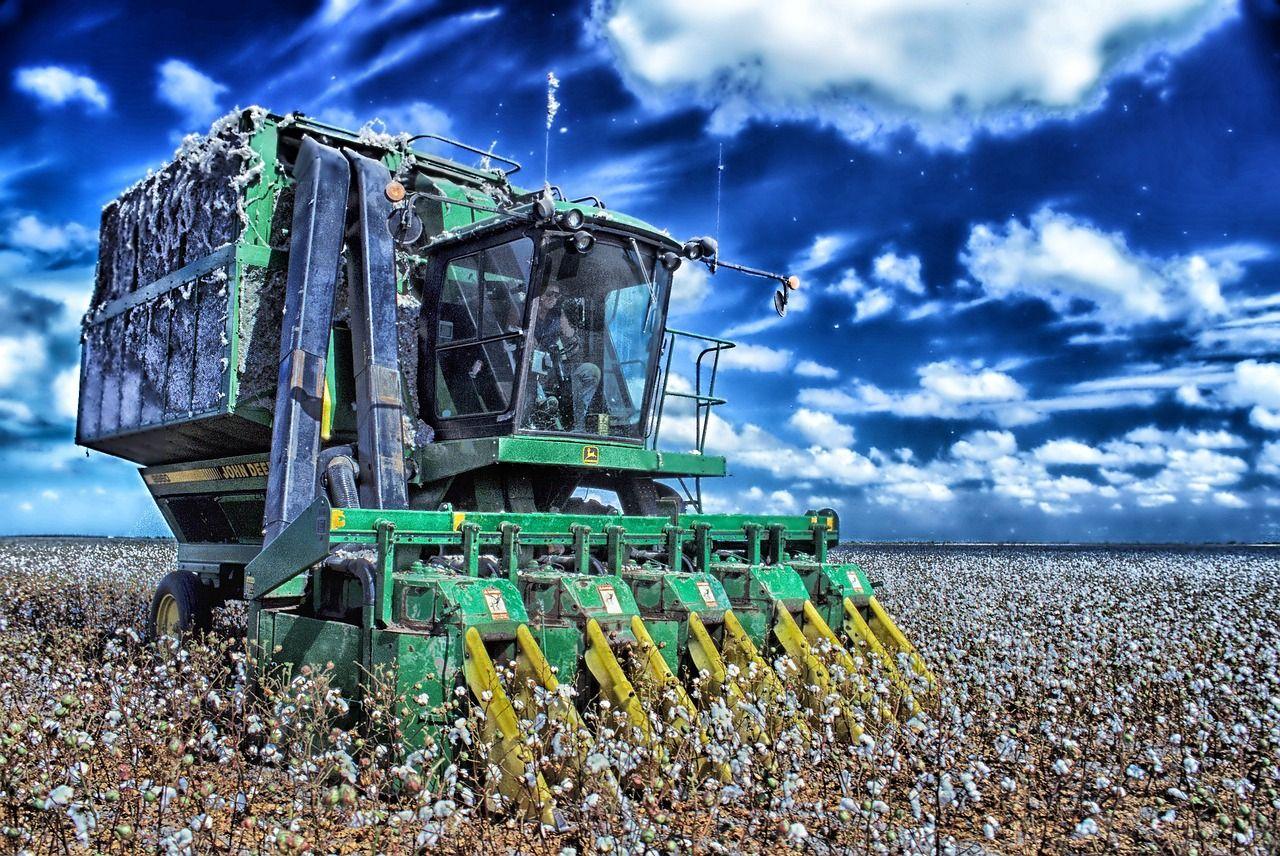
A stripper takes more of the plant than a spindle picker does. In the 2012 USDA-ARS data, burs made up 54% of the foreign matter in stripped cotton with the field cleaner bypassed, and 48% with the cleaner on. In picked cotton, burs were 29% of the foreign matter. Sticks were 10% of the foreign matter for the picker and 18–19% for the stripper.
All that extra material adds weight to the seed cotton without adding lint, so turnout drops. The field cleaner on a stripper removes much of it before the cotton reaches the module.
Should you bypass the field cleaner?
Bypassing the field cleaner lowers turnout but sends more gin byproduct to the gin, and some gins credit or sell that trash. Wanjura et al. modeled the trade-off. Their conclusion: a producer shouldn't consider bypassing the field cleaner unless the trash price, or the gin's credit for trash, is at least equal to the gross ginning price.
Even then, the model didn't count two more costs: lower lint value from seed cotton with more foreign matter, and the extra handling time in the field.
Other things that move turnout
- Variety and crop health. UF/IFAS lists crop health, environmental conditions, variety and boll quality as factors in turnout.
- Fertility. Oklahoma State University Extension lists decreased lint turnout among the effects of over-applying nitrogen to cotton, along with rank growth and delayed maturity.
- Gin cleaning. USDA-ARS testing (Wanjura et al., 2011) found that a second lint cleaner cut lint turnout by about 0.56 to 0.57 percentage points on average, for both picked and stripped cotton. A second stick machine removed more foreign material from seed cotton than one.
- Harvest method. As the table above shows, this is the biggest single factor.
How turnout shows up on your check
Turnout is worked out from two weights: the seed cotton coming in and the lint going out. The lint is what becomes bales and is sold. The seed and byproducts take their own paths.
The seed has value too. In most cases, Farm Press reports, the gin takes possession of the cottonseed and either contracts it to a buyer or sells it on the open market. The gin withholds collections from each producer for ginning and insurance and credits producers for the seed they brought in. In some cases the seed credit covers their ginning charges, and in high-price years many gins give rebates.
So a grower's return from a module depends on:
- Lint pounds, which equal seed cotton weight × turnout
- Lint value, which depends on fiber quality and price
- Seed credit, net of ginning and other charges
Charges and credits vary by gin. For a line-by-line look at what gins charge, see From Module Yard to Warehouse: Every Fee a Grower Pays a Cotton Gin, Explained.
Find a gin
Turnout is measured at the gin, so your gin is the place to ask about your numbers:
- Cotton gins in Lubbock County, TX
- Cotton gins in Hockley County, TX
- Arvana Gin Co, Lamesa, Texas
- Cotton gins near Lubbock and the South Plains
- Cotton gins in Coahoma County, MS
- Cotton gins in Leflore County, MS
Cotton markets, every trading day. Lint pounds times price is your check. The Cotton Wire brings you the cotton price every trading day. Subscribe to The Cotton Wire
FAQ
What is cotton gin turnout?
It's the percentage of seed cotton weight that comes out of the gin as lint. UF/IFAS defines it as the proportion of lint in seed cotton as determined by ginning.
How do you calculate cotton turnout percentage?
Divide pounds of lint by pounds of seed cotton and multiply by 100. For example, 3,000 lb of lint from 10,000 lb of seed cotton is a 30% turnout.
What is a good turnout for cotton?
It depends on harvest method. USDA-ARS research on the Texas High Plains averaged about 35% for picked cotton, 30% for stripped cotton with a field cleaner and 25% without. For picked cotton in the Southeast, UF/IFAS says turnout is commonly 35–40%.
Why is stripper cotton turnout lower?
Strippers bring in more burs, sticks and leaf with the seed cotton. That adds weight without adding lint.
Does gin cleaning lower turnout?
Slightly. In USDA-ARS tests, a second lint cleaner reduced lint turnout by a little over half a percentage point.
How many pounds of seed cotton make a bale?
It depends on turnout. At 30%, a 480-lb bale takes 1,600 lb of seed cotton (480 ÷ 0.30). At 35%, it takes about 1,371 lb.
Sources
- Mulvaney, M. J., et al. Estimating Cotton Yield (SS-AGR-450). UF/IFAS Extension: turnout definition, 35–40% common range, ~38% at commercial gins, factors affecting turnout. https://edis.ifas.ufl.edu/publication/AG450
- Wanjura, J. D., W. B. Faulkner, E. M. Barnes, G. A. Holt, and M. G. Pelletier. "Crop Residue Inventory Estimates for Texas High Plains Cotton." Proceedings of the 2012 Beltwide Cotton Conferences, pp. 542–552: turnout, seed and foreign matter by harvest method; field cleaner bypass economics. https://www.cotton.org/beltwide/proceedings/2005-2022/data/conferences/2012/papers/13220.pdf
- Wanjura, J. D., W. B. Faulkner, G. A. Holt, and M. G. Pelletier. "Influence of Seed Cotton Extractor Cleaners and Cleaning Rate on Gin Turnout and Fiber Quality." ASABE Paper No. 1111287, 2011: typical turnout ranges; lint cleaner and stick machine effects. https://cotton.tamu.edu/wp-content/uploads/sites/27/legacy-files/Harvest/Wanjura%20et%20al%202011%20ASABE.pdf
- Arnall, B., and R. Boman. Cotton Yield Goal – Nitrogen Rate Recommendation (PSS-2158). Oklahoma State University Extension, Apr 2017: over-fertilization and decreased lint turnout. https://extension.okstate.edu/fact-sheets/cotton-yield-goal-nitrogen-rate-recommendation
- USDA NASS. Cotton Ginnings 2025 Summary (May 2026): U.S. average net weight per bale, 491.5 lb. https://esmis.nal.usda.gov/sites/default/release-files/795901/ctgnan26.pdf
- Shannon, W. "Cottonseed: What do cotton and milk have in common?" Farm Press, Dec 6, 2024: gin seed handling, collections and seed credits. https://www.farmprogress.com/cotton/cottonseed-what-do-cotton-and-milk-have-in-common-