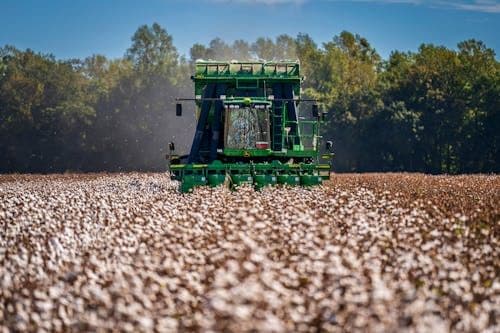
If I want better cotton irrigation calls, I need soil data from the root zone, not a calendar. This article shows how I can use moisture, tension, temperature, and EC sensors to decide when to irrigate, how deep water moved, and whether salts or nutrients are moving out of place.
Here’s the short version:
- Moisture sensors tell me how much water is in the soil.
- Tension sensors tell me how hard the crop must pull to get that water.
- Temperature sensors help with planting timing, with cotton often planted when soil stays in the mid-60s °F or warmer.
- EC sensors help me watch salinity and fertigation movement.
- Multi-depth readings at 6, 12, 24, and 36 inches help me see whether water stayed in the root zone or moved too deep.
- In many cotton systems, irrigation triggers often land around 20 to 100 centibars, depending on soil type, with some cotton work pointing to about -100 centibars as a useful trigger in some cases.
- On-farm results in the article include $25.29 per acre lower pumping costs in one Texas case and average net income gains of $202.28 per acre in Clemson trials.
What matters most: I need a sensor setup that matches my soil, irrigation system, and budget, then I need a simple rule for acting on the readings.
A few field takeaways stand out:
- If only the shallow sensor changes, the set was likely too short.
- If mid-depth sensors refill, water reached the main root zone.
- If deep sensors jump fast, water and nutrients may be moving below the roots.
- If shallow and mid-depth EC keep climbing, salts may be building up.
| Sensor type | Main job | Best use in plain terms |
|---|---|---|
| Capacitance/FDR | Track soil moisture | Watch refill and depletion |
| TDR | Track soil moisture | Check water movement by depth |
| Granular matrix | Track soil tension | Set irrigation triggers |
| Tensiometer | Track soil tension | Watch crop water stress |
| Integrated EC/temp probe | Track moisture, salts, and temperature | Link irrigation, salinity, and planting calls |
So, if I had to sum up the article in one line, it would be this: good sensor data helps me water cotton at the right time, in the right amount, and with fewer losses to stress, leaching, or salt buildup.
Soil Moisture Sensors: Selecting, Installing, and Using Them Effectively on your Farm
sbb-itb-0e617ca
Core Soil Sensor Types Used in Cotton
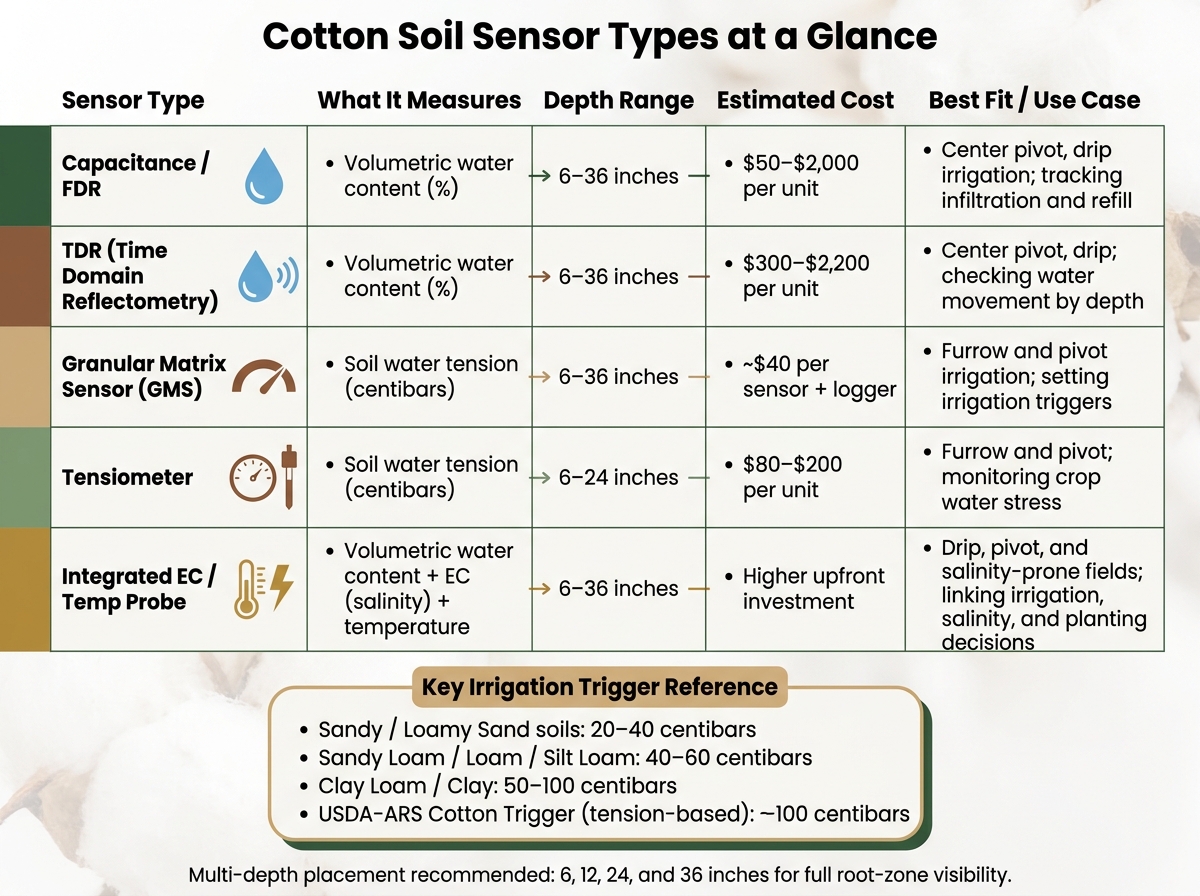
Cotton Soil Sensor Types: Features, Cost & Best Use Guide
Moisture and Tension Sensors for Irrigation Scheduling
Once the measurement goal is set, the next move is picking the sensor that fits the decision at hand. In cotton, irrigation scheduling often relies on capacitance/FDR probes, TDR sensors, granular matrix sensors (GMS), and tensiometers. Capacitance/FDR and TDR measure volumetric water content. GMS and tensiometers measure soil water tension, which tells you how hard roots have to work to pull water from the soil.
Capacitance/FDR and TDR sensors are a good fit for tracking infiltration and refill, especially when they’re tied to wireless platforms that send continuous data. GMS and tensiometers are often used for irrigation triggers because tension lines up closely with crop stress. USDA-ARS research put a useful cotton trigger at about -100 centibars.
Depth placement matters just as much as sensor choice. In cotton, sensors are often installed at 6, 12, 24, and 36 inches to represent the root zone. Shallow sensors show surface wetting and drying. Deeper sensors show whether water is reaching the full root zone or moving past it.
EC and Temperature Sensors for Salinity and Planting Conditions
Moisture data doesn’t tell the whole story. EC sensors show soil salinity. If shallow EC starts climbing, that can point to salt buildup that may hurt emergence. Looking at EC before and after irrigation also helps show whether salts are being pushed down or piling up near the surface.
EC sensors can also help track fertigation movement. After fertigation, a shallow EC spike that shifts deeper points to nutrient movement. If that spike keeps moving down, it can suggest leaching. Temperature sensors placed at 2–4 inches help with planting timing. Cotton planting usually waits until soil holds in the mid-60s °F or warmer.
Integrated probes combine moisture, EC, and temperature at several depths in one unit. When installed the right way, these probes have shown accurate moisture profiles. That setup makes installation easier and gives one data stream for both irrigation and salinity decisions.
Choosing the Right Sensor for Your Soil, Irrigation System, and Budget
Soil type, irrigation method, and budget all shape the best choice. Here’s a side-by-side look at the main sensor groups used in cotton.
| Sensor Type | Measures | Depth Range | Cost | Best Fit |
|---|---|---|---|---|
| Capacitance/FDR | Volumetric water content (%) | 6–36 in | $50–$2,000/unit | Center pivot, drip |
| TDR | Volumetric water content (%) | 6–36 in | $300–$2,200/unit | Center pivot, drip |
| Granular matrix (GMS) | Soil water tension (cb) | 6–36 in | ~$40/sensor + logger | Furrow, pivot |
| Tensiometer | Soil water tension (cb) | 6–24 in | $80–$200/unit | Furrow, pivot |
| Integrated EC/temp probe | VWC + EC + temperature | 6–36 in | Higher upfront | Drip, pivot, salinity-prone fields |
The right setup changes with the irrigation system. Furrow-irrigated cotton often uses simple tension sensors at two or three depths. Center pivots tend to work well with multi-depth capacitance or TDR probes plus wireless reporting. Drip systems often get more from volumetric probes with EC, since that helps track the wetting zone and fertigation movement.
Turning Sensor Readings Into Irrigation and Fertility Decisions
Once sensors are in place, the next job is simple in theory and tricky in practice: turn those readings into irrigation, fertility, and salinity decisions you can act on.
Setting Irrigation Thresholds by Soil Type and Root-Zone Depth
Sensor data only matters if it changes what you do in the field. A good starting point is matching irrigation triggers to soil texture. Sands and loamy sands usually trigger at 20–40 centibars. Sandy loams, loams, and silt loams tend to fall in the 40–60 range. Clay loams and clays can go higher, usually 50–100 centibars.
Cotton can use about 65% of the available water before irrigation, but that trigger should get tighter from squaring through boll fill. Early in vegetative growth, many recommendations let soil tension reach 50–60 centibars before irrigating. As the crop moves toward first bloom and boll development, it makes sense to stay closer to the low end of the range.
To set a threshold for one field, start by saturating the soil. Then record the reading once drainage slows and the profile settles at field capacity. From there, calculate total available water and apply your chosen depletion percentage to find the trigger point.
Reading Multi-Depth Data to Avoid Underwatering and Deep Percolation
Sensors placed at shallow, mid, and deep root-zone depths show where the water actually went after an irrigation set. That matters because one reading by itself can fool you.
Here’s the basic pattern to watch:
- If only the shallow sensor changes, the irrigation was too short or too light.
- If the mid-depth sensors move toward field capacity, water reached the main root zone.
- If the deep sensors jump fast, water is moving below the roots.
Extension guidance often puts more weight on shallow and mid-depth readings when setting an overall trigger. For cotton with sensors at 8, 16, and 24 inches, suggested weighting factors are 0.5, 0.3, and 0.2. That approach keeps the focus on the part of the profile doing most of the work.
In a sandy field, deep-sensor spikes after every irrigation are a red flag. Water is slipping past the root zone. In that case, splitting one application into two smaller sets a few days apart can keep moisture changes in the upper profile and cut leaching risk. It also gives you a clear read on whether applied water stayed where the crop can use it or moved past it.
Using Sensor Trends to Manage Fertility and Salinity
Water movement and salinity tend to travel together, so EC makes more sense when you read it next to moisture trends.
Deep moisture increases soon after irrigation or heavy rain can be an early warning sign for nitrogen and potassium leaching. If deep-profile sensors keep showing large moisture gains after those events, dissolved nutrients are probably moving with that water below the root zone. When that happens right after fertigation, part of the applied nitrogen may already be lost. The point isn’t only to spot leaching. It’s to cut fertilizer waste and protect yield. In practice, that usually means reducing irrigation depth per set, irrigating more often, and moving some N and K applications later into the season when ET is higher and roots are deeper.
EC trends add another piece to the picture. If shallow and mid-depth EC readings climb little by little over several weeks, even with regular irrigation, salts are building up in the root zone. If EC stays high after rewetting, that points to salt buildup rather than just a drying effect. Once EC passes local thresholds for cotton, apply enough water to move salts below the main root zone. Then check the profile again. You want to see mid-depth EC drop while deep EC rises for a short time. Catching that shift early matters because visual symptoms often show up only after yield loss has already started.
Monitoring Platforms, Setup, and Economics
Field Stations, Connectivity, and Mobile Dashboards
Once you know how to read the numbers, the next job is simple in theory and hard in practice: get those readings to the grower fast enough to do something with them.
In cotton, that usually means multi-depth probes placed in representative parts of the field. Each probe connects to a battery- or solar-powered field station. That station sends hourly readings through cellular, Wi-Fi, or radio to a cloud server. From there, the data shows up in a web dashboard or mobile app, which gives growers time to respond before crop stress, leaching, or runoff starts to build.
Clemson's Water Management System and UGA's Smart Sensor Array make the same case: fast data only helps if it reaches the grower soon enough to change an irrigation call. And that depends on setup. If the probe or station sits in the wrong spot, the dashboard can look polished while the field story is off.
Installation and Maintenance That Protect Data Quality
Probe placement matters more than most people expect. Put probes in areas with typical soil texture and water movement, not in low spots or shallow areas that stay wetter or drier than the rest of the field.
Placement also changes with the irrigation system:
- For center pivot systems, place probes about one-quarter of the distance between sprinkler risers and about one-third of the distance between lateral lines. That helps capture a typical wetting pattern.
- For subsurface drip, place probes inside the wetting bulb, about one-quarter of the distance from the drip emitter, so they react to irrigation while still tracking root-zone conditions.
Maintenance is pretty basic, but it's one of those things that's easy to put off. Check battery levels and make sure solar panels stay clean. Dust, bird droppings, or shade can cut charging and lead to missing readings. Also confirm that the node is sending data on schedule and that the dashboard is showing current values. When data goes missing, the cause is often a modem problem, antenna damage, or weak cellular coverage.
In saline or unusual soils, recalibrate at least once a year using separate soil measurements at field capacity and near the wilting point. That step helps keep the numbers tied to field conditions instead of drift over time. Good placement and routine upkeep protect data quality. And if the data isn't sound, the system can't earn its keep.
Cost, Payback, and Business Value in Cotton Production
The cost side includes hardware, software, installation, and training. It's better to judge payback over a full season or longer, not at the moment of purchase.
The field results are hard to ignore. On a 125-acre drip-irrigated cotton farm near Lubbock, Texas, soil moisture probes cut pumping costs by $25.29 per acre in year one. Over 10 years, total savings reached $32,276, along with water savings of 1.91 acre-inches per acre per year. Clemson on-farm trials in cotton, peanut, and soybean found that sensor-based irrigation increased net income by an average of $202.28 per acre (19.42%), with results ranging from $87.30 to $641.19 per acre depending on the field and season.
Adoption across the country was still low in 2018. About 12% of irrigated U.S. farms used soil moisture data for irrigation decisions. Still, use is growing.
Conclusion: Building a Soil Sensor Plan for Cotton
Soil sensors matter because they give you continuous visibility into the root zone across the soil profile. That means you can track water status, salinity, and planting conditions as they change. From there, the job is simple: turn those readings into a clear irrigation rule.
Multi-depth monitoring is the piece that makes a sensor program useful instead of turning it into a guessing game. In most cases, that means tracking conditions at 6, 12, 24, and 36 inches. Those multiple depths help you see what’s happening through the profile, not just near the surface. Thresholds also need to fit local field conditions. USDA-ARS research found that about –100 centibars can serve as a useful cotton trigger when the goal is to balance yield and limit water use. But that number isn’t automatic for every field. Soil type, irrigation system, and crop stage all shape where your thresholds should sit.
Once you’ve set those thresholds, placement and consistency make or break the plan. In practice, results depend less on hardware brand and more on where the probe goes, how well it’s maintained, and whether someone actually uses the readings to make decisions. A well-placed probe in a representative management zone, checked on a steady basis and tied to a clear rule, will beat an expensive system that’s poorly placed or rarely reviewed.
Local cotton networks, consultants, and extension contacts can help you compare readings, calibrate thresholds, and test your irrigation plan against field conditions that match what you’re dealing with.
FAQs
How many sensors do I need per field?
For accurate soil moisture monitoring in cotton fields, install at least three sensor stations per 40 acres. Put them in representative zones so the readings reflect average field conditions across the field.
At each station, use multi-level probes that measure at 4-inch intervals down to 60 inches. Placement matters a lot here. The probes need solid soil contact, or the readings can drift and give you the wrong picture.
How do I choose the best sensor depths?
Use multi-level probes that cover the full root zone, ideally down to 60 inches, with sensors placed at 4-inch intervals or close to that.
Focus on three zones:
- 0–12 inches: tracks daily water uptake
- 12–36 inches: shows root development
- 36–60 inches: measures remaining water reserves
This setup lets you follow how moisture moves through the soil, catch stress early, and make better calls on irrigation timing and volume.
How soon can soil sensors pay for themselves?
Soil sensors can pay for themselves faster than many growers expect. In some cases, a setup delivers a full return in a single season. More often, irrigation-focused systems pay back within 2 to 4 years.
The timeline depends on things like acreage, how much fields vary from one area to another, and the equipment already in place. The math gets a lot better when growers cut water use by 10% to 30% and lift yields by 10% to 20%. Those gains can go a long way toward covering the upfront cost.