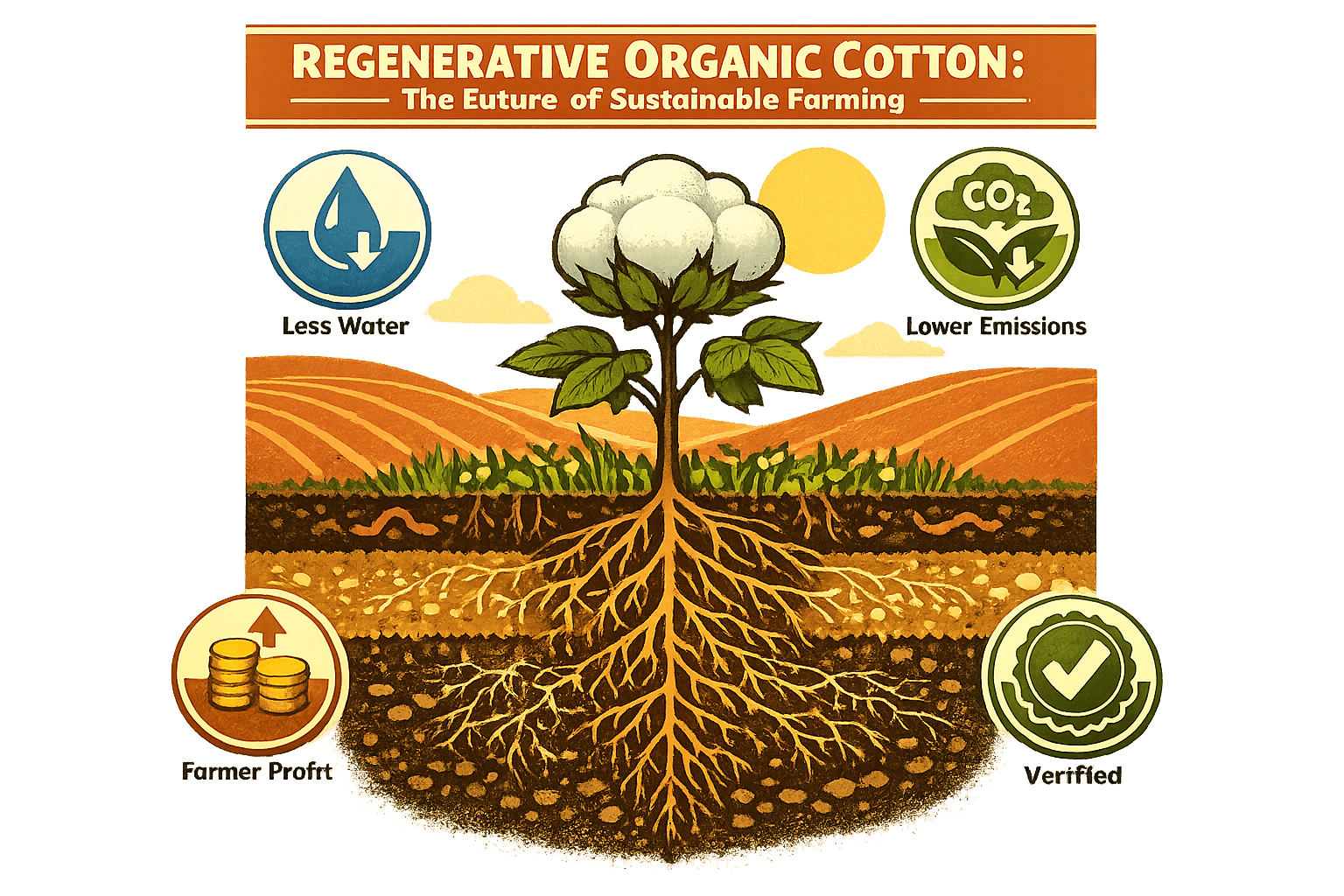
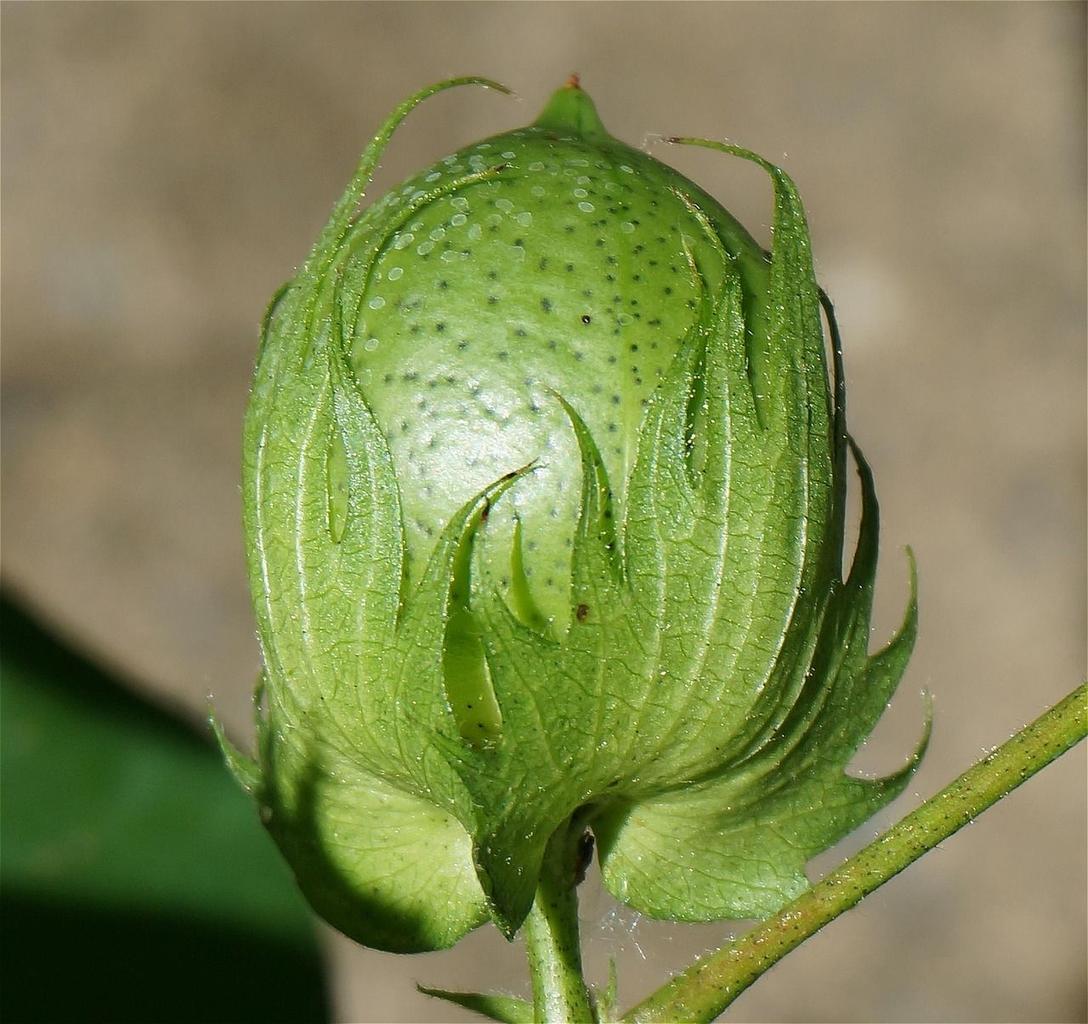
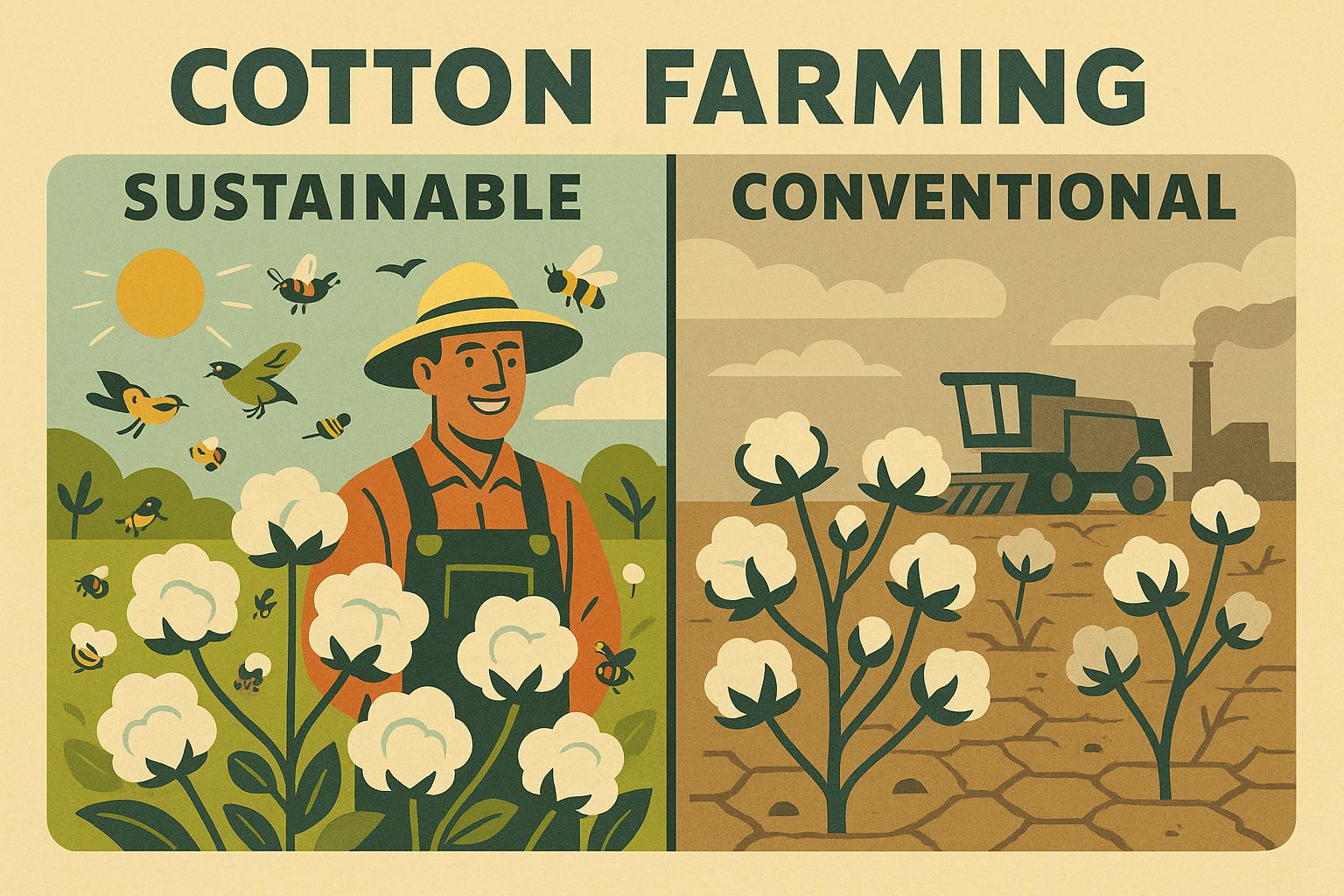
Cotton farming has drastically reduced its water usage over the years, cutting water needs by 56% per bale between 1984 and 2013 in the U.S. Advances in irrigation methods, precision tools, and drought-tolerant crops have made this possible while maintaining production levels. Today, 64% of U.S. cotton is grown using only rainfall, with just 5% relying entirely on irrigation.
Key points include:
- Irrigation technology: Systems like Subsurface Drip Irrigation (SDI) and Low Energy Precision Application (LEPA) reduce water waste.
- Precision tools: Soil moisture sensors and data-driven models optimize water use.
- Regional shifts: Cotton farming has largely moved from the arid West to the Southeast, where rainfall supports crops.
- Community efforts: Programs like LEMA and water reuse systems help farmers manage resources effectively.
Despite progress, challenges like climate change and aquifer depletion demand ongoing improvements in irrigation efficiency and water management strategies.
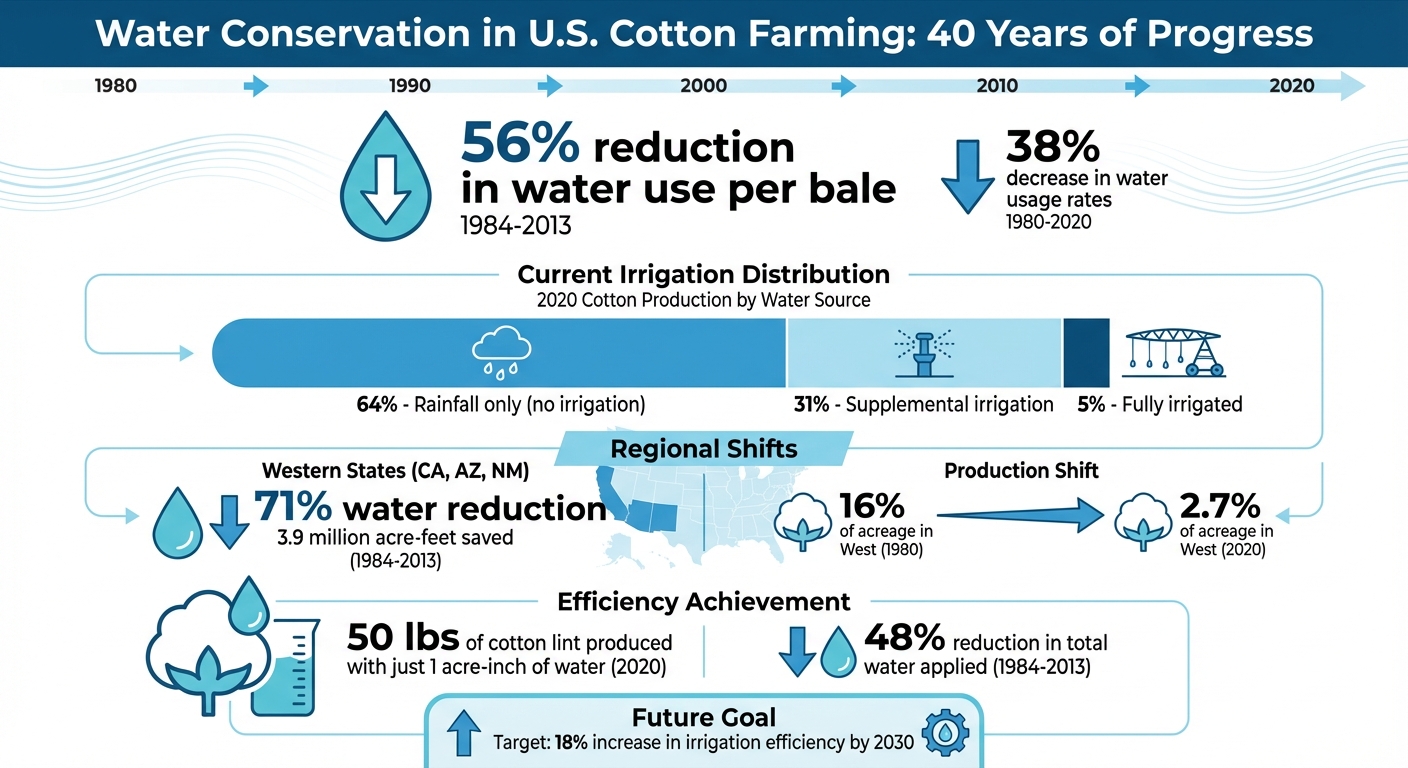
U.S. Cotton Farming Water Usage Reduction: 1980-2020 Key Statistics
Water Usage Trends in Cotton Farming: Key Findings
Historical and Current Water Usage Data
Over the past few decades, water use in U.S. cotton farming has seen a dramatic decline. From 1980 to 2020, water usage rates dropped by 38%, marking significant progress driven by advancements in farming practices and technology. Between 1984 and 2013, total water applied to cotton production decreased by 48%, even as irrigated production levels remained steady.
The most striking reductions occurred in the arid Western states. In California, Arizona, and New Mexico, water applied to cotton fell by 71% - a reduction of 3.9 million acre-feet - between 1984 and 2013. This wasn’t just a result of using less water per acre; it also reflected a shift in cotton farming regions and processing hubs. Back in 1980, about 16% of U.S. cotton acreage was in these Western states, but by 2020, that share had plummeted to less than 2.7%. Production moved eastward to the Southeast and Mid-South, where natural rainfall meets more of the crop’s water needs.
Fast forward to today, and the landscape of cotton farming has transformed. Around 64% of U.S. cotton now relies entirely on rainfall, requiring no irrigation at all. Fully irrigated cotton accounts for just 5%, while 31% receives supplemental irrigation. By 2020, irrigation efficiency had reached a point where just over 1 acre-inch of water could yield 50 pounds of lint. These shifts highlight the strides made in water efficiency and set the stage for understanding the innovations behind them.
Factors Behind Water Efficiency Improvements
Several key developments have driven these improvements in water efficiency. Modern irrigation systems have been a game-changer. The transition from traditional furrow irrigation to advanced methods like center pivots with Low Energy Precision Application (LEPA) and Subsurface Drip Irrigation (SDI) ensures water is delivered precisely where it’s needed, reducing waste from evaporation and runoff.
Precision agriculture tools have further refined water use. Farmers now rely on soil moisture sensors, GPS-enabled Variable Rate Irrigation (VRI), and computer models to apply water only when and where it’s necessary. Additionally, drought-tolerant cotton varieties help maintain yields while reducing the need for supplemental irrigation. Conservation practices, such as using cover crops and adopting improved tillage methods, enhance soil’s ability to retain water, creating a more sustainable farming approach.
These innovations are complemented by community-driven water management strategies, blending cutting-edge technology with local conservation efforts. Together, they form a holistic approach to improving water efficiency in cotton farming while addressing long-term sustainability challenges.
sbb-itb-0e617ca
Water Use in U.S. Cotton Production
Community-Based Water Management Programs
Technological advances are essential for water conservation, but community efforts are equally impactful in addressing water challenges.
How Communities Work Together to Conserve Water
When communities collaborate, water management becomes more effective. For example, water stewardship programs help map shared resources like aquifers and river basins, enabling better local management. One standout initiative is the Local Enhanced Management Area (LEMA), which allows farmers to set their own water conservation goals instead of adhering to rigid, top-down mandates. This approach not only encourages accountability but also builds trust and participation. Other efforts, like the multi-stakeholder WAPRO program, combine market-based incentives, public policy advocacy, and practical training. Some programs even involve schools, teaching sustainable water practices to younger generations within farming communities. By blending these community-driven initiatives with modern irrigation techniques, water use becomes more efficient overall.
Case Study: A Water Management Program in Action
The Sheridan-6 LEMA in Kansas offers a compelling example of how collaborative water management can succeed. According to a 2025 study, the initiative led to a 28% reduction in blue water use, a 22% drop in fossil energy consumption, and a 20% decrease in greenhouse gas emissions compared to traditional methods. Farmers participating in the program also transitioned to less water-intensive crops like sorghum and wheat.
Globally, similar community-led programs have delivered impressive results. For instance, during the 2018–2019 cotton season, Sharipov Habibullo, a farmer in Tajikistan, saved 1.8 million liters of water per hectare using tubular irrigation supported by Helvetas and the Alliance for Water Stewardship. In Gujarat, India, the Coastal Salinity Prevention Cell helped 11,000 farmers adopt drip and sprinkler technologies, while farmers in the Better Cotton Initiative used 13% less irrigation water than their peers. These examples highlight how local collaboration and innovative practices can make a real difference in conserving water resources.
Technology Supporting Water Conservation
Technological advancements are playing a key role in reshaping water conservation efforts in cotton farming. By introducing efficient irrigation systems and data-driven tools, these innovations are helping farmers reduce water usage while maintaining crop yields. Here's a closer look at some of the cutting-edge approaches transforming water management in cotton farming communities across the United States.
Irrigation Technologies and Practices
Subsurface Drip Irrigation (SDI) is one of the most efficient methods for delivering water directly to plant roots. This system minimizes water loss from evaporation and runoff, making it particularly effective in water-scarce regions. Kevin Bronson, a soil scientist at the USDA Arid Land Agriculture Research Center, describes SDI as:
Drip is a good, climate-friendly, cotton farming practice in places where cropping is nearly 100 percent irrigated. It's really the Cadillac of irrigation systems.
The benefits of SDI are evident in real-world applications. For example, a third-generation cotton farmer in Lubbock, Texas, compared subsurface drip to pivot irrigation on 3,500 acres. Using 16 inches of water, the farmer achieved 3 bales per acre with SDI, compared to just 2.25 bales per acre with pivot irrigation.
Automated scheduling systems are another game-changer for irrigation management. Systems like ISSCADA (Irrigation Scheduling Supervisory Control and Data Acquisition) use real-time data from soil moisture and plant temperature sensors to automate irrigation. Between 2021 and 2022, researchers Susan A. O'Shaughnessy and Paul D. Colaizzi tested ISSCADA on Phytogen 210 W3FE cotton at the Conservation and Production Research Laboratory in Bushland, Texas. The results were impressive: water savings of 20% in 2021 and 16% in 2022, all while maintaining seed cotton yields at a 75% replenishment level. O'Shaughnessy highlighted the system's potential:
the ISSCADA system streamlines deficit irrigation management in semi-arid regions.
Water Capture and Reuse (WCR) systems provide another practical solution, particularly in areas with unpredictable rainfall. These systems collect and store surface runoff and subsurface drainage in on-farm ponds, making water available during dry spells. From 2022 to 2024, Dr. Mohamed Youssef at North Carolina State University studied WCR systems at the Peanut Belt Research Station. During the dry 2023 season, supplemental irrigation from captured water boosted yields by over 600 lb/acre.
These advances in irrigation technologies set the stage for the next frontier: data-driven water management.
Data and Modeling in Water Management
Crop simulation models are helping farmers make informed decisions about irrigation strategies. The AquaCrop model, developed by the FAO, stands out for its reliability and ease of use, requiring fewer input parameters than more complex models. Between 2022 and 2024, researchers led by Botir Khaitov at the Cotton Growing Research Institute in Tashkent, Uzbekistan, used AquaCrop to optimize irrigation for cotton variety C-6524. An irrigation regime at 70-70-65% field capacity delivered optimal water productivity (0.64–0.66 kg/m³) with yield deviations of less than 5%. Khaitov noted the broader impact of this approach:
the digitalization of agricultural irrigation using the AquaCrop model will advance water-saving priorities, contribute to climate resilience and promote more sustainable crop production practices.
Building on these insights, growth-stage-specific strategies take water management a step further by tailoring irrigation to critical periods of crop development. Research from Texas A&M demonstrated that applying 90% of evapotranspiration replacement during early growth stages and 30% during the final stage saved 2.56 inches of irrigation water without significantly affecting yields. This method focuses water use on sensitive stages like flower initiation and peak bloom while scaling back during less critical stages, such as boll opening.
These tools and strategies are paving the way for smarter, more efficient water use in cotton farming, ensuring sustainability without sacrificing productivity.
Regional Water Challenges and Cotton Farming
Cotton farming in the United States faces a variety of water-related challenges, and these challenges differ significantly depending on the region. Advances in technology and farming practices have helped, but each area still contends with its own hurdles - from dwindling aquifers in the West to unpredictable rainfall in the Southeast. These differences highlight the importance of developing water management practices that are tailored to each region's specific needs. Taking a closer look at how cotton performs under water scarcity sheds light on these challenges.
Cotton's Drought Tolerance
One of cotton's standout traits is its ability to thrive in dry conditions, making it well-suited for arid and semi-arid regions. Unlike many other crops, cotton can rely on rainfall and supplemental irrigation instead of full irrigation systems. Its deep root system - reaching up to 1.8 meters (about 6 feet) - allows it to tap into moisture deep in the soil, giving it an edge in areas where surface water is limited. However, critical growth stages still require adequate moisture. Between 1980 and 2020, U.S. cotton growers managed to reduce water usage by 38% through better management practices, showing how efficiency can help sustain this crop even in water-scarce areas.
Regional Differences in Water Management
West Texas faces some of the harshest water challenges in the country. During the frost-free growing season, rainfall meets only 25% of the cotton crop's water needs. D.R. Krieg of Texas Tech University explains:
Lack of an adequate water supply to meet the evaporative demand of the growing cotton crop represents the major limitation to maximizing yield of cotton production in Texas.
Adding to the challenge, the region struggles to replenish soil moisture in more than 70% of years. While the Ogallala Aquifer has been a vital source of irrigation, its depletion raises serious concerns for the future.
In contrast, the Trans-Pecos region offers an example of how innovation can overcome extreme conditions. The Giesbrecht family at BJK Farms in Hudspeth County has successfully grown cotton in desert conditions. Despite receiving just 2 inches of annual rainfall and enduring temperatures between 110°F and 115°F, they achieved yields of 3.5 to 5 bales per acre - sometimes reaching 8 bales - by using 40 inches of irrigation water from the Bone Spring-Victorio Peak Aquifer. Farmers in the area also emphasize the importance of water quality, noting that their groundwater's high quality contributes to exceptional crop yields. This type of water is highly sought after in other cotton-growing regions like Seminole.
In the Southeast, the primary challenge is not consistent water scarcity but extreme weather variability. Farmers face swings between optimal rainfall, severe droughts, and excessive wet periods that can harm yields during critical stages like flowering. To address this unpredictability, farmers have turned to systems like Water Capture and Reuse. For instance, research led by Dr. Mohamed Youssef at North Carolina State University between 2022 and 2024 demonstrated the effectiveness of these systems. During the dry 2023 season, supplemental irrigation from captured water increased yields by over 600 pounds per acre at the Peanut Belt Research Station in Bertie County. These strategies help farmers maintain productivity despite the region's volatile weather.
In the arid Southwest, which includes California, Arizona, and New Mexico, water efficiency has seen tremendous improvement. Between 1984 and 2013, water use for cotton in these states dropped by 71%, saving more than 3.9 million acre-feet of water. Precision irrigation systems and reliance on underground aquifers have played a big role in this progress. For example, in Arizona, surface irrigation uses about 1,460 mm (57 inches) of water annually, while micro-irrigation reduces that to roughly 1,160 mm (46 inches).
However, the pace of improvement has slowed in recent years. Climate change has brought more frequent and prolonged droughts, along with heavy rains that fail to soak into the soil effectively. Each region continues to adapt its water management strategies to meet these evolving challenges, showing the importance of ongoing innovation to sustain cotton farming in the face of changing conditions.
Conclusion: Moving Toward Better Water Use
Key Takeaways from the Study
Over the past four decades, U.S. cotton farming has made strides in water conservation. From 1980 to 2020, water usage dropped by 38%, with 64% of cotton now grown using only rainfall, and just 5% depending entirely on irrigation. A major factor in this shift has been moving cotton production from drier regions in the West to areas in the Southeast with higher rainfall, significantly improving water efficiency.
Precision technology has also played a pivotal role. By 2020, farmers were producing 50 pounds of lint with just 1 acre-inch of water. Innovations like Subsurface Drip Irrigation, which delivers water directly to plant roots with up to 95% efficiency, and Variable Rate Irrigation, which cuts water use by up to 25%, have been game-changers. Community-driven initiatives, such as Water Capture and Reuse systems, have further amplified these gains, boosting yields by over 600 pounds during dry spells in 2023 while also improving water quality.
However, challenges persist. Climate change has brought longer droughts and more intense, less effective rainfall, slowing progress in recent years. As Edward M. Barnes and colleagues point out:
farmer adoption of advanced scheduling technologies is still limited and there is significant room for improvement.
Despite these hurdles, the progress made so far provides a strong foundation for further advancements in water conservation.
Future Opportunities for Water Conservation
The cotton industry is targeting an 18% increase in irrigation efficiency by 2030, even as climate challenges grow. Achieving this goal will require broader adoption of tools like soil moisture sensors and advanced irrigation scheduling systems, which many farmers have yet to fully embrace.
New crop simulation models are now able to predict irrigation needs 3–5 days ahead, enabling precise water application. Growth-Stage-Based Variable Deficit Irrigation, which reduces water use during less critical growth stages, offers another promising strategy for conserving water without sacrificing yields. Additionally, practices like cover cropping and reduced tillage can increase the soil's water-holding capacity by up to 1 inch per foot.
Programs such as Cotton LEADS and the U.S. Cotton Trust Protocol are vital for sharing effective practices across different regions. The study highlights the benefits of on-farm water storage systems, which not only improve yields but also enhance water quality. Expanding research efforts and investing in infrastructure will help farmers adapt to unpredictable weather patterns while ensuring sustainable water use for the future.
FAQs
What is the difference between 'rainfed' and 'supplemental' cotton?
Rainfed cotton depends largely on natural rainfall to meet its water needs. On the other hand, supplemental cotton involves using extra irrigation during dry spells or when rainfall falls short of what’s required for proper crop growth. Both approaches hinge on the availability of water to maintain healthy cotton yields.
Which irrigation upgrades save the most water per acre?
Drip irrigation systems, especially subsurface drip, are known for being some of the most water-efficient options available for cotton farming. Often referred to as the "Cadillac of irrigation systems", these setups use significantly less water compared to older, more traditional methods. Research consistently shows that they excel at conserving water, making them an excellent choice for farmers looking to boost efficiency on every acre.
How do LEMA-style programs work for farmers?
LEMA-style programs (Local Enhanced Management Areas) focus on conserving groundwater by establishing regional water use limits and encouraging smarter irrigation practices. These initiatives rely on collaboration between farmers and water managers to develop strategies like fine-tuning irrigation schedules, planting drought-resistant crops, and reusing water wherever possible. The goal? To strike a balance between saving water and maintaining crop yields, especially in areas like the High Plains Aquifer, where groundwater depletion poses a serious challenge.
However, implementing these programs isn’t without hurdles. Legal restrictions, local traditions, and varying climate conditions can all influence how readily these practices are adopted. Still, they represent a proactive approach to addressing water scarcity while supporting agricultural productivity.