A cotton gin can lose $2,000 to $5,000 per hour when equipment stops during season. That’s why I’d look at AI-based maintenance as a way to catch machine trouble early instead of waiting for a breakdown.
Here’s the short version:
- Reactive repairs cost more and often hit at the worst time
- Fixed schedules miss machine-by-machine wear
- AI uses sensor data like vibration, temperature, current, pressure, and acoustic signals
- High-risk assets usually include gin stands, motors, bearings, dryers, conveyors, and moisture-control systems
- A 2–4 week baseline helps the system learn normal machine behavior
- Pilot programs often start with 5–10 assets and 10–20 sensors
- Good programs can cut unplanned downtime by 30% to 50% and lower maintenance costs by 18% to 25%
What matters most is simple: watch the machines most likely to stop fiber flow, use the right sensors, and feed alerts into your maintenance process before peak-season failures happen.
If I were summarizing the article in one line, it would be this: AI maintenance helps cotton gins move from “fix it after it breaks” to “fix it before it stops the line.”
Exploring New Cotton Gin Technology at White Oak Gin in Missouri
sbb-itb-0e617ca
Where Cotton Gins Lose Time: Equipment Most Likely to Fail
Some gin assets carry most of the downtime risk. In most cases, the best return comes from watching the equipment that can stop fiber flow or chip away at drying and moisture control.
Gin Stands, Motors, and Bearings
Gin stands drive output, so when one goes down, the line stops on the spot. Their motors and bearings are also some of the parts most likely to fail. The main trouble spots are bearing wear, misalignment, overheating, and motor degradation.
Vibration sensors detect roughly 80% of common failures in rotating equipment. That makes them a strong fit for gin stands and the drives behind them. Add temperature monitoring, and crews get an earlier, clearer warning than they would from either signal on its own. High-frequency acoustic sensors can also pick up friction and air leaks that a normal walkthrough might miss.
These are the same signals AI systems use to warn crews before a stoppage.
Dryers, Moisture-Control Systems, Belts, and Conveyors
Dryers and moisture-control systems often drift out of spec before they fail outright. That can hurt fiber quality long before anyone sees a full shutdown. Pressure sensors can spot clogging and airflow loss that cut drying performance. Humidity and dew point sensors help flag condensation risk and corrosion risk in moisture-control systems.
Belts and conveyors can create line-wide slowdowns fast. One blocked conveyor or slipping belt can back up the whole operation. Current sensors can help spot belt slippage, drive failure, or a blockage starting to build.
This is where AI tends to pay off first: the sensor data lines up neatly with the gin assets most likely to cause trouble.
| Component | Primary Sensor Type | Failure Modes Detected |
|---|---|---|
| Gin Stand Motors | Vibration, Temperature, Current | Bearing wear, motor degradation, misalignment, overheating |
| Bearings / Gearboxes | Vibration, Acoustic | Lubrication failure, gear tooth damage |
| Dryers / Airflow Systems | Pressure, Temperature | Clogging, airflow loss, burner anomalies |
| Belts / Conveyors | Current, Vibration | Belt slippage, drive failure, blockage |
| Moisture-Control Systems | Humidity, Environmental | Condensation risk, corrosion risk |
Those signals feed the AI models and alerts covered next.
How AI Detects Equipment Problems Before a Breakdown
Sensors feed data into a workflow that turns raw readings into early warnings. Each sensor tells part of the story: vibration, temperature, current, and pressure all track different signs of machine health. Thermal imaging adds another check by showing hot spots on motors, bearings, and electrical panels before something fails. One small setup detail matters a lot here: mount vibration sensors on rigid bearing housings, not flexible sheet metal.
From there, the system compares new readings against normal operating patterns.
Sensors send data to a local gateway first. That gateway filters out noise, so only useful data moves to the cloud platform. During the first 2–4 weeks of deployment, the system builds a baseline for normal operation for each asset. After that, it checks incoming readings against those baselines in real time.
When a reading starts drifting toward a failure threshold, the platform sends an alert through a dashboard, email, or text. If the system is tied into a Computerized Maintenance Management System (CMMS), it can also create a work order on its own, with the diagnostic data already attached. That saves time and gives the maintenance team a clearer starting point.
The system also helps cut down on false alarms. Instead of reacting to one odd reading, alerts fire only when multiple readings point to the same issue. That matters a lot during early tuning, when teams are still dialing things in. It can also track how fast a reading is changing. For example, a 20% rise in vibration within 24 hours can be a stronger warning sign than one high reading by itself. In plain terms, the baseline lets the system catch small shifts before they turn into downtime.
AI-driven monitoring can surface developing problems weeks or even months before a catastrophic failure. That changes the job from scrambling during peak ginning to planning repairs during downtime. AI spots patterns like rising vibration, steady overheating, current changes, and humidity drift before they turn into shutdowns. That lead time is what makes a system worth evaluating.
What to Look for When Choosing a Predictive Maintenance Strategy
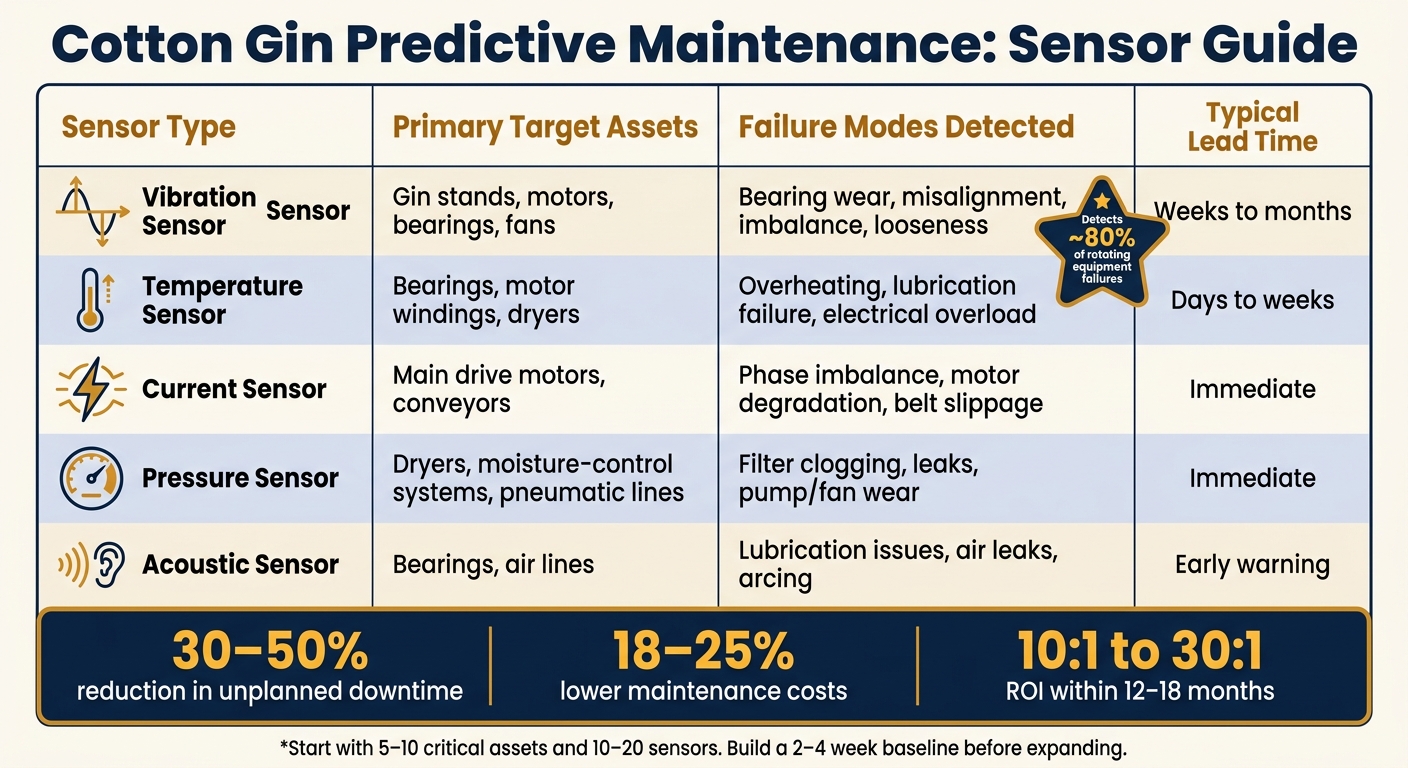
Cotton Gin Predictive Maintenance: Sensors, Assets & Failure Modes
Start With the Equipment That Carries the Highest Downtime Risk
Once AI starts flagging trouble early, the next move is simple: decide where to use it first. The best place to start is your CMMS history. Look at which assets fail most often, cost the most to fix, and cause the most lost production time.
In most gins, that usually points to primary drive motors, gin stands, main conveyors, and dryers. If one of those goes down during peak season, fiber flow can stop or drying can get thrown off fast. Those are the kinds of shutdowns predictive maintenance is built to avoid.
A small pilot makes more sense than trying to monitor everything at once. Start with 5–10 critical assets and 10–20 sensors to show what the system can do before rolling it out across the full site. Then pair each asset with the sensors that line up with its likely failure modes.
Compare Tools, Data Coverage, and Expected Payback
Each sensor should have a job. If it doesn’t tie to a likely failure mode, it’s just noise.
Vibration sensors are usually the go-to choice for motors, bearings, and conveyors. Dryers need pressure and temperature coverage. Air systems tend to do best with pressure and acoustic monitoring, which can help catch filter clogging, pump wear, airflow issues, and leaks.
Use this sensor map:
| Sensor Type | Primary Target Assets | Failure Modes Detected | Typical Lead Time |
|---|---|---|---|
| Vibration | Gin stands, motors, bearings, fans | Bearing wear, misalignment, imbalance, looseness | Weeks to months |
| Temperature | Bearings, motor windings, dryers | Overheating, lubrication failure, electrical overload | Days to weeks |
| Current | Main drive motors, conveyors | Phase imbalance, motor degradation, belt slippage | Immediate |
| Pressure | Dryers, moisture-control systems, pneumatic lines | Filter clogging, leaks, pump/fan wear | Immediate |
| Acoustic | Bearings, air lines | Lubrication issues, air leaks, arcing | Early warning |
The financial side can be hard to ignore. Leading operations report 10:1 to 30:1 ROI within 12 to 18 months. That return usually comes from fewer emergency repairs, less parts waste from run-to-failure breakdowns, and more recovered ginning hours.
Match the System to How the Gin Already Operates
Even a good system can flop if it doesn’t fit the way your gin works day to day. Before you commit, check a few practical things:
- Whether it connects to your current CMMS through API
- Whether your site has dependable connectivity for the sensors you want
- Whether the dashboard is simple enough for your maintenance crew to use fast
Connectivity tends to matter more than people think at first. In large gins with equipment spread across the site, LoRaWAN is worth a close look because its long range and low power use fit that kind of layout. In tighter indoor setups, Bluetooth Low Energy (BLE) or Zigbee can work well for mesh networks.
The hardware also has to survive the job. Cotton gin sensors need to deal with dust, heat, and constant vibration. High-heat zones need thermocouples, and wireless units should last at least 2 years.
Conclusion: Cutting Downtime Before It Starts
Once you've identified the highest-risk equipment, the next move is pretty clear: get ahead of failures before they hit the line.
Predictive maintenance matters because breakdowns during ginning season are far more expensive than planned service. Reactive maintenance can cost up to 40% more than predictive programs, and emergency repairs can run 10 times more than scheduled fixes. With AI-driven monitoring, teams can spot early signs of failure in time to avoid a shutdown.
That early warning changes the whole maintenance approach. Instead of scrambling after something breaks, you can act while the issue is still small. When you combine vibration data with temperature, current, pressure, and acoustic monitoring, you can catch wear, overheating, imbalance, and airflow loss across gin stands, motors, bearings, dryers, conveyors, and moisture-control systems before they bring production to a stop. Done well, that can reduce unplanned downtime by 30–50% and cut maintenance costs by 18–25%.
A smart way to begin is with a pilot on 5–10 critical assets. Build a 2–4 week baseline, then send alerts into your current maintenance workflow as automated work orders. Keep it simple at first. Prove it works. Then expand.
FAQs
How much data does AI need to detect failures accurately?
There’s no fixed number.
Predictive maintenance works by mixing real-time monitoring with past performance trends to create a baseline for normal equipment operation.
For new setups, a pilot with 5 to 10 critical assets is enough to get started. At first, thresholds usually come from manufacturer guidance and industry standards. Then, as the system gathers more data from day-to-day use, those thresholds get refined based on how the equipment actually performs.
Can predictive maintenance work in dusty cotton gin environments?
Yes. Predictive maintenance can work well in cotton gin settings, even with heavy dust.
Modern industrial sensors are made for rough conditions. If you mount them well - for example, putting vibration and temperature sensors on bearing housings instead of sheet metal - gins can track motors, belts, and conveyors in real time and spot wear early, before it turns into costly, unplanned downtime.
Who on the team should respond to AI maintenance alerts?
AI maintenance alerts work best when the whole team is involved.
- Operators watch live updates and get the first alerts.
- Technicians review those alerts, run diagnostics, and handle repairs.
- Managers track KPIs, review reports, and bring in specialized professional services when needed.
Clear documentation and clear task ownership help the team follow up on time.