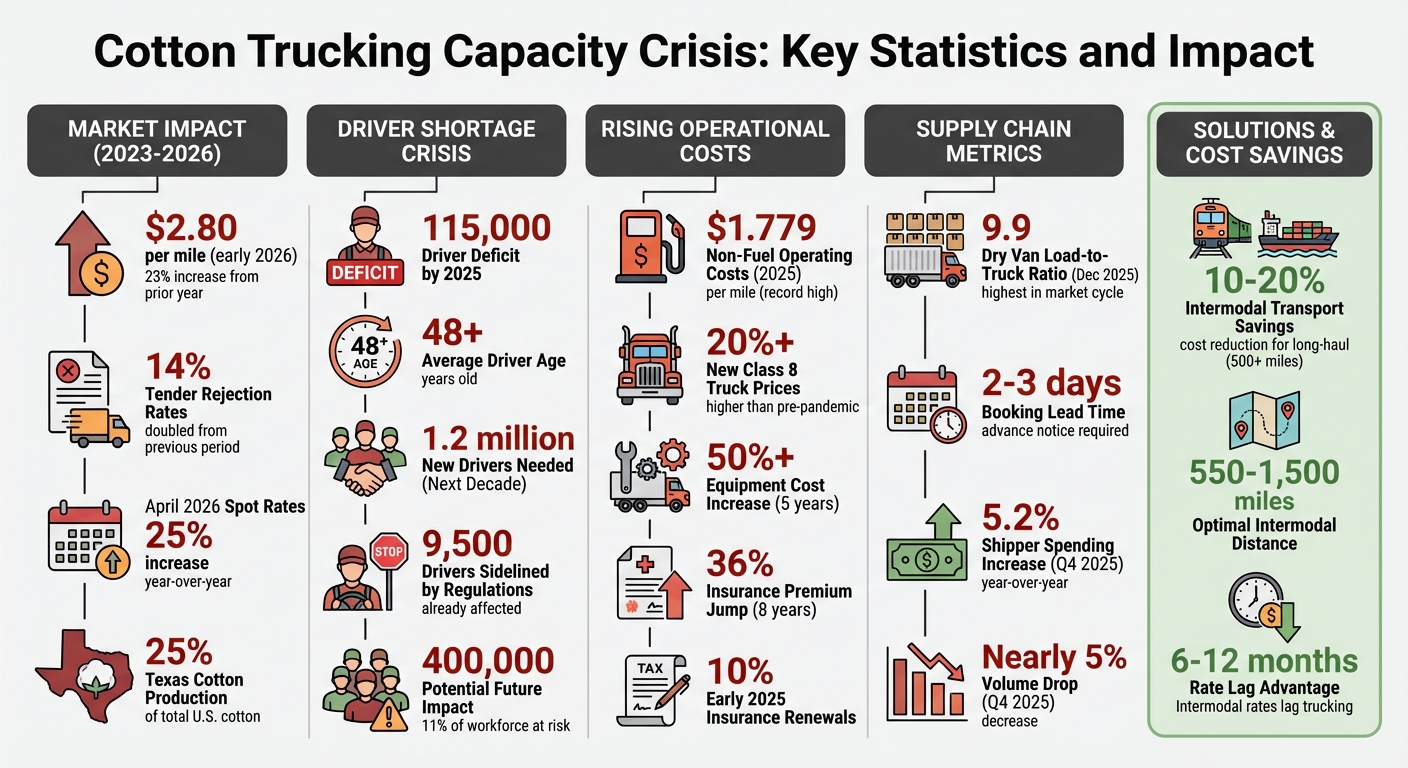
The cotton industry is dealing with a major trucking crisis, with rising costs, fewer drivers, and tighter capacity. Between 2023 and 2025, thousands of carriers exited the market, pushing spot rates to $2.80 per mile in early 2026 - a 23% increase from the prior year. Tender rejection rates have also doubled to 14%, making transportation delays more frequent and costly. Texas, producing 25% of U.S. cotton, faces unique challenges as seasonal demand spikes strain an already stretched trucking network.
Key issues include:
- Driver shortages: A deficit of 115,000 drivers by 2025, with stricter CDL and language requirements reducing the labor pool further.
- Supply chain bottlenecks: Longer lead times, warehouse delays, and higher load-to-truck ratios disrupt schedules.
- Rising costs: Non-fuel operating costs hit $1.779 per mile in 2025, alongside higher insurance premiums and equipment prices.
Solutions focus on early planning, efficient logistics, and diversifying transportation options. Using tools like freight management software and intermodal transport can help reduce costs by 10–20% for long-haul shipments. Resources like cottongins.org also assist in optimizing routes and connecting with reliable carriers. The key is proactive coordination to avoid delays and manage rising costs effectively.
Cotton Trucking Capacity Crisis: Key Statistics and Impact 2023-2026
Capacity Is Tightening: Why Shippers Are Locking in Carriers!
sbb-itb-0e617ca
What Causes Trucking Capacity Shortages in Cotton
Understanding why trucking capacity is tight helps cotton producers and gin operators make better plans. Three key factors are driving the current challenges: labor shortages, supply chain slowdowns, and rising costs.
Driver Shortages and Labor Problems
Driver shortages are a major issue in cotton trucking. The average truck driver in the U.S. is now over 48 years old, and retirements are outpacing the recruitment of new drivers. To keep up with retirements and growing demand, the industry needs about 1.2 million new drivers over the next decade.
Regulatory changes have made things worse. For example, stricter rules on English proficiency and CDL compliance have already sidelined 9,500 drivers, and up to 400,000 drivers - roughly 11% of the workforce - could be affected by further enforcement over the next two years. This is a big challenge, especially during the busy cotton harvest season.
Trucking is also losing its appeal as a career. Long hours away from home, high stress, health risks, steep training costs, and age restrictions discourage new entrants. Many drivers also struggle with unpredictable earnings due to pay-per-mile systems and delays at warehouses and gins. With fewer drivers, many trucks and trailers sit idle, further straining capacity.
But labor isn't the only issue - supply chain bottlenecks also play a big role.
Supply Chain Bottlenecks
Trucking capacity relies on smooth coordination among various parts of the supply chain, including chassis availability, terminal scheduling, and rail ramp operations. When any of these elements slows down, the entire system backs up.
Warehouse delays and overcrowded yards are a big problem. Trucks and chassis often get stuck for extended periods, reducing the number of trips drivers can complete each day. Booking a truckload now often requires 2–3 days' notice.
For cotton operations, these delays mean trucks may arrive late - or not at all. Retailers' shift toward lean inventory strategies has pushed more storage responsibilities onto wholesalers and intermediaries, creating unpredictable warehouse utilization that disrupts trucking schedules. By December 2025, the dry van load-to-truck ratio hit 9.9, the highest in this market cycle.
These delays not only slow down operations but also increase costs.
Rising Costs and Operational Problems
Operating a truck has never been more expensive. In 2025, non-fuel operating costs hit a record $1.779 per mile. Prices for new Class 8 trucks are over 20% higher than before the pandemic, and equipment costs have risen by more than 50% in the past five years.
Insurance costs are also climbing. Premiums have jumped 36% over the past eight years, with early 2025 renewals up nearly 10%. These rising costs are forcing many fleets to delay buying new trucks, choosing instead to keep older equipment running longer.
"For some carriers, the math now favors higher maintenance costs in the short term rather than investing in new equipment." - Triple T Transport
Operational inefficiencies add to the problem. Traffic congestion and delays at loading docks cost billions in lost driver hours every year. This waste reduces the available capacity of the current workforce and increases the cost per load. Financial pressures from these rising costs have led to fleet downsizing and carrier closures, further tightening the already limited capacity.
How to Address Trucking Capacity Shortages
Planning ahead is key to ensuring reliable transportation even when spot rates fluctuate wildly.
Improving Logistics and Operations
To become a preferred shipper, focus on minimizing delays at gins and warehouses. Fast and efficient loading processes can make a big difference. Carriers are more likely to prioritize shippers who run smooth operations, especially when capacity is tight.
"In a tight market, carriers prioritize shippers who treated them well during the downturn. Consistent volume, fair rates, and efficient facilities matter more than ever." – CXTMS
Streamlining your logistics reduces delays, which can help secure more trucks when capacity is limited. Tools like data-driven routing and long-term 3PL planning can help you navigate shrinking capacity markets effectively.
Once your logistics are running smoothly, diversifying your carrier base can further protect against shortages.
Working with Dependable Carriers
Streamlined operations are just one piece of the puzzle. Partnering with a broad range of carriers ensures you’ll have consistent capacity. Build a diverse portfolio that includes asset-based carriers, brokers, and intermodal providers.
For example, in early 2026, tender rejection rates hit 14% as carriers opted for higher-paying spot loads over contracted ones. Flexible contracts - like mini-bids or shorter commitment periods - can help you adjust quickly to market changes. For long-haul lanes over 500 miles, intermodal transport can save 10–20% on costs while bypassing truckload capacity issues. Direct contracting and using brokers as an outsourced sales team can also help secure steady volumes and predictable rates.
Using Technology for Freight Management
Technology is a game-changer for freight management, offering real-time visibility and smarter decision-making. Freight management software can automate critical tasks like scheduling, cost-per-mile analysis, and route optimization. Accurately calculating your cost-per-mile allows you to bid competitively as rates climb.
Freight factoring is another useful tool. By converting invoices into immediate cash, you can cover fuel and maintenance costs even when payment cycles stretch beyond 40 days. This is particularly important in a market where shipper spending rose by 5.2% year-over-year in Q4 2025, despite an overall volume drop of nearly 5%. Managing working capital effectively can give you a competitive edge.
| Strategy | Capacity Benefit | Focus |
|---|---|---|
| Direct Contracting | Rate stability and guaranteed volume | Bidding on consistent lanes; avoiding spot market volatility |
| 3PL Partnerships | Real-time visibility and data-driven routing | Proactive planning and carrier relationship management |
| Freight Factoring | Immediate working capital | Converting invoices to cash for fuel and maintenance |
| Broker Networking | Access to exclusive shipper lanes | Building loyalty with multiple trusted brokers |
"Stability in a turbulent market is a competitive advantage." – Bruce Sayer, eCapital
How cottongins.org Helps with Logistics Coordination
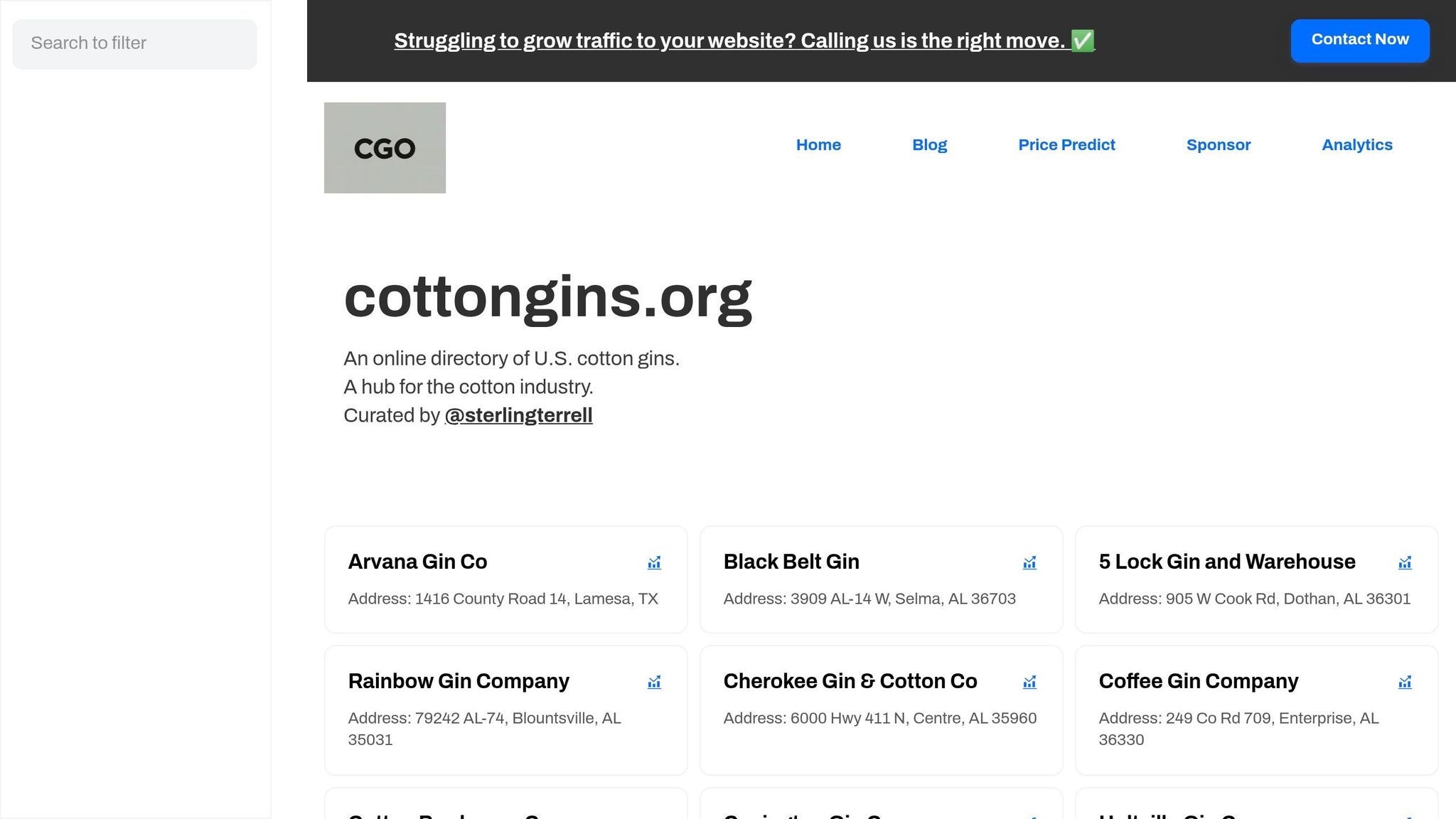
With capacity shortages becoming a growing challenge, efficient logistics coordination is more important than ever. When trucking capacity is tight, knowing the exact locations of facilities can save miles, fuel, and - most importantly - time. The cottongins.org directory offers a state-by-state listing of cotton gins and warehouses across the U.S.'s major cotton-producing regions, including states like Alabama, Georgia, Texas, and California.
Locating Nearby Gins and Warehouses
Each facility listing includes precise addresses, helping you plan routes more effectively and make the most of your trucking resources. For instance, if your primary delivery point in Georgia is experiencing delays, you can quickly locate alternative facilities nearby to keep your operation moving. Some facilities, like 5 Lock Gin and Warehouse in Alabama and Portland Gin & Warehouse in Arkansas, serve as both gins and warehouses, potentially cutting out the need for additional transport steps.
The directory’s state-specific pages also highlight key routes where facilities are clustered. In Arkansas, for example, the US-165 and US-61 corridors are packed with facilities, making it easier for drivers to complete multiple pickups or drop-offs in one trip. This kind of detailed mapping helps reduce empty miles and supports smoother operations.
Sponsorship Options for Better Visibility
Visibility is just as crucial as location when it comes to logistics. Sponsorship options on cottongins.org help connect gins and warehouses with reliable transportation partners. Here’s how it works:
- Sponsored Posts: For $200 each, these posts stay featured for a full day and are promoted on social media.
- Official Sponsors: At $200 per month, sponsors get their logo placed in the main page footer with a backlink.
- Featured Sponsors: For $400 per month, these sponsors receive premium logo placement and additional visibility.
These options create direct connections between facilities and transportation providers, ensuring that available capacity meets demand efficiently.
Maintaining Accurate Directory Information
Accurate and up-to-date information is the backbone of effective logistics, especially as 76% of supply chain leaders report workforce shortages. Preventing unnecessary miles and delays becomes even more critical in this environment. The "Submit A Gin" tool allows users to report changes, such as facility closures or relocations, keeping the directory reliable and current.
As one expert highlights:
"A fully connected end-to-end (E2E) supply chain requires unified and accurate data, fully integrated supply chain systems, and enabling technologies such as AI." – OPEX
Conclusion: Planning for Transportation Challenges
Trucking capacity shortages remain a pressing issue. As of April 2026, spot rates have climbed 25% year-over-year, with data pointing to continued market contraction. For the cotton industry, this means moving from reactive responses to forward-thinking strategies to keep freight moving without overspending.
One of the most effective strategies is diversifying transportation options. For distances between 550 and 1,500 miles, intermodal rail offers a potential cost reduction of 10–20% compared to truckload. Additionally, intermodal rates tend to lag behind trucking rates by 6 to 12 months, creating an opportunity to lock in lower prices before they rise. As a representative from Uber Freight noted:
"Now would be a good time to secure Intermodal capacity at the lower rates".
This cost advantage highlights the importance of forming strong partnerships to secure diverse and reliable transportation options.
Building these partnerships is as critical as adopting the right technology. Collaborating with logistics providers who have solid connections in the rail industry ensures you’re not left scrambling when trucking capacity tightens. On top of that, freight management software offers real-time visibility, enabling quick shifts between modes when rates spike or carriers reject loads - a growing issue with the current 14% tender rejection rate.
Integrated logistics coordination further strengthens these efforts. Resources like cottongins.org provide tools to optimize routes by identifying nearby gins and warehouses, cutting unnecessary miles, lowering fuel costs, and enabling smarter routing. Access to accurate facility data can make a significant difference in a market where capacity is tight.
The key to navigating these challenges lies in early planning, strategic partnerships, and leveraging the right tools. Carriers and shippers who embrace intermodal transport and real-time logistics solutions will be better equipped to manage capacity shortages effectively.
FAQs
When should I book trucks for cotton moves during harvest?
To ensure you get the best rates and avoid last-minute headaches, book your trucks for cotton transportation well in advance - ideally 6 to 12 months before harvest. With the trucking industry facing capacity shortages, early planning is crucial to sidestep potential delays.
Timing is everything. Booking during the off-season or at the start of the harvest period can work in your favor. Right now, intermodal rates are more attractive compared to over-the-road rates, giving you another reason to plan ahead and secure your logistics efficiently.
How do I become a preferred shipper for carriers?
To stand out as a preferred shipper, focus on negotiating volume-based contracts. These agreements can help you lock in better rates and ensure stronger service commitments. Stick to consistent shipping schedules and provide dependable freight to show carriers that they can count on you. Clear and effective communication is also key - keeping carriers informed builds trust and strengthens your relationships. By demonstrating reliability and fostering strong partnerships, you’ll position yourself as a go-to client for carriers looking for dependable business.
When does intermodal make sense for cotton freight?
Intermodal freight works well for transporting cotton, especially during times when trucking capacity is tight. It's particularly useful for long-distance shipments, offering a dependable and budget-friendly alternative. Challenges like driver shortages and stricter regulations can make trucking less reliable, but intermodal shipping helps secure lower rates and keeps the supply chain moving smoothly. This makes it a smart option for handling large cotton shipments when steady transportation is essential.