Cotton transloading plays a critical role in ensuring smooth transportation of cotton bales from one mode of transport to another, such as rail or truck to ocean freight. However, this process is not without challenges. Key issues like moisture exposure, contamination, and bale deformation can lead to delays, insurance claims, or damaged goods. To avoid these problems, focus on these four steps:
- Choose the right transloading partner: Look for facilities near ports (2–10 miles) with expertise in cotton handling, contamination-free zones, and proper equipment for fumigation and inspections.
- Handle and store bales properly: Protect bales from moisture, ensure proper stacking to avoid deformation, and keep them away from contaminants.
- Leverage tracking technology: Use RFID systems for real-time shipment tracking and better coordination with transportation schedules.
- Plan for risks: Prepare for seasonal bottlenecks, secure container space early, and double-check documentation to avoid costly errors.
4 Steps to Avoid Cotton Transloading Shipping Problems
What is transloading? Supply chain experts explain
sbb-itb-0e617ca
Why Cotton Transloading Matters for Your Supply Chain
Cotton transloading has grown far beyond being just a cost-cutting tool - it's now a key element of modern supply chains. Since 2021, ocean carriers have pulled back on their inland service offerings, leaving cotton shippers with little choice but to depend more heavily on transloading facilities near port cities. This shift makes selecting the right transloading method crucial to ensuring your cotton arrives on time and in good condition.
The financial implications are hard to ignore. Studies indicate that 73% of customers are likely to spend less with a company they don’t trust, which means dependable delivery isn’t just an operational concern - it’s a competitive edge. When done right, transloading can cut logistics costs by up to 20% through smarter truck utilization and better routing. These savings come from combining smaller shipments into larger ones and maximizing the efficiency of labor and storage.
"Transloading has evolved from a cost-saving tactic to a strategic necessity." - Transload Now
But it’s not just about saving money. Transloading also provides the flexibility necessary to adapt to seasonal fluctuations in demand. Cotton harvests naturally lead to sharp increases in shipping needs, and transloading helps you scale your transportation resources up during these peak times and scale them back down when demand slows. This adaptability helps avoid two costly scenarios: paying for unused capacity during slow periods or scrambling for trucks during the harvest rush.
Another critical factor is quality control. Moisture exposure remains the leading cause of cotton insurance claims, making the transloading stage a vital checkpoint. During this process, facilities can inspect bales for damage, confirm that protective covers are intact, and ensure proper spacing in containers to prevent moisture transfer from metal walls. This step helps catch issues early, reducing the risk of rejected shipments or insurance claims at the destination.
Step 1: Selecting a Reliable Transloading Partner
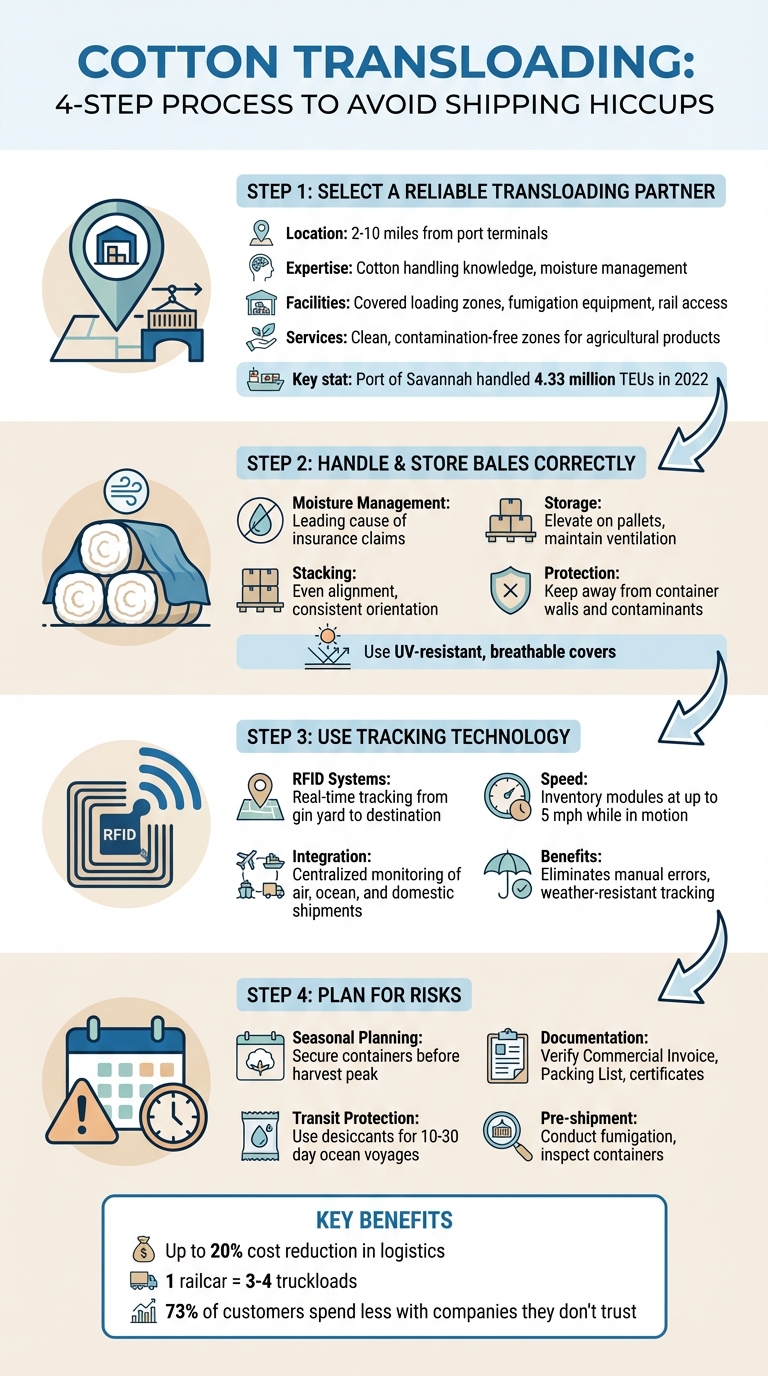
Choosing the right transloading partner begins with location. Ideally, the facility should be within 2–10 miles of port terminals. This proximity helps keep drayage fees low and avoids congestion-related delays. Known as "near-dock" positioning, this setup strikes a balance between cost and efficiency - close enough for quick container movement but far enough to avoid the higher rates of on-dock facilities. For example, the Port of Savannah, which handled 4.33 million TEUs in 2022, highlights the importance of being near such high-traffic hubs. Starting with location sets the groundwork for evaluating a partner's expertise in handling cotton.
"Preferably within 2–10 miles of the terminal to avoid detention, demurrage, and unnecessary drayage fees." - OLIMP Warehousing
Cotton handling expertise is a crucial factor. Cotton is highly sensitive to moisture, so a knowledgeable partner will avoid loading during rain or high humidity. They’ll inspect containers for cleanliness before loading, ensure bales are stored off the ground, and avoid placing cotton near materials like chemicals or rubber that could compromise its quality. These measures help maintain the cotton's integrity and minimize the chances of shipment delays.
The services and facilities offered by the partner also play a big role in operational efficiency. Look for facilities with covered loading zones, inspection and fumigation equipment, and the ability to handle repairs quickly. Ask about their daily container processing capacity and average unload times to gauge whether they can manage the seasonal spikes that come with cotton harvests. Rail access is another key advantage. With one railcar replacing three to four truckloads, it can significantly reduce long-haul transportation costs.
Finally, confirm that the partner maintains clean, contamination-free zones tailored for agricultural products. Cotton is prone to compression damage, so proper loading plans are essential to prevent bale distortion, which can cause issues later at textile mills. Additionally, they should assist with critical documentation like Phytosanitary Certificates, Fumigation Certificates, and Quality/Grade Certificates, which detail important factors such as staple length, micronaire, and color grade.
Step 2: Handling and Storing Cotton Bales Correctly
Cotton Bale Handling Best Practices
Handling cotton bales requires extra care to protect their quality throughout transloading. Moisture management is critical, as it’s the leading cause of cotton insurance claims. Avoid loading or unloading bales during rain or when humidity levels are high. Before loading, check containers thoroughly for cleanliness, pests, and lingering odors - cotton easily absorbs contaminants, which can degrade shipment quality.
When stacking bales, ensure they are aligned evenly and oriented consistently to prevent compression damage, which can alter their shape and affect mill processing. Keep bales away from container walls to avoid moisture transfer caused by condensation. Also, never store cotton alongside chemicals, oils, rubber, or other materials that emit strong odors. Inspect bale covers for damage and repair any tears or holes immediately to maintain moisture protection.
| Challenge | Best Practice |
|---|---|
| Moisture & Mold | Use desiccants, keep bales away from container walls, avoid loading during rain |
| Contamination | Load in clean areas, elevate bales, and ensure covers are intact |
| Deformation | Stack evenly, maintain orientation, and avoid crushing under heavy cargo |
| Infestation | Inspect containers, fumigate pre-shipment, and avoid dusty storage areas |
Proper handling is just one part of the equation. Equally important is how the bales are stored during transfers.
Storage During Transfers
Once bales are handled correctly, the next step is ensuring they are stored in a way that preserves their quality. Always place bales on pallets or raised platforms to prevent direct contact with the ground, which can lead to moisture, dirt, or oil seeping into the fibers. Ventilation is key - use industrial fans to maintain air circulation and reduce humidity, which can cause mold or discoloration.
"Proper cotton bale storage is essential for maintaining fibre quality, preventing contamination and ensuring safety during handling." – Polytex
For long-term storage, use UV-resistant, breathable covers that protect bales from sunlight while allowing airflow. Space bales adequately to encourage ventilation and implement a First In, First Out (FIFO) system, using RFID codes to track inventory and reduce storage time. In areas with unpredictable weather, climate-controlled facilities or desiccants can help maintain stable storage conditions.
Step 3: Using Technology to Track Shipments
Real-Time Tracking Systems
RFID technology is revolutionizing cotton shipment tracking. Unlike outdated methods like handwritten logs or barcodes - which can fail under rain or UV exposure - RFID tags provide automatic, weather-resistant tracking from the gin yard to the final destination. These tags work with fixed readers placed at key checkpoints, such as weighbridges, storage yards, and facility entrances, to automatically log shipment data. This eliminates manual errors and ensures a smooth, accurate tracking process.
RFID systems can even inventory cotton modules at speeds up to 5 mph while in motion. Logistics managers can use mapping software to monitor exactly where shipments are and how much cotton is ready for pickup. To make the most of RFID, place readers at critical transloading points, use durable tags designed for tough conditions, and train staff on proper tag usage and software operation. Regular maintenance - like checking tag readability and cleaning readers - is essential to keep the system running reliably throughout the season.
When paired with careful cotton handling, RFID delivers a powerful tool for reducing shipping issues. The real-time data it provides helps synchronize transportation schedules, ensuring a more efficient supply chain.
Coordinating Tracking with Transportation Schedules
Integrating real-time tracking with transportation schedules takes efficiency to the next level. Digital platforms allow you to monitor air, ocean, and domestic shipments in one centralized system, making it easier to track key milestones and manage document flow. These systems can also integrate with third-party applications to share critical data - like weight, yield, and producer information - streamlining coordination efforts.
"It is possible to optimize transloading operations simply by better connecting existing systems together to enable real-time decision-making, rather than implementing a full overhaul of new technologies." – Transload Now
Use status notifications and milestone alerts to address potential delays before they escalate. Focus on metrics like average transit time per SKU and days of inventory on hand to identify and resolve bottlenecks in the transloading process. By aligning tracking data with strategies for port appointments and drayage readiness, you can minimize congestion and keep shipments moving efficiently.
Step 4: Planning for Risks and Backup Plans
Building on the strategies for effective handling and tracking, preparing for potential risks ensures that disruptions don’t derail your entire supply chain.
Seasonal Shipping Challenges
The peak cotton harvest season often brings significant bottlenecks to supply chains. Ports can become congested as cotton competes for space with other agricultural goods, and ocean container availability becomes limited. To avoid delays that could stretch for weeks, securing container allocations well in advance of the harvest is essential. Waiting until bales are ready to ship can leave you scrambling for resources.
"The first link in the supply chain is the port.... We have kept that supply chain moving; in fact, we've ramped it up." – Dean Corgey, SIU Vice President Gulf Coast
Collaborate closely with your transloading partner to anticipate and plan for these peak periods. This includes reserving warehouse space, scheduling transfer labor, and locking in transportation slots ahead of time. Don’t forget to account for weather-related risks - loading during adverse weather conditions can lead to further delays. By building flexibility into your schedule, you can better handle unexpected weather disruptions while keeping delivery timelines intact.
Once seasonal risks are addressed, attention should turn to avoiding errors in documentation and transit procedures.
Preventing Weight and Transit Errors
Errors in documentation can lead to customs penalties, shipment returns, or prolonged delays. To avoid these pitfalls, double-check that your Commercial Invoice and Packing List accurately reflect the bale count, weight, grade, and HS codes. Ensure all required certificates - like Phytosanitary, Fumigation, Certificate of Origin, and Quality/Grade certificates - are complete and align with the physical shipment.
Before loading, inspect containers to ensure they are clean and dry, minimizing contamination risks during transit. Properly stack bales to maintain their shape, as mills may reject deformed bales. For long ocean voyages, particularly those lasting 10–30 days, use desiccants and moisture-protective covers to prevent deterioration. Promptly repair damaged bale covers and conduct pre-shipment fumigation to meet destination requirements and eliminate infestation risks.
Conclusion
To steer clear of shipping issues in cotton transloading, focus on a few key strategies: work with reliable partners, handle bales with care, leverage tracking technology, and prepare for potential risks. These steps can help create a more efficient and resilient supply chain.
Since 2021, shifts in the industry have made it more important than ever to choose skilled partners and establish strong processes. As noted by Transload Now:
"Strategic partners help to ensure efficient operations, cost effective rates, and reliable transit times in transload operations." – Transload Now
Rather than chasing overly complicated technology, prioritize practical and integrated solutions that deliver real results.
FAQs
What should I look for in a cotton transloading facility?
When selecting a cotton transloading facility, focus on key factors like dependable handling and storage, state-of-the-art tracking systems, and a proven track record for efficiency. Look for facilities that can handle cotton transfers effectively and provide solid logistics support to keep shipments on schedule and reduce the risk of damage.
How do I prevent moisture damage during transloading?
To minimize moisture damage during transloading, it's crucial to keep cotton bales dry. Avoid loading them during rain or when humidity levels are high. Use moisture-resistant bale covers to shield them from damp conditions, and always ensure the bales are completely dry before baling. Adding desiccants to containers can also help manage humidity during transit.
For extra protection, elevate the bales so they don't come into direct contact with container walls or the ground. Additionally, avoid co-loading with items that are either sensitive to moisture or could cause contamination. These steps are essential to preserving the fiber quality of the cotton.
Do I really need RFID tracking for cotton shipments?
RFID tracking offers a powerful way to boost the management of cotton shipments. By improving efficiency and minimizing losses, it plays a key role in modern transloading operations. This technology helps simplify processes and provides greater visibility over your cotton products as they move through transit.