Protecting your cotton crop in 2026 requires a mix of strategies to combat pests, diseases, and nematodes while improving yields. This guide covers the latest methods and tools tailored for U.S. cotton growers, focusing on Integrated Pest Management (IPM), resistant seed varieties, and advanced technologies. Here’s a quick summary:
- Integrated Pest Management (IPM): Use threshold-based pest control, rotate insecticides, and preserve beneficial insects like lady beetles and parasitic wasps.
- Field Practices: Crop rotation, residue management, and adjusting planting dates reduce pest and disease risks.
- Resistant Varieties: New cotton seeds like ST 4130AXTP and ST 5260AXTP address nematodes and bacterial blight.
- Nematode Management: Soil sampling, resistant varieties, and targeted treatments like Telone II are key.
- Precision Tools: GPS scouting apps, moisture sensors, and decision-support platforms optimize pest control and irrigation.
- Gin Feedback: Use data from cotton gins to refine pest and disease strategies for future seasons.
Key Principles of Cotton Crop Protection
Understanding Integrated Pest Management (IPM)
Integrated Pest Management (IPM) is all about making informed decisions to protect your cotton crop. It combines several control methods to prevent economic losses, while also keeping risks to people and the environment as low as possible. The main idea? You don't aim to eliminate every pest. Instead, you use tools like beat buckets to measure pest levels and act only when the cost of pest damage outweighs the cost of treatment.
A key part of IPM is threshold-based decision-making. This means you only treat your crop when pest numbers hit a certain level. To make these decisions, regular scouting is vital - ideally once or twice a week. Different tools help target various pests: beat buckets for plant bugs (shake 40 plants), drop cloths for row-middle sampling, and sweep nets (15-inch size, 50 sweeps) for catching mobile adults.
Another essential aspect is resistance management. Rotating insecticide groups based on the IRAC (Insecticide Resistance Action Committee) classification system helps slow down pest adaptation to specific chemicals. Follow this simple rule: avoid mixing two products from the same IRAC group, and always rotate IRAC numbers between applications. Combining these strategies with smart cultural practices strengthens your pest control plan.
Field management also plays a huge role in pest control, often before you even consider chemical treatments.
Cultural and Agronomic Practices
The best chemical controls are only as effective as the field practices supporting them. Your decisions about planting, spacing, and residue management can significantly influence pest and disease pressures. Here's a quick look at some of the most effective cultural practices and their benefits:
| Practice | Target Pest or Disease | Benefit |
|---|---|---|
| Crop rotation | Nematodes, soil-borne pathogens | Disrupts pest life cycles |
| Stalk destruction | Boll weevil, pink bollworm | Removes overwintering sites |
| Planting date adjustment | Thrips, early-season insects | Avoids peak pest activity periods |
| Wider row spacing | Foliar diseases (e.g., target spot) | Improves airflow, lowers canopy humidity |
| Residue incorporation | Bacterial blight, target spot | Speeds up decomposition of infected material |
Nutrient management is another often-overlooked factor. Balanced nitrogen and potassium levels can reduce the severity of leaf spot diseases like Alternaria, Stemphylium, and Cercospora. Controlling excessive vegetative growth (or "rank growth") using Plant Growth Regulators (PGRs) also helps by reducing the humid conditions that encourage foliar diseases.
Chemical and Biological Control Methods
Chemical and biological controls work best when they complement each other. For example, Bt cotton varieties like WideStrike 3, Bollgard 3, and TwinLink Plus offer built-in protection against pests like armyworms, bollworms, and loopers. These varieties often reduce the need for additional foliar sprays targeting caterpillar pests.
Natural enemies, such as assassin bugs, big-eyed bugs, lady beetles, lacewing larvae, and parasitic wasps, provide ongoing pest control at no extra cost. To protect these helpful insects, it's crucial to use selective insecticides - ones that effectively target pests without harming beneficial species.
"Selecting insecticides that are more toxic to the target pests than they are to natural enemies minimizes the impact insecticides have on natural enemies." - Texas A&M AgriLife Extension Entomology
Even with advanced Bt traits in place, regular scouting for pests like bollworms and fall armyworms remains essential. If larvae grow beyond ¼ inch, a supplemental treatment may still be necessary.
sbb-itb-0e617ca
Scouting for Cotton Insect Pests
Major Pests and Diseases Affecting U.S. Cotton
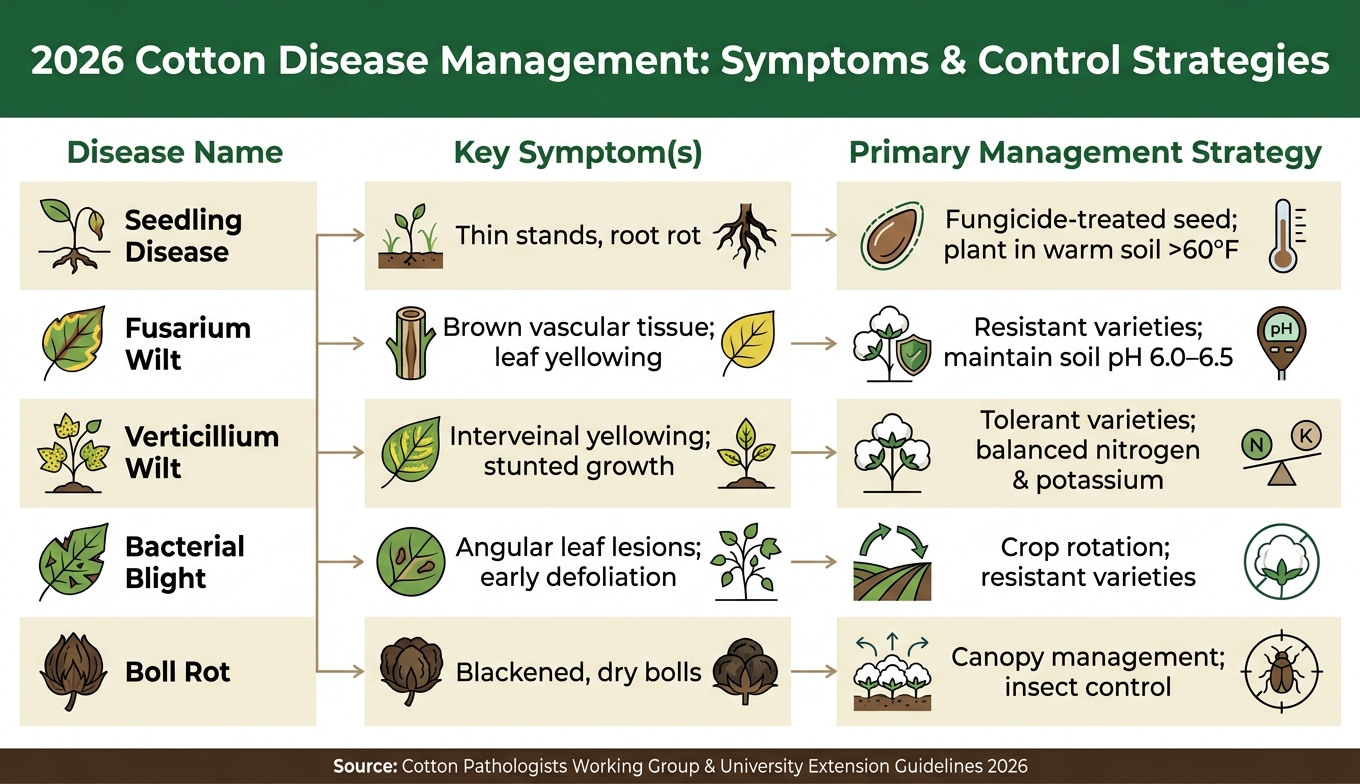
2026 Cotton Disease Management: Symptoms & Control Strategies
Common Insect and Mite Pests
Cotton growers in the U.S. contend with a range of insect and mite pests, each requiring specific strategies for effective control.
Caterpillar pests - such as cotton bollworm, tobacco budworm, beet armyworm, fall armyworm, and loopers - pose some of the biggest threats. While third-generation Bt cotton varieties like WideStrike 3, Bollgard 3, and TwinLink Plus provide strong protection, they aren’t a perfect solution. Regular field scouting is still a must to catch any issues early.
Sucking pests, including thrips, aphids, and plant bugs (Lygus and verde plant bugs), demand different approaches. Thrips are particularly harmful early in the season, which is why neonicotinoid seed treatments have become a standard practice. For aphids and plant bugs, the beat bucket method is an effective monitoring tool.
Two-spotted spider mites often become a problem during hot, dry periods. The best way to detect them early is by visually inspecting plant terminals. Interestingly, foliar insecticide use in Texas cotton has dropped by 66.6% since 2000, so growers aim to intervene only when pest pressure justifies it.
While insects are a visible challenge, diseases can be equally damaging, often reducing yields before symptoms are obvious.
Significant Cotton Diseases
Cotton diseases can quietly undermine production, with some of the most harmful ones falling into distinct categories.
Seedling diseases, caused by pathogens like Rhizoctonia, Fusarium, and Pythium, result in issues like thin stands, stem lesions, and root rot. To prevent these, plant in warm, well-drained soil above 60°F and use fungicide-treated seeds with a germination rate of at least 80%. Raised beds can also improve drainage and lower the risk of damping off.
Fusarium wilt and Verticillium wilt are persistent soilborne diseases. Fusarium wilt causes yellowing leaf margins and brown discoloration in the stem's vascular tissue, while Verticillium wilt leads to interveinal yellowing and stunted growth. Managing soil pH between 6.0 and 6.5 and planting resistant varieties are key strategies.
Bacterial blight creates angular leaf lesions and can cause premature defoliation. Rotating crops and planting resistant varieties are effective preventive measures. Boll rots, on the other hand, often result from dense vegetative growth trapping humidity. Proper canopy management can help reduce this issue by improving airflow.
| Disease | Key Symptom | Primary Management |
|---|---|---|
| Seedling Disease | Thin stands, root rot | Fungicide-treated seed; warm soil (>60°F) |
| Fusarium Wilt | Brown vascular tissue; leaf yellowing | Resistant varieties; soil pH 6.0–6.5 |
| Verticillium Wilt | Interveinal yellowing; stunting | Tolerant varieties; balanced N and K |
| Bacterial Blight | Angular leaf lesions; early defoliation | Crop rotation; resistant varieties |
| Boll Rot | Blackened, dry bolls | Canopy management; insect control |
Nematode Challenges
Nematodes present another layer of difficulty for cotton growers, as they weaken root systems and create openings for diseases like Fusarium wilt. The three main nematode species affecting U.S. cotton are southern root-knot, reniform, and sting nematodes.
Root-knot nematodes are easier to identify due to the galls they leave on roots. Reniform nematodes, however, are trickier, causing symptoms like stunting and patchy yellowing (often called tiger striping). Sting nematodes are typically found in sandy soils with more than 80% sand content.
Soil sampling is the first step in nematode management. Collect 20 soil cores (1-inch diameter, 12-inch depth) per 10 acres at harvest. Once the species is identified, growers can choose the best management approach. Resistant cotton varieties are effective against root-knot nematodes, and since 2021, varieties with reniform resistance have also become available. For fields with severe infestations, pre-plant fumigation with 1,3-dichloropropene (Telone II) applied 10–12 inches deep is highly effective. In lower-pressure situations, seed treatments like Avicta, COPeO, or VOTiVO offer a more affordable alternative.
A rising concern is the guava root-knot nematode (M. enterolobii), which has been found in Florida, North Carolina, South Carolina, Georgia, and Louisiana. This nematode can bypass standard root-knot resistance in cotton, making precise species identification - ideally through a university diagnostic lab - critical for growers in affected regions.
Advanced Tools and Technologies for 2026
Resistant Cotton Varieties and Trait Technologies
By 2026, cotton farming is set to benefit from major advancements in herbicide and pest management technologies. BASF has introduced three new Stoneville varieties - ST 4130AXTP, ST 4650AXTP, and ST 5260AXTP - all featuring Axant Flex technology, the first quad-stacked herbicide trait in the industry. Paired with TwinLink Plus, a three-gene insect control system, these varieties offer growers unmatched flexibility in tackling weeds and pests.
These varieties also address specific challenges posed by diseases and nematodes. For example:
- ST 4130AXTP and ST 5260AXTP are tolerant to both root-knot and reniform nematodes.
- ST 4650AXTP and ST 5260AXTP are resistant to bacterial leaf blight.
Choosing the right variety depends on your field’s history. If your soil has a mix of nematodes, ST 4130AXTP or ST 5260AXTP might be better suited than a variety targeting only root-knot.
"Our new Stoneville varieties are designed to give cotton growers doing the biggest job on Earth the confidence they need to tackle the toughest challenges in their fields." - Bryan Perry, Head of U.S. Seeds and Traits for BASF Agricultural Solutions
Exciting research is also paving the way for future disease-resistant varieties. A genome-wide association study in 2026 identified 77 QTLs associated with Verticillium wilt resistance, including 65 potentially novel alleles and the GhHIR1 gene on chromosome D12. As Li et al. emphasized, "Developing and deploying VW-resistant cotton varieties represents the most effective and sustainable strategy for mitigating the impact of VW". While this research is still being translated into field-ready solutions, it hints at even more precise resistance traits in the years ahead.
| Variety | Maturity | Best Fit | Nematode Tolerance | Bacterial Blight Resistance |
|---|---|---|---|---|
| ST 4130AXTP | Early | Eastern Cotton Belt | Root-knot & reniform | No |
| ST 4650AXTP | Early-to-mid | Eastern Cotton Belt | Root-knot only | Yes |
| ST 5260AXTP | Mid | Mid-South | Root-knot & reniform | Yes |
Important Note: Before planting Axant Flex varieties, check the registration status of Alite ISO and Engenia herbicides in your state for the 2026 season. Using unregistered products can lead to legal and agronomic complications.
Precision Agriculture and Digital Tools
Precision agriculture tools are becoming indispensable for cotton growers. From GPS-tagged scouting apps to soil moisture sensors, these technologies allow farmers to make decisions based on real-time data rather than guesswork. For example:
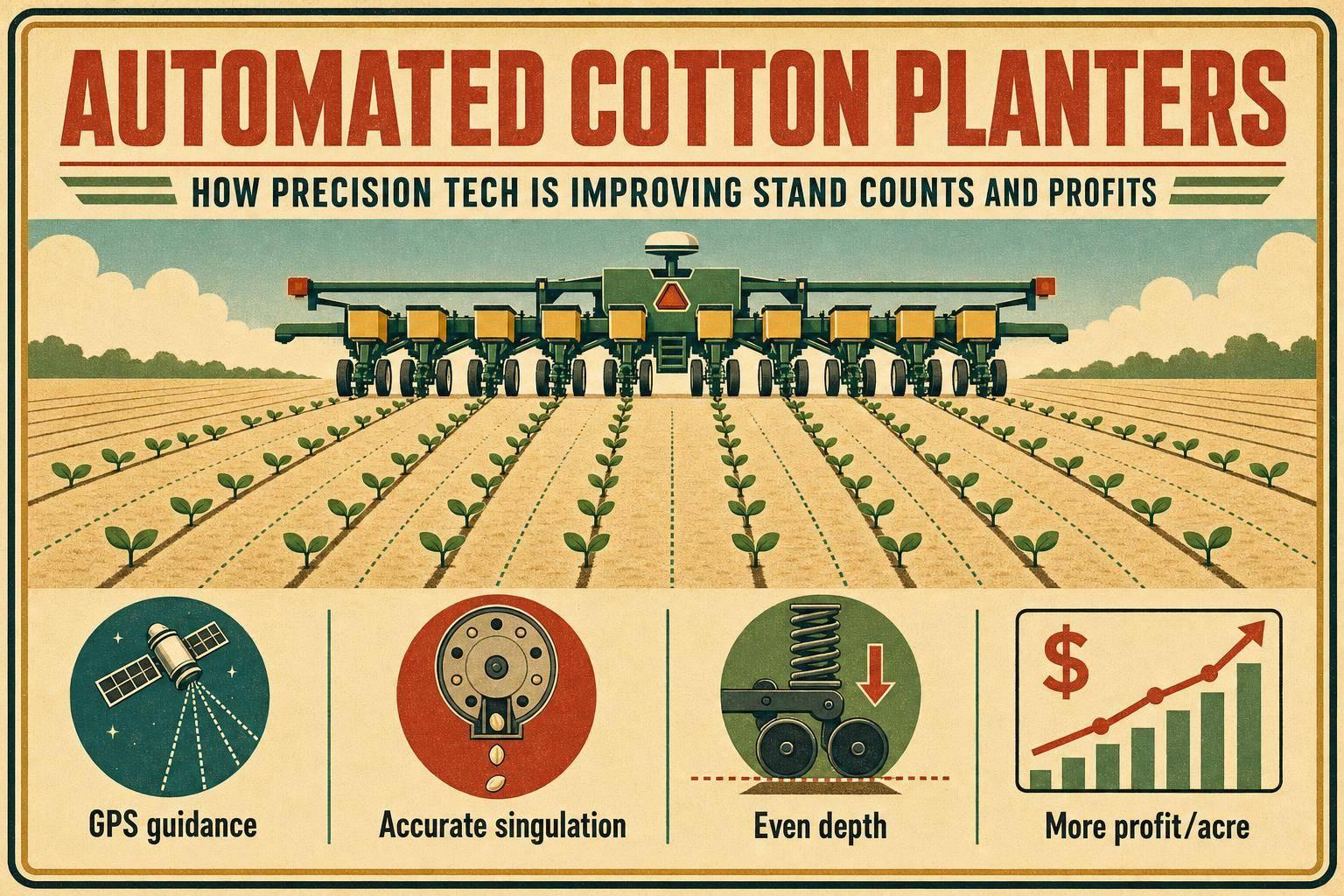
- GPS-based pest scouting apps help track infestations with pinpoint accuracy.
- Soil moisture sensors optimize irrigation schedules, conserving water.
- Variable-rate sprayers ensure precise chemical application, reducing waste and costs.
Decision-support platforms are another game-changer. By integrating weather forecasts, pest pressure thresholds, and historical field data, these platforms help growers time fungicide and insecticide applications more effectively. Instead of spraying on a fixed schedule, farmers can wait until conditions actually demand treatment, saving both money and resources.
Responsible Pesticide Use
Modern crop protection also relies on responsible pesticide use. The 2026 Cotton Insecticide Use Guide introduces a scoring system to help growers evaluate products based on their effectiveness against pests like whiteflies and Lygus bugs, as well as their risks to beneficial insects, pollinators, aquatic life, and human health.
"No product is completely without risk and that informed decisions require weighing factors such as pest control performance, resistance management, cost, and broader environmental impact." - University of Arizona Cooperative Extension
To ensure safe and effective use:
- Keep the Insect Control Guide for Agronomic Crops (Publication 2471) handy for quick reference.
- Use quick-reference IPM shorts for on-the-spot decisions in the field.
- Follow strict spray drift prevention measures and label instructions to stay compliant with regulations while protecting beneficial insect populations.
Working with Cotton Gins and Using Field Data
How Gin Feedback Improves Crop Protection
Cotton gins play a critical role in shaping strategies for the next growing season. When your modules arrive at the gin, bale samples are sent to one of 10 USDA classing offices across the Cotton Belt. There, High Volume Instrument (HVI) testing evaluates fiber length, strength, uniformity, micronaire, color, and trash content. These results act as a window into the challenges your crops faced - whether they stemmed from pests, drought, or disease. For instance, classing reports that flag foreign material like bark or grass often point to issues with weed control or poorly timed defoliation. By identifying these problems, you can take targeted action before planting next year’s crop.
Each cotton bale in the U.S. comes with a 12-digit Permanent Bale Identification (PBI) tag. This tag connects the bale to its gin and classing office, enabling you to trace quality data back to the field it originated from. This feedback loop is invaluable for refining your pest management strategies and selecting the right varieties, helping you continuously improve crop protection.
Keeping and Using Field Records
The insights from gin feedback become even more powerful when combined with detailed field records. Keeping accurate records allows you to make quick, informed decisions about pest control and variety selection. At a bare minimum, track your module identification numbers and link them to specific field locations before they leave your farm. By connecting each bale's HVI data to its field, variety, spray history, and harvest date, you create a robust dataset for analysis. For example, comparing how different varieties perform across fields can help you pinpoint which seeds deliver the best fiber quality.
To take this a step further, tools like BASF's cotton yield portal (yields.basf.us/cotton.html) let you compare variety performance across different soil types and environments. Pairing this resource with your own field data can help refine treatment plans and improve overall results.
"A successful season starts with the right seed, and with Stoneville and FiberMax cotton, we're helping farmers lay the groundwork for strong yields and premium fiber quality." - Bryan Perry, Head of U.S. Seeds and Traits for BASF Agricultural Solutions
Using cottongins.org to Find Local Gins
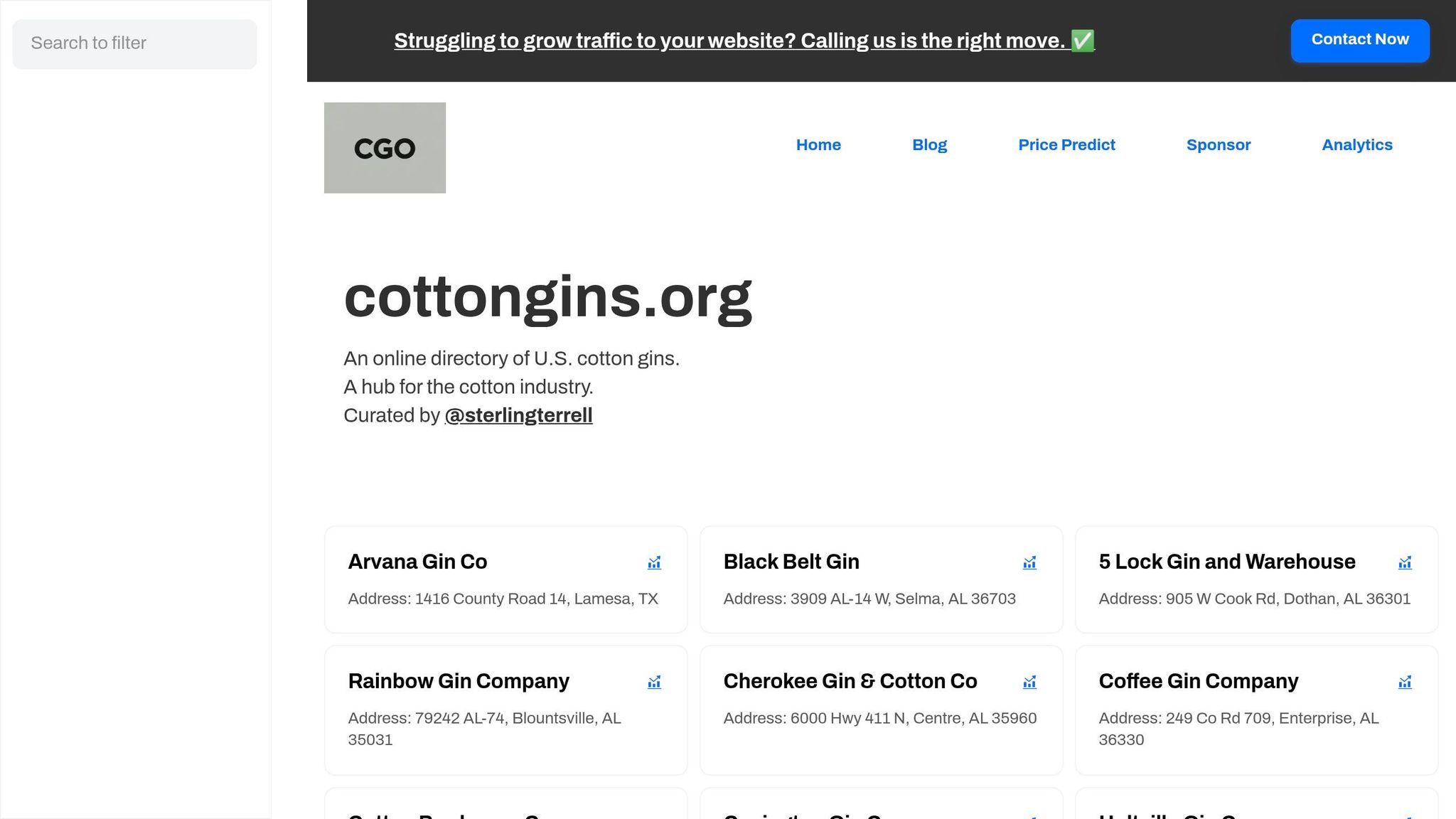
Finding a reliable gin is easier with cottongins.org, which lists cotton gins by state, covering regions like Alabama, Texas, Georgia, Mississippi, and the rest of the Cotton Belt. The site also offers access to The Cotton Wire, a daily market analysis tool that keeps growers informed about prices and industry trends.
Conclusion: Building a Stronger Cotton Crop Protection Plan
Safeguarding cotton crops in 2026 means combining multiple strategies for maximum effectiveness. Integrated Pest Management (IPM), resistant cotton varieties, precision agriculture techniques, and feedback from gins each contribute uniquely. Together, these tools create a stronger defense than any single approach could achieve.
These strategies are backed by extensive research. For instance, the Cotton Pathologists Working Group (CPWG) determines fungicide efficacy ratings through rigorous multi-year and multi-location testing. Similarly, the 2026 Insect Control Guide offers updated, field-tested data on insecticide performance. These resources are built on real-world data, providing a reliable foundation for decision-making.
"The group determined efficacy ratings for each fungicide listed in the table by testing the materials over multiple years and locations, and by reviewing Plant Disease Management Reports." - Cotton Pathologists Working Group
A well-rounded protection plan should address insects, foliar diseases, and nematodes. Reviewing resources like the "Cotton Disease Loss Estimates from the United States - 2025" can help identify regional patterns and guide your investment priorities for the 2026 season.
FAQs
How do I set action thresholds for key cotton pests in my fields?
Setting action thresholds means keeping a close eye on pest populations to catch potential economic damage before it happens. Make it a habit to inspect your fields weekly, or even twice a week, during those critical growth stages. Compare what you find - pest density - to established economic thresholds. Keep detailed records of pest levels and crop conditions. This approach ensures insecticides are applied only when absolutely necessary, helping to reduce overuse and safeguard beneficial insects in the process.
Which 2026 cotton varieties fit my nematode and bacterial blight risks?
Looking ahead to 2026, BASF offers Stoneville® ST 4130AXTP, a variety known for its root-knot nematode tolerance. For added protection, consider ST 4650AXTP or ST 5260AXTP, which combine root-knot nematode tolerance with bacterial leaf blight resistance. These options are designed to deliver targeted defense for your crops.
How can I use gin classing data to improve next season’s crop protection?
Gin classing data provides key insights into both fiber quality and pest resistance, giving growers a clearer picture of their crop's performance. By examining this data, farmers can evaluate how well their pest control strategies are working and make smarter decisions about when to apply insecticides, which resistant crop varieties to plant, and how to implement integrated pest management practices effectively.
Additionally, monitoring fiber quality across multiple seasons can help spot early signs of pest resistance. This allows growers to adapt quickly with strategies like crop rotation or switching up modes of action to ensure their pest control methods remain effective.