Moving cotton efficiently while lowering costs and emissions is now more achievable than ever. Here's how:
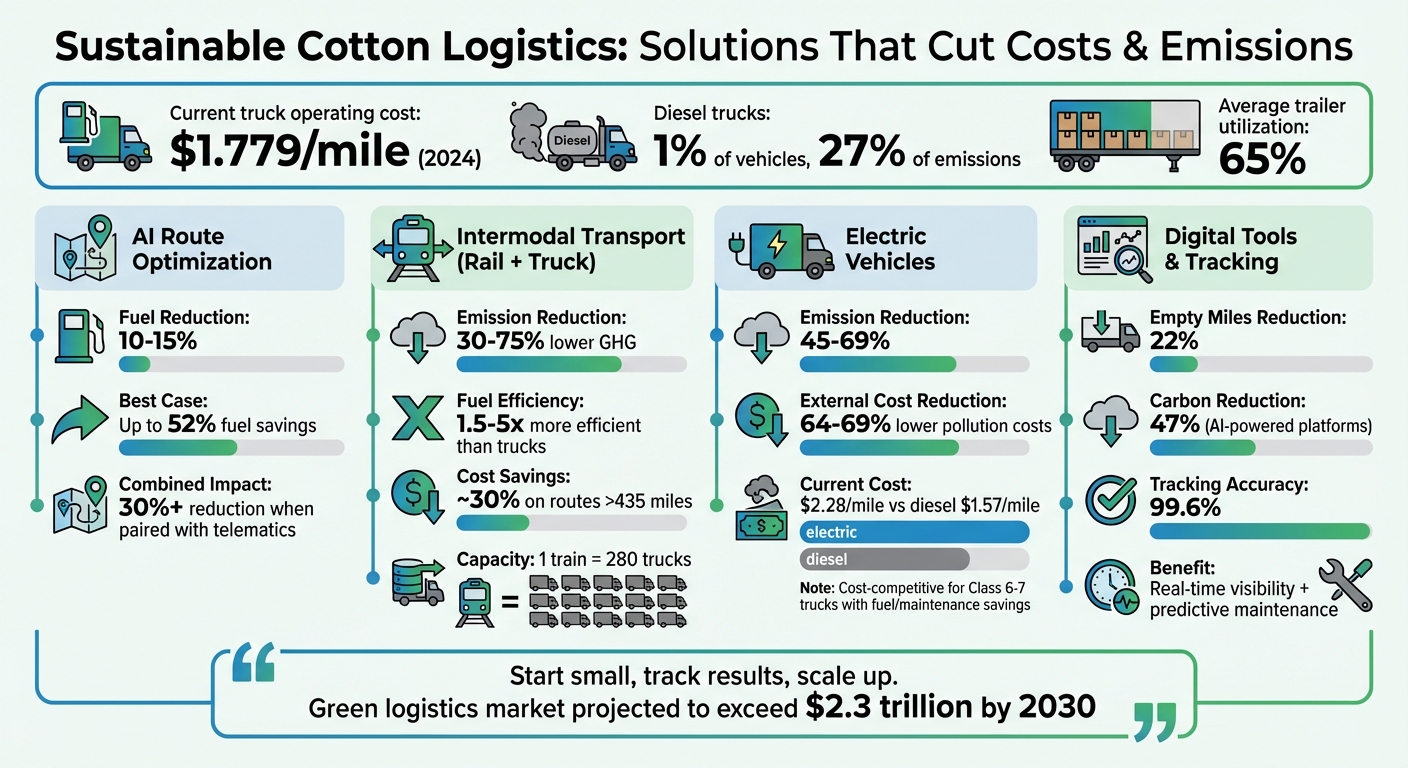
- High Costs and Emissions: Trucks dominate cotton logistics but are costly ($1.779/mile in 2024) and emit significant CO₂ (27% of vehicle emissions in the U.S.).
- Key Challenges: Inefficient routes, empty miles, and low trailer utilization (65%) increase fuel use and costs.
- Practical Solutions:
- AI Route Optimization: Cuts fuel use by 10–15%.
- Intermodal Transport: Rail + truck reduces emissions by 30–75%.
- Electric & Biofuel Vehicles: Lower emissions by up to 69%.
- Digital Tools: Real-time tracking, predictive maintenance, and shipment consolidation improve efficiency.
Start small, track results, and scale up. These strategies not only reduce costs but also prepare your business for greener operations. Keep reading for actionable steps to improve cotton logistics.
Cotton Logistics Solutions: Cost and Emission Reduction Comparison
Main Problems in Cotton Logistics: Costs and Emissions
High Transportation Costs
The cost of moving cotton has reached a breaking point. Transportation expenses, including fuel, insurance, maintenance, and premiums, have climbed to a staggering $1.779 per mile in 2024. These rising costs, coupled with inefficiencies in logistics, are putting significant pressure on profit margins.
One major issue is "empty miles", where trucks travel without cargo, wasting both fuel and driver hours without generating any revenue. On top of that, poor route planning leads to unnecessary idling at ports and yards, further burning fuel and time. With trucks operating at just 65% capacity, the cost of shipping each unit increases. Electric heavy-duty trucks, while promising lower emissions, face challenges too. Their heavy batteries reduce payload capacity, often resulting in the need for additional trips to transport the same amount of cotton.
Regulations are also intensifying the financial strain. Policies like the EU's Emissions Trading System and Carbon Border Adjustment Mechanism penalize carbon-heavy operations, while North American logistics must comply with stricter EPA SmartWay standards.
These financial hurdles are closely tied to the environmental impact of diesel trucks, which is explored in the next section.
Carbon Emissions from Diesel Trucks
The inefficiencies in cost management are deeply intertwined with the environmental challenges posed by diesel truck emissions.
Although diesel trucks make up just 1% of on-road vehicles, they are responsible for a staggering 27% of greenhouse gas emissions from this sector in the United States. Long-haul routes, often exceeding 250 miles, such as those connecting rural gins to coastal ports or textile mills, account for 68% of all heavy-duty vehicle emissions.
Diesel combustion also generates 50% of fine particulate matter (PM2.5) emissions from on-road vehicles, causing significant air quality problems along freight routes. For cotton businesses, these emissions are increasingly being tracked as Scope 3 liabilities, as retailers and manufacturers demand detailed CO₂ reporting before awarding contracts.
The financial toll is clear too. Diesel trucks cost $1.57 per mile to operate, but their societal costs - stemming from air pollution and related health impacts - add an extra burden. While battery-electric trucks currently have higher operational costs at $2.28 per mile, they bring 64–69% lower external costs by significantly reducing pollution.
Solving these intertwined challenges of cost and emissions is essential for creating a more efficient and responsible cotton logistics system.
sbb-itb-0e617ca
Driving Decarbonization | Innovations in Sustainable Logistics (Webinar)
Practical Solutions for Reducing Emissions and Costs
Operators have access to practical strategies that can cut emissions and reduce costs simultaneously. With the right technology, these solutions effectively address both financial and environmental goals.
Route Optimization with GPS and AI Tools
Modern routing software helps minimize fuel consumption by finding the most efficient paths. AI-powered platforms can identify routes that reduce fuel usage, even if they’re longer - some have achieved up to 52% fuel savings on routes that are 34% longer. Tools like GPS tracking and real-time visibility systems leverage machine learning to analyze shipment data, revealing inefficiencies such as outdated vehicles or low cargo utilization. When fleets combine driver monitoring, telematics, and optimized routing, they’ve reported fuel consumption reductions of 30% or more.
"Aiming to reduce carbon footprint in supply chain, businesses should understand that the key is to target high-impact areas with practical, technology-driven solutions." – Stanislav Dobrolezha, Business Systems Analyst, Trinetix
To get started, map out fuel usage by lane, shipment, and vehicle type to uncover inefficiencies. AI-powered freight matching can also consolidate Less-than-Truckload (LTL) shipments, reducing the number of trips needed. Test these strategies on a single high-traffic route before rolling them out across your entire operation.
Pairing route optimization with smarter transport modes can lead to even greater efficiency.
Using Rail and Truck Transport Together
Intermodal transport - combining rail and truck - leverages the strengths of both modes. Rail handles long-distance hauls, while trucks manage first- and last-mile delivery. Rail is not only 1.5 to 5 times more fuel-efficient than heavy trucks but also produces up to 75% fewer greenhouse gas emissions. A single train can carry the equivalent load of about 280 trucks.
For routes exceeding 435 miles, intermodal shipping can lower costs by around 30%. Rail fuel surcharges are typically about 10%, compared to 20% for trucks, because rail is up to 4 times more fuel-efficient.
| Feature | Full Truckload (FTL) | Intermodal (Rail + Truck) |
|---|---|---|
| Best Use Case | Short-haul (<435 miles), urgent deliveries | Long-haul (>500 miles), consistent volume |
| Carbon Footprint | High (most carbon-intensive surface mode) | Low (75% reduction in GHG) |
| Cost Structure | Linear (price doubles as distance doubles) | Lower line-haul costs offset drayage |
| Predictability | Traffic and weather delays | Fixed, scheduled departures |
For industries like cotton ginning, where products are shipped to distant ports or textile mills, intermodal transport offers both cost predictability and environmental benefits. To avoid peak-season trucking surcharges, plan rail capacity months in advance and secure contracted rates.
Electric and Biofuel Vehicles
Class 6 and 7 electric trucks are now cost-competitive with diesel when factoring in fuel and maintenance savings. Electrifying fleets can cut emissions by up to 45%, and when paired with strategies like intelligent charging and speed planning, heavy-duty electric trucks can achieve a 61% total reduction in carbon emissions compared to diesel.
A critical factor is carbon-aware charging - charging vehicles when the grid’s carbon intensity is at its lowest. This approach alone accounts for about 12% of total carbon reductions in optimized electric truck operations. Without proper charging schedules, electric trucks could end up with a higher carbon footprint than their diesel counterparts.
For routes that aren’t yet practical for electrification, biofuels offer an immediate solution. These sustainable fuels can lower emissions without requiring major infrastructure changes. By selecting the right vehicle technology for each route, businesses can meet their emission goals while managing costs effectively. Focus initial electrification on regional distribution routes, where the economics already work, and expand as technology and charging networks improve.
Digital Tools for Better Logistics Management
Digital platforms are reshaping cotton logistics by transforming raw data into actionable insights. Tools like IoT sensors, cloud-based tracking systems, and AI-driven analytics take the guesswork out of logistics, addressing common issues like wasted fuel, empty trucks, and unnecessary emissions. For cotton transport, which involves moving loads from rural gins to ports and textile mills, this level of visibility is essential for managing costs and improving environmental outcomes. This data-driven clarity enables smarter logistics decisions.
But this shift isn't just about tracking shipments - it's about achieving carbon intelligence. Modern shippers and regulators now demand emissions data on a shipment-by-shipment basis, rather than broad monthly summaries. This detailed approach helps pinpoint inefficiencies. When Transportation Management Systems (TMS) integrate with telematics and warehouse platforms, they enable better coordination between gins, warehouses, and carriers. This reduces idle time and eliminates unnecessary miles, lowering costs and cutting emissions.
"Carbon measurement isn't something you do once and forget about... It makes carbon reduction part of everyday operations, tied directly to cost and performance - not just another reporting task." – Stanislav Dobrolezha, Business Systems Analyst, Trinetix
Real-Time Tracking and Load Consolidation
IoT-enabled tracking systems provide real-time updates on shipment location, status, and carbon footprint. For example, platforms like Exonac use AI to dynamically optimize routes, selecting low-emission transport modes and avoiding delays that waste fuel. Exonac reports an average 47% reduction in carbon emissions compared to industry norms, with a tracking accuracy of 99.6% for global freight. One fleet manager noted a 22% drop in empty miles after adopting Exonac's AI-powered routing.
AI tools also analyze shipment data to identify opportunities for consolidating Less-than-Truckload (LTL) shipments heading to similar destinations. This reduces the number of trucks on the road, particularly between cotton gins and processing facilities, saving both fuel and emissions. Platforms like shipzero centralize emissions data from TMS, ERP, and telematics systems, helping operators find the best ways to cut Scope 3 emissions. The platform also ensures compliance with international standards like ISO 14083 and the GLEC framework.
"shipzero provides us with greater transparency on our emissions data, enabling us to identify promising reduction measures and quantify their effectiveness." – Moritz Tölke, Director Strategical Customer & Green Projects, Sovereign Speed
Cotton-specific tools like TraceBale by CottonConnect offer even more targeted solutions. By tracking raw materials from farm groups to finished products, TraceBale enhances supply chain efficiency. To date, the platform has mapped a volume equivalent to 1.77 billion T-shirts and registered over 580,000 farmers. This end-to-end visibility helps prevent loss and ensures traceability, a growing requirement under EU sustainability regulations.
Predictive Maintenance for Fleet Efficiency
Digital tools aren't just about tracking shipments - they also keep fleets running efficiently. Predictive maintenance systems use telematics data to continuously monitor vehicle health, catching potential issues before they cause breakdowns. In 2024, the cost of operating a heavy-duty truck hit $2.26 per mile, with non-fuel expenses like maintenance reaching $1.779 per mile - the highest on record. Unplanned breakdowns not only inflate costs but also disrupt schedules and lead to higher emissions from inefficient alternatives.
By connecting TMS with telematics, operators can monitor fuel consumption, idling time, speed, and route data to identify patterns that signal maintenance needs. This approach extends vehicle lifespans and improves overall efficiency. Fleets that combine driver-behavior monitoring with optimized route planning have reported fuel savings of 30% or more.
The secret lies in making maintenance insights part of daily operations. Continuous monitoring adapts to changing conditions like fuel prices, routes, and shipment volumes, ensuring efficiency improvements remain relevant. A good starting point is to pilot these systems on a high-mileage route. Track the results - such as reduced idle time and fuel savings - before expanding the program fleet-wide.
Together, these digital tools are driving more integrated and sustainable logistics for cotton operations.
Connecting Cotton Gins for Better Logistics
By combining digital tracking with predictive tools, cotton gins can unlock new levels of efficiency and sustainability through coordinated operations.
When gins operate independently, opportunities to cut costs and reduce emissions often go unnoticed. Picture this: one gin sends out a half-empty truck while a nearby gin dispatches another truck to the same destination. This kind of inefficiency can be avoided with better coordination - and centralized directories are key to making it happen.
With access to shared data on nearby facilities and shipment routes, gins can consolidate deliveries heading to the same processing plants or ports. It’s similar to the freight consolidation strategies already trimming carbon footprints across the cotton supply chain. Instead of each gin managing logistics in isolation, a coordinated network allows facilities to share transportation resources. The result? Fewer trucks on the road, lower per-bale shipping costs, and reduced emissions.
Centralized data also shines a light on inefficiencies like empty truck lanes or overlapping routes. For instance, one global shipper discovered through detailed analysis that some routes were producing nearly three times the CO₂ emissions previously estimated. This kind of transparency enables gins to address wasteful practices before they inflate costs.
"Shared data is the foundation of shared responsibility. In all logistics networks, transparency on emissions is the first step to building effective decarbonization strategies." – Inge Tanke, Sustainable Logistics Consultant
Digital marketplaces that promote collaboration among nearby gins can further optimize shipments, cutting down on empty runs and emissions. Since 1980, the U.S. cotton industry has reduced greenhouse gas emissions by 25%. This progress has been driven, in part, by tools that improve coordination between farmers, ginners, and buyers. Extending this collaborative approach to gin-to-gin logistics - using geospatial data and mapping tools - can shrink transportation’s environmental footprint while maintaining traceability. It’s a win-win: lower costs and reduced carbon emissions.
How cottongins.org Helps with Logistics Coordination
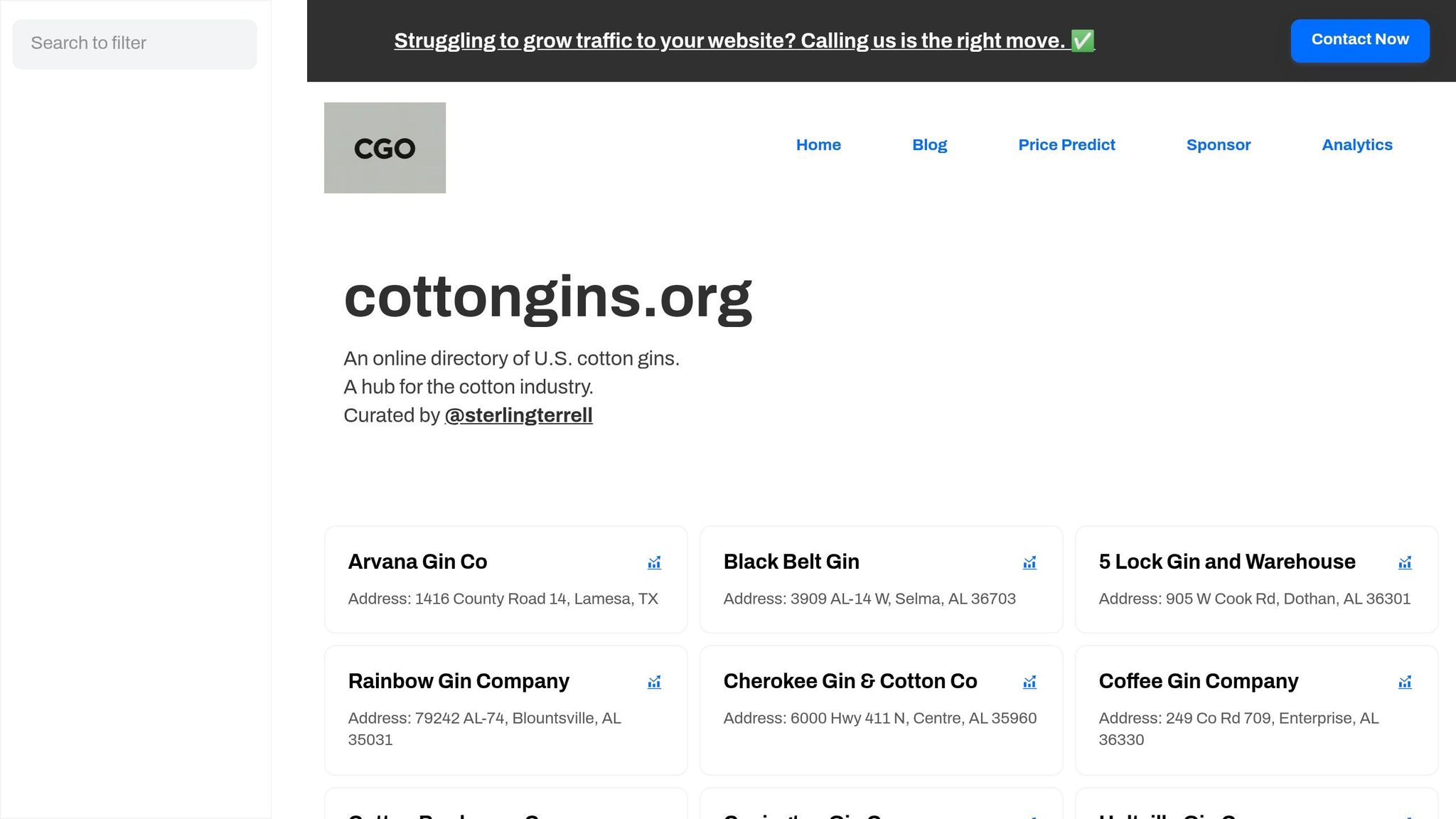
cottongins.org provides an extensive directory of U.S. cotton gins, complete with location details by county and state. This visibility helps cotton businesses identify nearby facilities to consolidate shipments and streamline deliveries.
The platform offers real-time updates through its submission feature, ensuring that the directory remains accurate and useful. Additionally, sponsorship options - like Official Sponsors ($200/month) and Featured Sponsors ($400/month) - help fund logistics technology. These tools support the industry’s push toward transparent, cost-effective logistics networks that also minimize environmental impact.
Conclusion: Lower Emissions and Costs in Cotton Logistics
When it comes to cotton logistics, balancing environmental responsibility with cost efficiency isn't just possible - it's the smart move. By adopting the strategies outlined, you can achieve both lower emissions and reduced expenses. For instance, switching to rail can slash emissions by up to 30%, while AI-powered route optimization cuts fuel use by 10–15%. These aren't small adjustments; they directly impact your operational costs, which is crucial given today's high expenses.
Start by tracking your current operations. Measure fuel consumption, eliminate unnecessary routes, and reduce idling. Consolidating shipments can improve trailer utilization from 65% to over 85%, which significantly lowers emissions per unit. A Transportation Management System (TMS) can also help by giving you visibility into Scope 3 emissions and automating low-carbon choices across your supply chain.
"Aiming to reduce carbon footprint in supply chain, businesses should understand that the key is to target high-impact areas with practical, technology-driven solutions. And what is even more important, is to implement them without disrupting day-to-day operations." – Stanislav Dobrolezha, Business Systems Analyst, Trinetix
Test small, then scale up. Start with one route, measure the results, and expand successful practices. Whether you're adopting electric vehicles for local deliveries or collaborating with nearby gins using tools like cottongins.org, incremental changes can lead to significant progress. With the green logistics market expected to exceed $2.3 trillion by 2030, these steps not only cut costs but also prepare your business for a future where sustainability and profitability go hand in hand. Every effort you make today brings your operation closer to a greener, more efficient tomorrow in cotton logistics.
FAQs
Which cotton lanes should I optimize first for the fastest savings?
Trucking is responsible for a staggering 57% of freight emissions, making it the largest contributor to freight-related environmental challenges. To tackle this issue effectively, start by optimizing trucking routes. By focusing on these lanes, you can achieve faster reductions in both costs and emissions, targeting the most significant source of impact in the freight sector.
When does intermodal shipping make sense for cotton loads?
Intermodal shipping works well for transporting cotton when the goal is to cut costs and lower emissions. By using a combination of transportation methods - such as rail, truck, and sea - you can improve efficiency while keeping expenses and environmental impact in check.
What data do I need to measure shipment-level CO₂ and Scope 3 emissions?
To calculate shipment-level CO₂ and Scope 3 emissions, you'll need detailed information about your shipments. This includes data on transportation modes, routes, fuel types, and specific shipment details such as weight, distance, and the mode of transport. With this data, you can accurately estimate emissions and pinpoint areas where reductions are possible.