Modern seed treatments are transforming cotton farming by addressing key challenges like low germination rates, pest attacks, and stress from harsh conditions. Here's what you need to know:
- Germination Boost: Advanced methods like Cold Atmospheric Plasma (CAP) and seed priming significantly improve germination rates - up to 90% in some cases.
- Pest and Disease Defense: Solutions like CottolyST PREMIER and Avicta Complete Cotton combine fungicides, insecticides, and nematicides to shield seeds from soil-borne pathogens and pests.
- Stress Tolerance: Techniques such as polymer coatings and bio-priming enhance resilience to drought, cold, and salinity.
- Chemical-Free Options: CAP and hydropriming offer sustainable alternatives to traditional treatments, reducing reliance on harmful chemicals.
These technologies help farmers protect their seeds, improve crop establishment, and maximize yields, especially in challenging environments. Whether you're dealing with cracked seed coats, poor soil conditions, or pest pressure, there's a seed treatment solution tailored to your needs.
Verdesian Field Day – Take Off Seed Treatment and Sulfone Technology on Cotton

Modern Seed Treatment Technologies for Cotton
With the challenges of cotton farming in mind, modern seed treatment technologies have been developed to directly address the vulnerabilities of cotton seeds. These advancements go well beyond traditional fungicide applications, offering growers innovative solutions to improve germination rates and provide early-season protection.
Cold Atmospheric Plasma Treatment
Cold Atmospheric Plasma (CAP) is a cutting-edge, chemical-free seed treatment that works at near-room temperatures. This method produces Reactive Oxygen and Nitrogen Species (RONS), such as ozone and hydroxyl radicals, which modify the seed surface without causing thermal damage to the embryo.
CAP operates through two main mechanisms. First, it etches the seed surface, removing the waxy outer layer and introducing polar groups that enhance water absorption. Second, it uses RONS to signal hormonal changes in the seed, breaking dormancy and promoting germination. This approach is particularly effective in addressing issues like cracked seed coats, a common problem in cotton processing.
Research by de Groot demonstrated that a 27-minute CAP treatment could boost warm germination rates from 65% to 90% and improve cold germination rates from 79% to 82% after 10 days. Additionally, CAP increases the activity of antioxidant enzymes like superoxide dismutase and catalase, which help seedlings tolerate stress from drought and salinity.
Beyond its effectiveness, CAP serves as a sustainable alternative to traditional acid delinting, eliminating the need for hazardous chemicals like sulfuric acid while enhancing seed performance. Two common systems used in agriculture for CAP are Dielectric Barrier Discharge (DBD), which processes large seed batches, and Atmospheric Pressure Plasma Jets (APPJ), designed for precision treatments.
Similar to CAP, other treatments like CottolyST PREMIER and Avicta Complete offer targeted solutions to protect cotton seeds and address specific challenges.
CottolyST PREMIER Seed Treatment
CottolyST PREMIER provides comprehensive protection against fungal diseases, nematodes, and insect pests like aphids and thrips - all in a single application.
This treatment is specifically designed to work seamlessly with NexGen cotton varieties. Its primary focus is ensuring uniform stand establishment, a critical factor for successful cotton farming. By offering multi-level protection, CottolyST PREMIER gives seeds the best chance to thrive, especially in fields with high pest or disease pressure. This aligns well with the cost-effective strategies discussed earlier.
Avicta Complete Cotton Seed Treatment
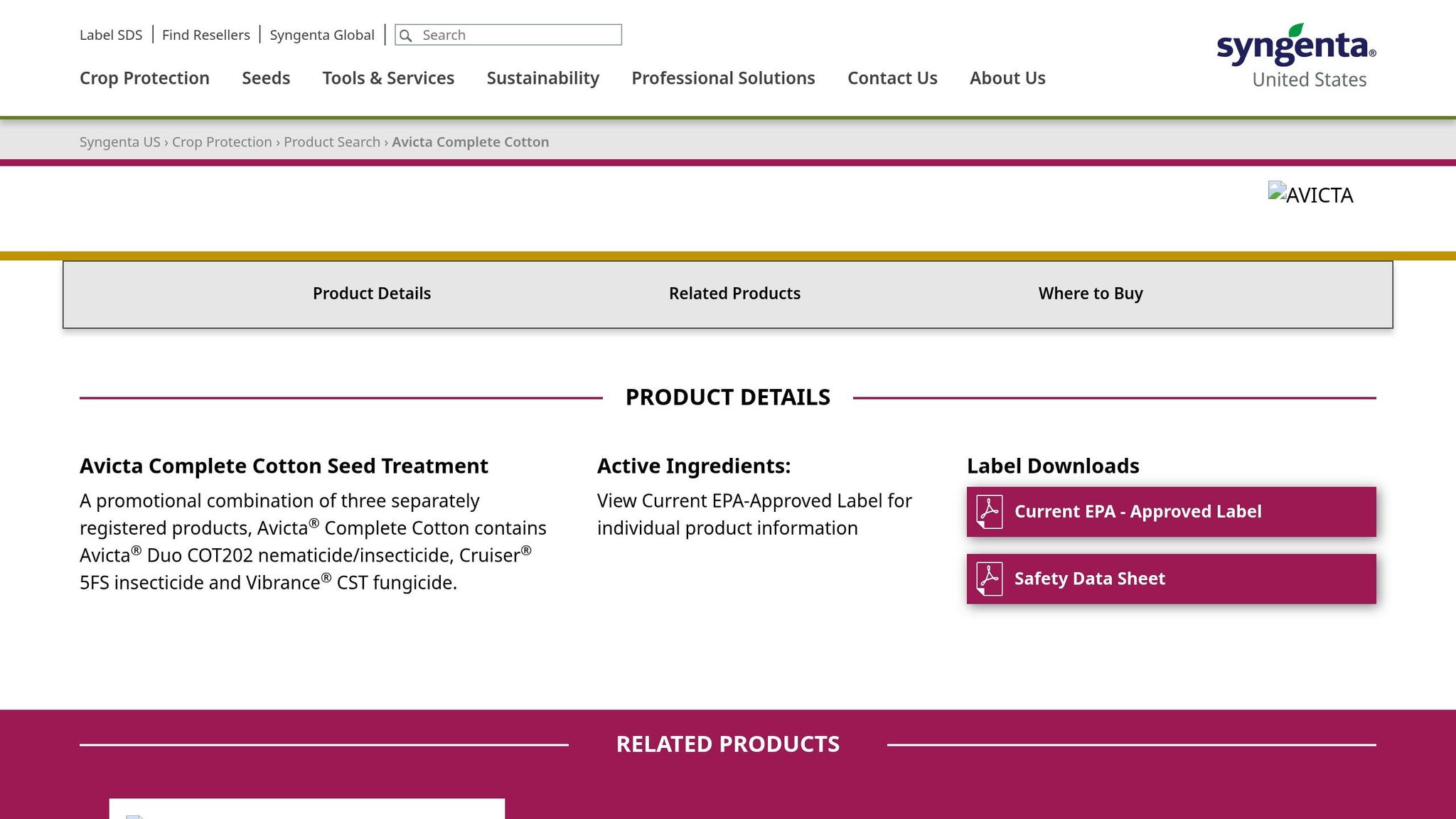
Avicta Complete Cotton takes a triple-action approach by combining fungicides, insecticides, and nematicides in a single on-seed application. This powerful combination protects seeds from soil-borne pathogens such as Rhizoctonia solani, Pythium, Fusarium, and Thielaviopsis basicola.
Advanced Seed Enhancement Methods
Advancements in seed treatment technologies are pushing the boundaries of cotton seed performance, focusing on improving germination rates and resilience to environmental stress. Below, we explore two cutting-edge approaches that are making a difference.
Controlled-Release Polymer Coatings
Polymer coatings create a thin, semi-permeable layer around cotton seeds. This layer serves as a protective shield while also delivering active ingredients like fungicides, insecticides, and nutrients. Tiny particles embedded in the coating help attract and retain water, which is crucial for germination under dry conditions.
"Functionalized polymer coating can be used for even application of chemicals on the seed, increase the efficiency of chemicals used, and reduce environmental pollution."
– Journal of Cotton Research
These coatings also improve planting efficiency by ensuring chemical treatments adhere tightly to the seed, resulting in dust-free seeds that flow smoothly through mechanical planters. Research shows that combining polymer coatings with micronutrients and foliar sprays during flowering can increase cotton yields by up to 16%. Additionally, polymer coatings can preserve biological agents for as long as four months, offering extended protection compared to untreated seeds. This method not only supports germination but also paves the way for another powerful technique: seed priming.
Seed Priming for Stress Tolerance
While polymer coatings focus on external protection and water absorption, seed priming activates the seed's internal defense mechanisms. This pre-germination process involves exposing cotton seeds to controlled conditions - such as water or specific solutions - to jump-start metabolic activities without allowing the seed to sprout. This "priming" process helps seeds develop a kind of stress memory by activating key defense genes, making them better equipped to handle challenging environments. It also fine-tunes levels of hormones like ABA and GA, which are critical for germination in cold or saline conditions.
"Seed priming is a pre-germination treatment recognized for its potential to enhance seedling emergence, growth, and stress tolerance."
– Springer Nature
In drought-prone areas, priming cotton seeds with potassium nitrate (KNO₃) has been shown to increase seed cotton yields by 36%, even under severe water stress. For regions with saline or alkaline soils, priming supports water uptake and root growth. Without priming, seeds in these conditions can suffer dramatic reductions in root length, diameter, and volume - up to 90.1%, 58.3%, and 88%, respectively. Priming helps resistant varieties thrive under these harsh conditions. For growers looking for an affordable option, hydropriming with distilled water offers a simple, chemical-free solution that can be applied directly on the farm.
sbb-itb-0e617ca
Seed Treatment Technology Comparison
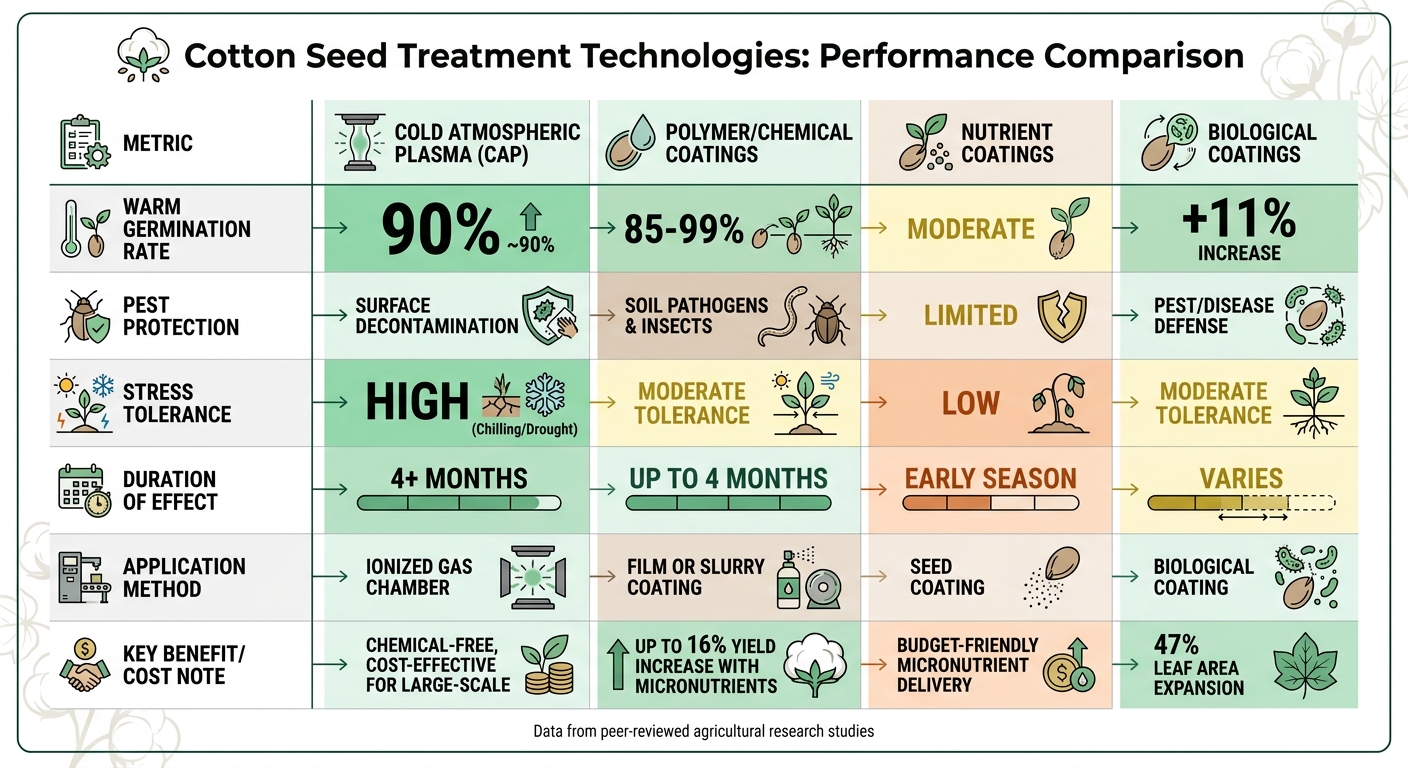
Cotton Seed Treatment Technologies Comparison: Performance and Benefits
This section highlights key performance and cost metrics for various seed treatment technologies, helping you decide which option aligns best with your farming needs, budget, and challenges.
Each technology brings its own advantages to the table:
Cold Atmospheric Plasma (CAP) is notable for boosting stress tolerance in seeds, with warm germination rates reaching an impressive 90%. This method physically alters the seed surface, improving water absorption and kickstarting metabolic processes - all without relying on chemicals. Its effects last over four months, making it a practical choice for large-scale farming operations.
Polymer and chemical coatings - like CottolyST PREMIER and Avicta Complete Cotton - excel in targeted pest protection. These coatings deliver fungicides, insecticides, and nutrients directly, offering systemic defense against soil-borne pathogens and insects. When enhanced with micronutrients, polymer coatings can increase cotton yields by as much as 16%. Meanwhile, biological seed coatings, which use beneficial rhizobacteria, have shown to improve germination rates by 11% and expand leaf area by 47% compared to chemical coatings alone. The table below breaks down these distinctions further.
| Technology | Warm Germination | Pest Protection | Stress Tolerance | Duration of Effect | Application Method |
|---|---|---|---|---|---|
| Cold Atmospheric Plasma | ~90% | Surface decontamination | High (chilling/drought) | 4+ months | Ionized gas chamber |
| Polymer/Chemical Coatings | 85%–99% | Soil pathogens & insects | Moderate tolerance | Up to 4 months | Film or slurry coating |
| Nutrient Coatings | Moderate | Limited | Low | Early season | Seed coating |
| Biological Coatings | ~11% increase | Pest/disease defense | Moderate tolerance | Varies | Biological coating |
CAP offers a cost-effective solution for large-scale farms, using only air or argon gas. On the other hand, nutrient seed coatings provide a budget-friendly way to supply micronutrients, often cheaper than foliar applications. For smaller-scale farmers, hydropriming is a straightforward, no-cost option that activates enzymes and repairs cellular damage before planting. Balancing costs with performance is key for growers looking to optimize yields while keeping expenses manageable.
Conclusion
Modern seed treatment technologies have become a game-changer for cotton farming, offering tailored solutions to tackle challenges like hard seed coats, soil-borne diseases, and environmental stressors such as cold snaps or drought. These treatments are designed to address specific issues, helping growers achieve better germination and stronger crop performance.
Physical methods, like hot water treatments, provide a chemical-free way to break seed dormancy and improve germination rates. On the other hand, polymer coatings deliver nutrients and fungicides directly to the seed, offering both protection and support for early-season growth.
For those looking to reduce chemical use, biological coatings are an exciting alternative. These treatments promote plant growth by colonizing roots early, providing lasting protection throughout the growing season.
Ultimately, choosing the right seed treatment depends on the unique challenges of your farm - whether it’s pest pressure, environmental conditions, or ensuring strong stand establishment. The technologies outlined in this guide offer reliable strategies to protect your seeds and set the stage for a productive and healthy cotton crop.
FAQs
Which cotton seed treatment fits my field conditions?
When deciding on the best cotton seed treatment, it’s important to focus on the specific challenges your field faces. These could include soil-borne diseases, pests, or environmental stresses like cold, wet spring conditions. Treatments that combine fungicides, insecticides, and bio-stimulants can help improve germination and ensure strong crop establishment.
To make the right choice, evaluate your soil's condition, the level of pest pressure, and your crop's nutrient requirements. It’s also a good idea to consult with local agronomists or extension services for tailored recommendations that match your field’s unique needs.
Will CAP treatment affect seed storage life or planting?
CAP treatment has the potential to influence seed storage and planting by boosting germination rates and improving seed vigor. Techniques such as pulsed electromagnetic fields and high-voltage pulsed electric fields show promise in extending the storage life of seeds and enhancing their emergence. These advancements could play a key role in maximizing cotton seed performance across different environments.
Can I combine priming with coatings without hurting emergence?
Research shows no indication that combining seed priming with coatings negatively affects seed emergence. In fact, priming techniques, such as nano-priming, have been found to boost germination rates and seedling strength. When combined with treatments like fungicides, insecticides, or bio-stimulants, these methods can further improve seed performance and provide added protection. However, it's important to strictly follow recommended guidelines to ensure these combinations are effective and do not interfere with emergence.