Organic cotton and conventional cotton differ greatly in their farming and production practices. Organic cotton prioritizes methods that protect ecosystems, avoid synthetic chemicals, and conserve resources, while conventional cotton relies heavily on synthetic pesticides, fertilizers, and intensive water use. Here's a quick overview of the key differences:
- Organic Cotton: Uses less water, avoids synthetic chemicals, improves soil health, and emits fewer greenhouse gases. However, it has lower yields and higher costs for consumers.
- Conventional Cotton: Offers higher yields and lower costs but consumes more water, emits more greenhouse gases, and relies heavily on harmful chemicals.
Quick Comparison
| Factor | Organic Cotton | Conventional Cotton |
|---|---|---|
| Water Usage | 91% less blue water; mostly rain-fed | 2,700 liters per t-shirt |
| Chemical Use | No synthetic pesticides/fertilizers | 16-25% of global pesticide use |
| Greenhouse Emissions | 46% fewer emissions | Higher emissions |
| Yield | 14-28% lower | Higher yields |
| Consumer Price | 2-3× higher | More affordable |
| Soil Health | Improves soil | Depletes soil |
| Worker Safety | Safer for workers | Exposure to carcinogens |
Organic cotton offers a cleaner, eco-conscious option but comes with challenges like lower yields and higher costs. Conventional cotton is more accessible but has significant environmental and health drawbacks. This comparison helps you make informed choices about the cotton products you buy.
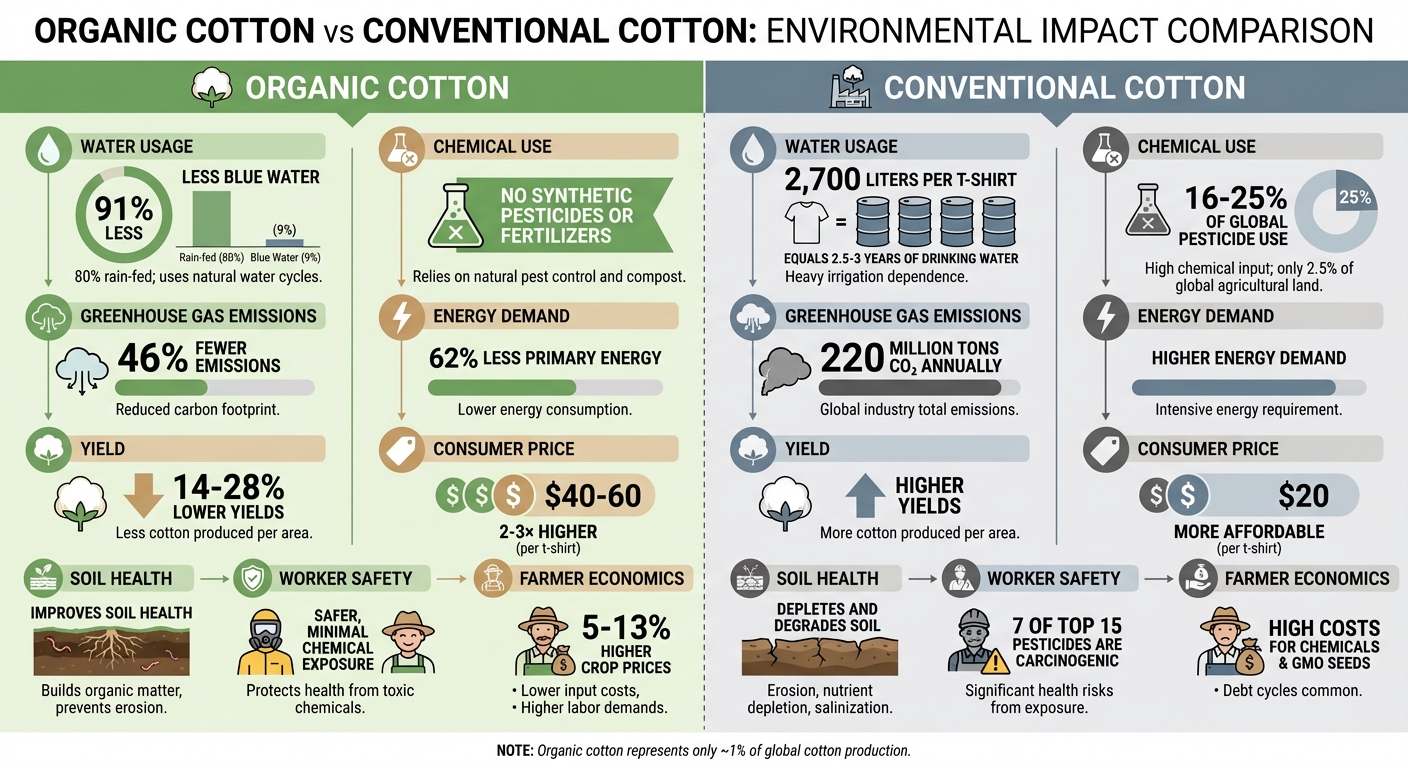
Organic vs Conventional Cotton Environmental Impact Comparison
1. Organic Cotton
Water Usage
Organic cotton farming takes a thoughtful approach to water use by prioritizing soil health. Healthy, organic-rich soil acts like a sponge, holding onto moisture and reducing the need for excessive irrigation. This means less water is required overall. Plus, because organic systems avoid synthetic chemicals, the water runoff is much cleaner. Without toxic pesticides or fertilizers leaching into groundwater or nearby streams, the surrounding communities and ecosystems benefit from healthier water systems. This careful water management ties into organic cotton's broader aim to minimize environmental harm.
Pesticide Application and Soil Health
In addition to water conservation, organic cotton farming rethinks how pests and soil are managed. Synthetic pesticides and fertilizers are completely off the table. Instead, natural pest control methods and soil-enriching techniques take center stage.
"Organic cotton is grown, processed, dyed, and finished with methods that have a focus on building ecosystem health and reducing the use of toxic pesticides, synthetic fertilizers and hazardous processing chemicals." - The Organic Center
Collaborative research by The Organic Center and Iowa State University highlights how these toxin-free practices not only protect biodiversity but also improve soil health. They even play a role in tackling climate change by supporting more sustainable agricultural ecosystems.
Carbon Footprint and Energy Demand
Organic cotton farming also has a smaller carbon footprint compared to conventional methods. A big reason for this is the elimination of synthetic fertilizers, which are notoriously energy-intensive to produce. By cutting these out, organic farming reduces greenhouse gas emissions and helps combat climate change.
The benefits don’t stop at the farm. Organic cotton avoids hazardous processing chemicals, which further reduces its environmental impact from start to finish. A 2023 USDA-supported study (award no. 2023-51300-40849) is currently digging deeper into how organic cotton production stacks up against conventional systems in terms of environmental impact.
All of this makes organic cotton a solid choice for those looking to support environmentally conscious practices in the textile industry. It’s a step toward a more resilient and sustainable future.
sbb-itb-0e617ca
2. Conventional Cotton
Water Usage
Conventional cotton has an enormous thirst for water. To produce just one conventional cotton t-shirt, about 2,700 liters (around 715 gallons) of freshwater is required. To put that in perspective, that's roughly the amount one person drinks over 2.5 to 3 years. On an even larger scale, producing 1 kilogram of cotton demands approximately 10,000 liters (about 2,642 gallons) of water.
This becomes even more problematic because conventional cotton is often cultivated in areas already struggling with water scarcity, such as Gujarat in India, Uzbekistan, and California. These regions rely heavily on irrigation, which can have devastating consequences. For example, the diversion of water for cotton farming has caused the Aral Sea to shrink by a staggering 90% since the 1960s. Adding to the strain, water is also used to apply synthetic pesticides, which not only harms the environment but also reduces the soil's ability to retain moisture. With depleted soil organic matter, farmers are forced to use even more water for irrigation, creating a destructive cycle.
Pesticide Application and Soil Health
Conventional cotton has earned the dubious title of "the dirtiest crop on Earth" due to its heavy reliance on chemicals. Although it takes up only about 2.5% of global agricultural land, it accounts for a shocking 16% to 25% of global insecticide use and 7% to 10% of pesticide use.
"Conventional cotton... accounts for 16 to 25% of all insecticides used globally and about 10% of pesticides." - Savinien Domken, Co-founder of Lucid Collective
This dependency on synthetic fertilizers and pesticides doesn't just harm the environment - it also depletes soil health over time. Chemicals leach into groundwater, endanger farm workers, and disrupt surrounding ecosystems. The degraded soil often requires even more chemical inputs to maintain yields, trapping farmers in a vicious cycle that continuously harms the land.
Carbon Footprint and Energy Demand
The global cotton industry is a major player in greenhouse gas emissions, contributing around 220 million tons of CO₂ each year. Emissions are generated throughout the cotton lifecycle, from farming and textile manufacturing to consumer use. During cultivation, the use of synthetic fertilizers releases nitrous oxide, a greenhouse gas far more potent than carbon dioxide. Additionally, the production and processing stages are highly energy-intensive, further increasing the carbon footprint. In regions where energy production relies on fossil fuels, such as coal, the emissions from post-production activities can skyrocket.
These emissions aren't the only concern. The energy demands of conventional cotton production also contribute to broader environmental challenges, including acidification and eutrophication.
Acidification and Eutrophication
The environmental toll of conventional cotton extends beyond carbon emissions. Runoff from synthetic fertilizers introduces excessive nutrients into nearby water bodies, often sparking algae blooms. These blooms deplete oxygen levels, devastating aquatic life - a process known as eutrophication. Meanwhile, the extensive use of chemical inputs can acidify both soil and water systems, disrupting natural pH levels and harming local ecosystems. Over time, these cumulative effects lead to widespread environmental damage that reaches far beyond the cotton fields.
Organic vs conventional cotton - what's the difference? And why should you buy organic cotton?
Pros and Cons
Choosing between organic and conventional cotton involves weighing several factors that impact farmers, consumers, and the environment. Each comes with its own set of benefits and challenges, making the decision less straightforward than it might seem.
Organic cotton stands out for its reduced environmental footprint. It uses 91% less blue water, emits 46% fewer greenhouse gases, and requires 62% less primary energy compared to conventional cotton. Farmers benefit from avoiding the high costs of synthetic pesticides and fertilizers and often earn 5% to 13% higher prices for their crops. A farmer from Madhya Pradesh, India, Babu-ji, shared how switching to organic farming transformed his community:
"Organic farming has allowed us to become self-sufficient as a family and broadly as a community. We are no longer dependent on resources provided by external entities who put their own commercial interests first."
However, organic farming isn’t without its challenges. Yields are 14% to 28% lower than conventional cotton, and the process is more labor-intensive, with tasks like hand weeding being common. For consumers, this translates into higher prices. For instance, a conventional cotton t-shirt priced at $20 could cost $40 to $60 if made from organic cotton.
Conventional cotton, on the other hand, offers higher yields thanks to synthetic inputs, making it more accessible for mass markets. But this comes at a cost. Conventional cotton requires significant water resources - approximately 2,700 liters per t-shirt - and relies heavily on chemicals, which degrade soil health over time. Farmers face high input costs for pesticides, fertilizers, and GMO seeds, often leading to cycles of debt. Worker safety is another concern, as seven out of the top 15 pesticides used in conventional cotton farming are classified as carcinogenic.
Here’s a quick comparison of the two:
| Factor | Organic Cotton | Conventional Cotton |
|---|---|---|
| Yield | 14–28% lower yields | Higher yields due to synthetic inputs |
| Water Usage | Uses 91% less blue water; mostly rain-fed (80%) | Around 2,700 L per t-shirt |
| Chemical Use | Avoids synthetic pesticides and fertilizers | Uses 16–25% of global pesticides |
| Greenhouse Gas Emissions | 46% fewer emissions | Higher emissions |
| Farmer Costs | Lower input costs but higher labor demands | High costs for chemicals and seeds |
| Consumer Price | 2–3× higher premiums | More affordable for mass markets |
| Soil Health | Improves soil health | Leads to soil degradation |
| Worker Safety | Minimizes exposure to hazardous chemicals | Exposes workers to carcinogens |
The trade-offs between organic and conventional cotton highlight critical sustainability issues. Organic cotton offers clear environmental advantages, such as better water efficiency, healthier soil, and reduced chemical risks. However, it demands more labor and comes with lower yields and higher consumer prices. Conventional cotton, while delivering higher yields and affordability, brings significant environmental and health challenges due to its heavy reliance on synthetic inputs. Understanding these differences is essential for making informed choices about cotton production.
Conclusion
The comparison between organic and conventional cotton brings the trade-offs into sharp focus. Organic cotton stands out for its ability to reduce water consumption, greenhouse gas emissions, and energy use. It also avoids toxic chemicals, which helps maintain soil health, supports biodiversity, and ensures safer working conditions. As stated by The Organic Center:
"Organic cotton is one of the most important choices people can make for the environment, because it supports a healthy ecosystem and prevents the use of toxic synthetic chemicals".
However, these benefits come with challenges. Organic cotton typically yields 20% to 30% less than conventional cotton, meaning more land is needed to produce the same amount of fiber. Additionally, higher labor needs and certification expenses contribute to its limited presence - just about 1% of global cotton production - and lead to higher costs for consumers.
Despite these hurdles, opting for organic cotton in everyday products can help reduce environmental harm. Certifications like the Global Organic Textile Standard (GOTS) ensure products meet high standards, using at least 95% organic fibers and following strict environmental and social guidelines. Meanwhile, industries shifting to non-toxic processing methods can further minimize hazardous chemical use throughout the textile supply chain.
The choice between organic and conventional cotton reflects broader concerns about how farming practices affect the planet. Research by The Organic Center and Iowa State University highlights how organic cotton farming can ease the environmental strain caused by conventional methods. This comparison emphasizes the growing importance of informed decisions in shaping a more sustainable future for cotton production.
FAQs
How can I verify cotton is truly organic?
To ensure that cotton is genuinely organic, look for certifications such as the Global Organic Textile Standard (GOTS) or the Organic Content Standard (OCS). These organizations provide official databases where you can input the license or label number to confirm the product's authenticity. For labels like OEKO-TEX®, you can use their official label check tool for verification. Additionally, the USDA’s Organic Integrity Database offers a list of certified organic cotton, although access to this resource may sometimes be limited.
Is organic cotton always better if it needs more land?
Organic cotton is often regarded as a better environmental choice because it skips synthetic pesticides, fertilizers, and genetically modified seeds. This approach helps cut down on chemical pollution and promotes biodiversity. While it may need more land due to lower yields, the advantages - like using less water, minimizing chemical runoff, and enhancing soil health - frequently make up for this challenge, especially when factoring in its role in supporting the climate and ecosystems.
What matters most: farming or textile processing impacts?
The way cotton is farmed plays a major role in shaping its environmental footprint. Organic cotton farming, for instance, avoids synthetic pesticides, chemical fertilizers, and genetically modified organisms (GMOs). This approach not only helps reduce pollution but also improves soil health and encourages biodiversity. These benefits ripple outward, positively impacting water quality, air purity, and even the climate.
While the textile processing stage also contributes to environmental challenges, the foundation for a smaller overall footprint begins with sustainable farming practices. In the world of cotton production, farming methods are the key to making a lasting difference.