The GOTS Farm-Gin Registry is a system that ensures organic cotton remains traceable and certified from farm to gin. It links certified farms to designated gins and requires producers to register cotton volumes, certifications, and processing details. Gins can only process cotton from registered farms, and strict rules like a 500 km transport limit and mandatory testing for GMOs and pesticides maintain supply chain integrity.
Key points:
- Mandatory for certified organic cotton: Farms must register production details and gins must verify sources.
- Traceability enforced: Cotton origins are tracked, ensuring transparency and preventing fraud.
- Testing and audits: Regular inspections, unannounced audits, and ISO-standard testing uphold standards.
- Compliance for U.S. producers: Farms must navigate transport limits, testing, and USDA restrictions on "in-conversion" cotton.
This system supports a reliable organic cotton supply chain, ensuring certified products meet strict requirements.
GOTS Key Feature: Traceability
How the Farm-Gin Registry Works
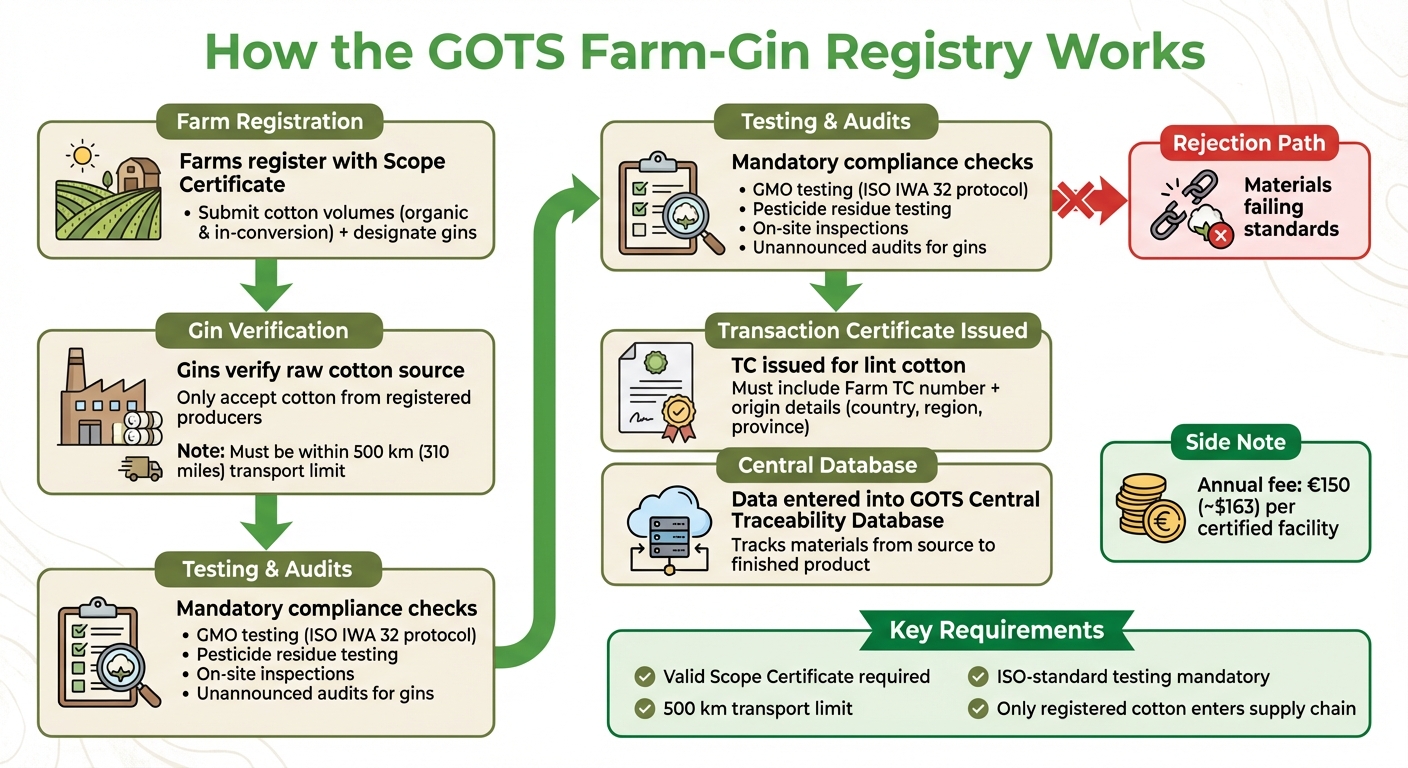
GOTS Farm-Gin Registry Process: From Farm Registration to Certification
Registration Process for Farms and Gins
Farmers must register their projects with a Scope Certificate to confirm certification. This includes providing details about cotton volumes - both organic and in-conversion - and specifying which gins will receive the cotton. This setup establishes a clear connection between certified farms and their designated gins. Gins are only permitted to accept raw cotton from registered producers, and certifiers ensure traceability before issuing Transaction Certificates for the processed lint cotton.
Required Data and Compliance Verification
Before issuing Transaction Certificates, Certification Bodies carry out detailed evaluations. Independent auditors conduct on-site inspections as part of the process to issue or renew Scope Certificates, with gins undergoing more frequent unannounced audits. The verification process includes testing for GMO contamination following ISO protocols, as well as pesticide residue testing. Any material failing to meet GOTS standards is rejected. Additionally, raw cotton must adhere to a strict transportation limit, traveling no more than 310 miles (500 km) from the farm to the certified gin. This rigorous system ensures that farm data is seamlessly integrated into the centralized traceability network, maintaining the integrity of the supply chain.
Connection to the GOTS Central Traceability Database
All verified registration and audit data are incorporated into a centralized traceability system. GOTS is currently building a database designed to track organic materials throughout their entire journey - from the raw material source to initial processing and, eventually, the finished product. This database plays a crucial role in advancing global traceability standards, with the Farm-Gin Registry acting as a key foundation for this broader infrastructure. Through this system, the origin of organic cotton is reliably documented and can be verified from its very first stage of processing.
Benefits of the Farm-Gin Registry
Better Traceability Across the Supply Chain
The Farm-Gin Registry creates a direct connection between certified farms and their designated gins, making it easier to trace cotton from its source all the way to the certificate. Farms are required to register their harvest volumes and identify the gins receiving their cotton. This ensures that only raw cotton listed in the registry enters the GOTS supply chain. As a result, every Transaction Certificate is backed by verified data, providing a clear and reliable trail of transparency.
Stronger Certification Integrity
This registry strengthens the certification process by adding an extra layer of verification. Before issuing Transaction Certificates for lint cotton, certifiers must confirm that the farm is registered. GOTS-certified gins can only receive these certificates if the raw cotton they process comes from a registered producer. This mandatory step ensures that traceability data is accurate, eliminating gaps in the certification process and ensuring only verified cotton is certified.
Fraud Prevention and Quality Assurance
By allowing only registered cotton into the supply chain, the registry helps curb fraud. The collaboration between Oregon Tilth and Textile Exchange, which includes sharing Gin Transaction Certificate and GMO test data, adds another level of protection for organic integrity. Additionally, the registry’s quality controls empower certifiers to reject cotton that doesn’t meet GOTS standards, ensuring the supply chain remains reliable and trustworthy.
sbb-itb-0e617ca
Practical Considerations for U.S. Farms and Ginners
Building on the earlier process details, here’s a closer look at key considerations for U.S. farms and gins involved in organic cotton production.
Steps for U.S. Farms and Gins
For U.S. organic cotton farms, the first step is registering on the GOTS Farm-Gin Registry. This involves submitting a valid Scope Certificate, reporting cotton volumes, and listing the gins that will process their cotton. Registration is mandatory for any organic cotton entering the GOTS supply chain.
Gins, on the other hand, need to start by verifying that any raw cotton they receive is listed in the Farm-Gin Registry. Certifiers must consult this registry before issuing Transaction Certificates (TCs) for lint cotton. Additionally, the first GOTS TC issued at the ginning stage must include the Farm TC number and origin details like the country, region, and province.
Both farms and gins should anticipate mandatory GMO testing of seed cotton using the ISO IWA 32 protocol. Depending on risk assessments, pesticide residue testing may also be required. Certifiers will perform volume reconciliation and plausibility checks before issuing TCs, and gins in high-risk scenarios may be subject to surprise audits.
These steps are crucial for ensuring compliance and addressing logistical hurdles effectively.
Using cottongins.org as a Resource
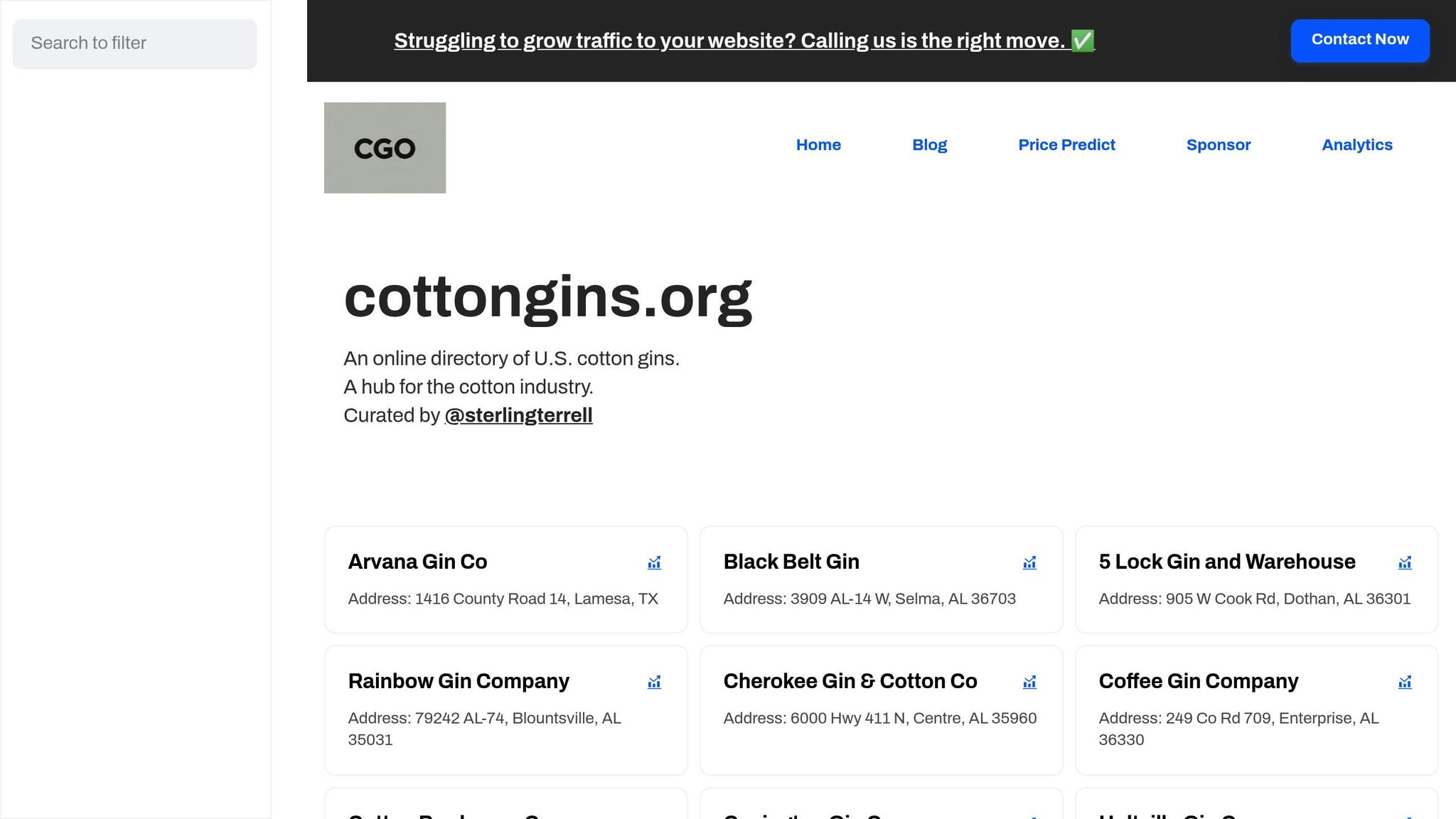
Finding a suitable gin partner within the required distance can be tricky, but the cottongins.org directory simplifies the process. This directory provides a detailed list of U.S. cotton gin locations, categorized by county and state, helping organic farms identify certified gins within the 500 km travel limit. Farms can also contribute by submitting new gin entries to keep the directory up-to-date.
Managing Logistics and Compliance Challenges
To maintain supply chain integrity, farms must carefully plan their partnerships with gins to stay within the 500 km distance limit. While GOTS may grant exemptions in rare cases, thorough planning is key.
Traceability is another critical aspect. Farms and gins must keep detailed records of raw materials to ensure traceability to the farm group. Facilities are required to conduct GMO and pesticide residue testing and maintain proper documentation. Additionally, each certified facility must pay an annual fee of €150 (around $163), which allows them to use the GOTS logo on certified products.
It’s also important for U.S. producers to note that while GOTS is recognized by the USDA National Organic Program (NOP) for textiles, products made with “organic in-conversion” fibers cannot carry that label in the U.S. due to USDA NOP regulations.
Conclusion
The GOTS Farm-Gin Registry plays a key role in ensuring transparency and accountability within the organic cotton industry. By mandating the registration of all farms supplying certified raw cotton and documenting their connections with cotton gins, the system creates a reliable framework to guard against fraud.
For U.S. farms and ginners, this registry isn’t just about meeting compliance requirements - it’s an opportunity to stand out in the market. Through its rigorous validation process, which includes random audits and testing, the registry builds consumer confidence and opens doors to international markets that value GOTS certification. This level of transparency strengthens GOTS’s reputation as a leader in ethical textile production.
The system’s interconnected verification process ensures that Transaction Certificates are only issued when raw cotton can be traced directly to a registered producer. This guarantees an unbroken chain of custody, so every bale of certified organic cotton has a documented journey from the field to the gin.
Additionally, measures like the 500 km limit and mandatory testing protocols protect the integrity of the product. When consumers see the GOTS label, they can trust that the product genuinely meets organic standards. For U.S. producers, this means access to a transparent and credible supply chain that is widely recognized as a global standard for organic textiles. The registry ultimately ensures traceability at every step, from the farm to the finished product, upholding GOTS’s high standards.
FAQs
What is the GOTS Farm-Gin Registry, and why is it important?
The GOTS Farm-Gin Registry plays a crucial role in monitoring organic cotton as it moves through the Global Organic Textile Standard (GOTS) supply chain. This system ensures that only cotton from certified farms and gins is used in GOTS-certified products, providing a clear path for tracking its journey.
By keeping a centralized record, the registry confirms that every stage - starting at the farm and continuing through to the finished textile - meets GOTS standards. This not only reinforces trust and transparency in organic textile production but also ensures all certification requirements are properly met.
What is the 500 km transport limit for organic cotton, and how does it impact producers?
The 500-kilometer (about 310 miles) transport limit means organic cotton growers can only send their cotton lint to GOTS-certified gins within that radius. This guideline helps simplify the supply chain by cutting down transportation distances, which can reduce costs, lower risks, and promote the use of nearby gins.
By keeping operations local, this rule strengthens traceability in organic cotton production, supports sustainable practices, and provides a boost to regional economies.
What do U.S. farms need to do to register with the GOTS Farm-Gin Registry?
To incorporate U.S.-grown organic cotton into the GOTS supply chain, farms need to pre-register with the GOTS Farm-Gin Registry. The process begins by accessing the registry portal and completing the "Start Farm Registration" form. This form requires essential details, including farm information, group affiliations, and anticipated yields.
Farms must also provide documentation to demonstrate compliance with GOTS organic-fiber standards. This includes an approved organic certification, GMO testing results at the field level, and any required social or environmental documentation. Once all information is submitted, a GOTS certification body reviews the application. Upon approval, the farm receives a unique farm ID.
This farm ID plays a crucial role, as it must appear on every Lint Cotton Transaction Certificate. Certifiers use the GOTS Farm-Gin Registry to verify the farm's registration status, ensuring that the cotton can be traced seamlessly from the field to the finished product.