Executive Summary (TL;DR)
- Carding, combing, and spinning transform cotton lint into top-quality yarn for countless uses.
- Fiber blending and process optimization boost efficiency, strength, and profit for growers and processors.
- Actionable strategies help seasoned farmers adapt, improve margins, and stay ahead in the global cotton market.
Related Post: For further reading, see our in-depth guide on "5 Benchmarks for Cotton Gin Profitability."
Introduction
There’s a simple truth: seasoned cotton growers know yield is one thing—but quality, consistency, and margin flow from how lint transforms into yarn. Cotton lint to yarn isn’t just a sequence of mechanical steps—it’s a strategic process shaped by plant genetics, harvest timing, gin selection, blending know-how, and mill innovation. This post cuts through the fluff, drilling into each stage with a focus on advanced choices, pain points, and actionable improvements for those already deep in the game.
What is Cotton Lint?
Cotton lint is the prized fiber separated from the cottonseed after ginning. Its properties—length, strength, fineness, uniformity—set the achievable ceiling for yarn quality. Lint forms in the bolls, with factors like plant variety, climate, and field practices shaping the final fiber attributes. Maximizing lint potential starts well before harvest, but the real journey kicks in once lint arrives at the processing plant or spinning mill.
Main Stages: Cotton Lint to Yarn
1. Ginning and Cleaning
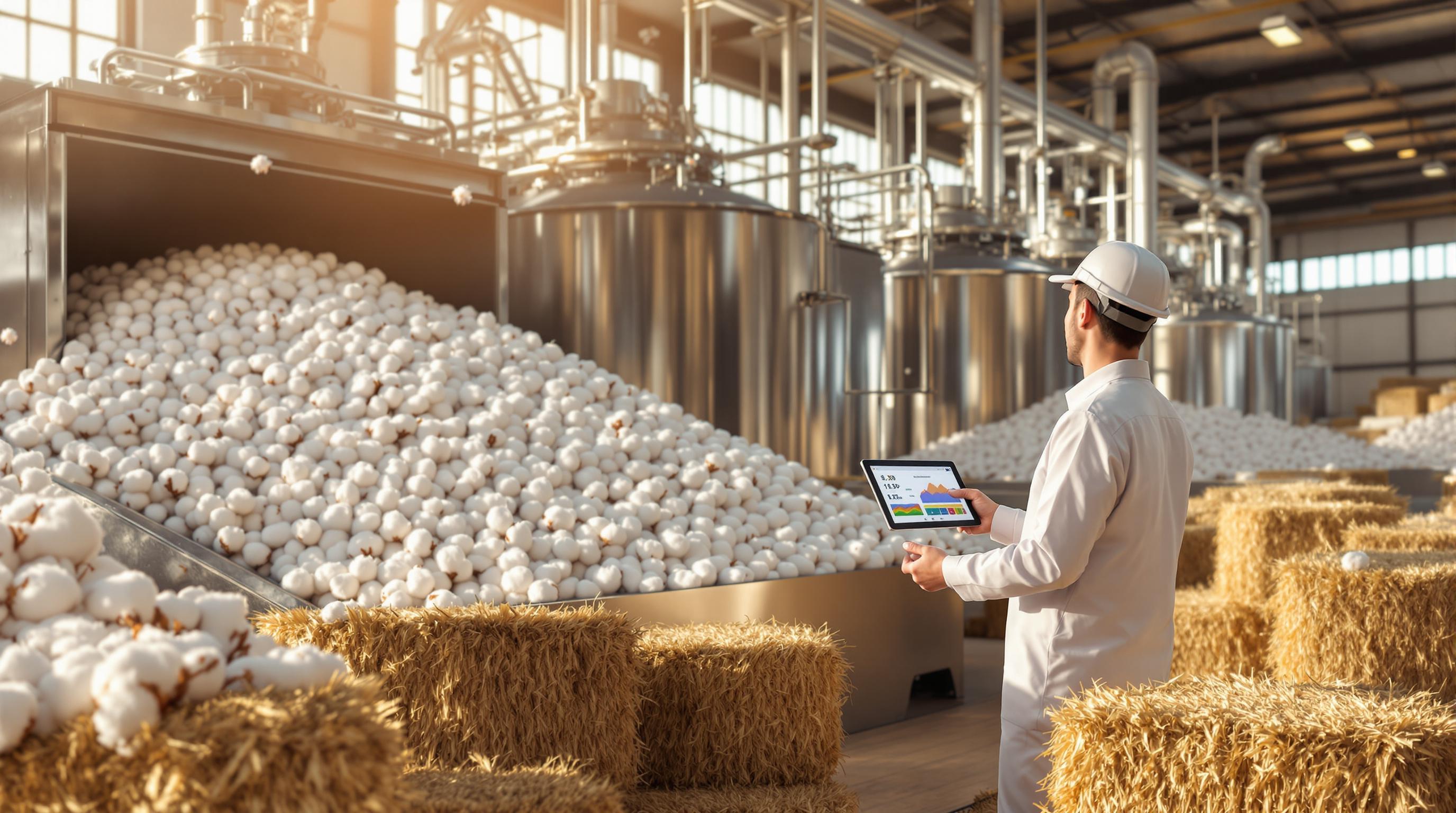
- The ginning operation separates lint from seeds and trash—sticks, hulls, leaves.
- Modern lint cleaners remove remaining impurities, reducing neps and short fibers, but aggressive operation can sometimes sacrifice fiber integrity.
- After cleaning, lint is pressed into dense, uniform bales for easy transport and storage.
Pain Point: Over-cleaning to remove all trash can spike neps and boost short fiber percentage, lowering final yarn consistency. Balance is everything.
2. Opening and Blending
- Bales are opened—often by automated feeder systems—allowing initial mix and aeration.
- Multiple bales are blended to even out batch variability, optimize staple length, and match mill specification, especially when mixing different cotton grades or integrating specialty fibers for blending.
Pain Point: Poor blending leads to unpredictable yarn properties, increased breakage, and downstream waste. Use inline sensors and test protocols to validate blends.
3. Carding
- Carding machines separate and align fibers, removing residual trash, seed particles, and neps.
- The card produces a sliver—a loosely held strand of parallel fibers, ready for further processing.
Advancement: Newer carding lines offer real-time adjustment based on input variability, allowing mills to recreate consistent sliver profiles across seasons and bale blends.
4. Combing
- Not all cotton undergoes combing—this step is reserved for finer grades and demanding end-uses.
- Combing gets rid of the shortest fibers and remaining impurities, boosting uniformity and yielding smoother, stronger yarn.
Farmer Insight: Providing combing-grade lint can command a premium, but entails tight control of harvest, ginning, and initial cleaning protocols. High staple length (>29mm) is essential.
5. Drawing and Roving
- Multiple card slivers are drawn together, equalized, and slightly twisted for increased cohesion.
- Advanced drawing frames use automation to maintain mass-per-unit and fiber alignment, optimizing for minimal variation.
- Roving machines thin out and mildly twist the drawn sliver, prepping the fibers for final spinning.
Optimization Tip: Monitor roving uniformity; inconsistencies here often compound as defects in spun yarn later.
6. Spinning
- Yarn formation comes via high-speed ring spinning, rotor spinning, or compact spinning systems—each yielding different yarn characteristics in terms of strength, elongation, and evenness.
- Running optimal spindle speeds and maintaining tight humidity control are critical. Fiber-to-yarn conversion efficiency can be the difference between profit and loss over millions of pounds.
Pain Point: Poorly maintained spinning systems or inconsistent feedstock generate higher hairiness, neps, and waste—driving down quality and margin.
7. Winding, Twisting, and Plying
- Finished single yarns are wound onto packages for transport and use.
- Twisting and plying combine singles, targeting desired thickness and strength for end-use (e.g., knitting, weaving, or specialty textiles).
- Quality checks at this stage flag any ongoing uniformity or strength issues.
Practical Note: For premium yarns, extra winding steps remove slubs and entanglements, while computer-controlled tensioning avoids section weaknesses.
Advanced Practices for Experienced Cotton Producers
Blending with Other Fibers
- Polyester, viscose, and other synthetic blends match for demand in strength, colorfastness, and abrasion resistance.
- Blending at the lint or sliver stage enables customized yarn properties, meeting specialties from fire-resistant workwear to luxury bedding.
Insight: Strategic blending (10–30%) can add margin for commodity spinners, but shifting customer demands can force blend reevaluation season to season.
Process Optimization
- Inline sensors and software track fiber quality at every stage, feeding adjustments to cleaning, carding, and drawing systems.
- Waste minimization—collecting fly and reclaiming fibers—feeds into sustainability and cost efficiency, especially as environmental regulations tighten.
Pain Point: Older mills struggle with retrofit compatibility; investment in modern controls pays off rapidly, but only if staff are trained to leverage the data.
Quality Control and Consistency
- Regular bale tests—HVI (High Volume Instrument) for strength, length, micronaire—predict end yarn quality.
- Spinners use frequent sliver and yarn tests: Uster statistics, hairiness metrics, tenacity, and elongation benchmarks align mill output with contracts.
Insider Strategy: Committing to robust pre-spinning testing reduces claims, rework, and lost contracts.
Challenges: Farmer-Centric Problems
- Commodity price volatility eats into margin—quality improvements justify price premiums but make selling harder if buyers are price-only focused.
- Climate stress and pest management directly affect fiber properties, rippling through every stage outlined above.
- Logistics—FOB warehousing, bale traceability, and shipping—impact fiber freshness and final yarn outcomes. Freight delays or mishandling can shift moisture, micronaire, and breakage rates, affecting spinning.
Actionable Takeaways
- Partner with mills open to transparent feedback loops on lint quality; invest in joint bale testing.
- Focus harvest timing, disease management, and moisture control—these shape the initial lint profile more than any later step.
- Prioritize data: Validate blends and process choices using both inline automation and off-line quality reports from your ginner or buyer.
- Track logistics: Insist on shipping solutions that preserve bale integrity (prefer covered FOB warehouse contracts and rapid delivery windows).
Frequently Asked Questions
Q: How much does lint cleaning affect final yarn quality?
A: Substantially. Aggressive cleaning creates more neps; moderate cleaning offers better balance for most applications.
Q: Can small farmers compete with large processors?
A: Yes—but only by leveraging high-quality niche grades, forging direct relationships, and using precise process control to justify premium contracts.
Q: What is the biggest risk to spinning profitability?
A: Variability in lint properties—especially micronaire and staple length—causes the most spinning losses and yarn rejection.
Conclusion
For seasoned cotton growers and processors, the journey from lint to yarn is fraught with opportunities for improvement—and pitfalls for the unwary. By mastering each phase, blending options, and quality controls, professionals can maximize both output and margin, staying ahead in an ever-evolving agricultural market. Adapt, optimize, and never settle for “good enough”—it’s how the best in the business stay on top.