Federal subsidies deeply influence U.S. cotton prices and farming decisions. Here's what you should know:
- Subsidy Trends: U.S. cotton subsidies dropped from $2.5 billion annually (2000–2009) to $700 million (2010–2019). Recent fluctuations include $847.3 million in 2021, $441.1 million in 2022, $0.6 million in 2023, and a projected rebound to $89.1 million in 2025.
- 2025 Cotton Market: Weak global demand and rising farm costs ($467.4 billion in 2025) keep cotton prices low, between $0.74–$0.79 per pound, below production costs (~$0.80+ per pound).
- Key Programs: Marketing loans, Price Loss Coverage (PLC), and crop insurance provide financial safety nets, encouraging planting even during low-price periods.
- Regional Impact: Subsidies drive expansion in newer production areas (e.g., Southeast), increasing local supply but straining infrastructure and pushing prices lower.
- Insurance Effects: Subsidized crop insurance (70–80% of premiums covered) reduces risks, increasing planting and contributing to oversupply and price volatility.
For cotton gin operators, monitoring subsidies, insurance participation, and local acreage trends is crucial for managing risks and planning operations effectively.
Cheating Cheaters of Cheatery: The Amazing Story of Brazil's Cotton War with the U.S.
How Federal Subsidies Affect Cotton Prices in New Production Areas
Federal programs like Price Loss Coverage (PLC), Agriculture Risk Coverage (ARC), and crop insurance play a key role in shaping cotton prices, especially in areas where production is expanding. These subsidies aim to stabilize farm incomes but often create ripple effects, including increased market volatility over time.
Here’s how it works: when market prices drop below the government’s reference levels, these programs step in to support farmers’ incomes. This safety net encourages cotton planting, even when market signals suggest otherwise. In newer production areas - like parts of the Southeast where cotton acreage has grown in recent years - this support ensures a steady local supply, regardless of broader market conditions.
For example, in 2025, seed cotton prices average around 34 cents per pound, while production costs hover in the mid-80 cents per pound range. Thanks to PLC payments calculated on a 42-cent reference price, farmers receive about $127 per acre in subsidies - up significantly from $41 per acre under the previous reference price. This increase allows farmers in new regions to continue planting cotton, even when market prices result in substantial financial losses.
Programs like the Stacked Income Protection Plan (STAX) and Enhanced Coverage Option (ECO) provide additional layers of support. ECO, for instance, allows farmers to enroll in PLC while offering up to 95% coverage, with 70% of premiums subsidized. These programs help stabilize individual farm finances but also contribute to broader market effects, as discussed below.
Effects on Price Stability and Volatility
While subsidies reduce financial risks for individual farmers, they can unintentionally increase market volatility. Studies show that programs like PLC and ARC encourage planting even during oversupply periods, delaying natural market corrections and prolonging low-price environments.
In states like Georgia and regions of the Carolinas, cotton has become more competitive with crops like peanuts and soybeans. This shift is largely due to higher PLC reference prices and generous insurance subsidies, which sustain cotton production despite lint prices lingering around 64 cents per pound - well below the break-even point. These policies have driven up local supply, putting further downward pressure on prices in these areas.
Area-based insurance products like ECO and STAX amplify these effects. When multiple farms in a region respond to the same subsidy incentives, the collective increase in production can lead to larger supply shifts. These shifts magnify price swings when demand changes or trade policies fluctuate.
For instance, with cotton prices far below production costs but PLC payments of $127 per acre supporting continued planting, the market experiences prolonged periods of oversupply. This delays price recovery and increases volatility when external factors eventually force adjustments.
Traditional vs. New Production Regions
The impact of subsidies also varies significantly between established and newer cotton-growing regions. In traditional areas like the Texas High Plains, where yields are generally higher and more consistent, PLC payments are smaller but still help sustain long-term production. Farmers in these regions often have the experience and infrastructure needed to navigate market volatility more effectively.
In contrast, newer production regions in the Southeast face different challenges. Here, yields are more variable, and infrastructure is less developed. ARC payments, which are tied to county or farm revenue, play a larger role in these areas. Counties with lower yields or prices receive higher ARC payments, offering strong incentives to maintain cotton production even in marginal conditions. This contributes to increased local supply and impacts cotton prices in these regions.
The adoption of ECO insurance has further encouraged expansion in these newer regions. Farmers who might have hesitated to grow cotton now benefit from multiple layers of protection: the PLC price floor, area-based revenue insurance, and subsidized premiums that make coverage affordable. These factors have made cotton more appealing compared to alternative crops, leading to expanded acreage and higher local supplies at cotton gins.
In traditional regions, existing infrastructure and established market relationships help cushion the impact of subsidy-driven production increases. However, in newer areas, even small acreage expansions can significantly disrupt the local supply-demand balance. This results in more noticeable price effects at cotton gins and throughout regional markets. Ultimately, these federal programs play a key role in shaping cotton economics, driving planting decisions, and influencing price trends across both established and emerging production areas.
Price Loss Coverage and Agricultural Risk Coverage Payment Effects
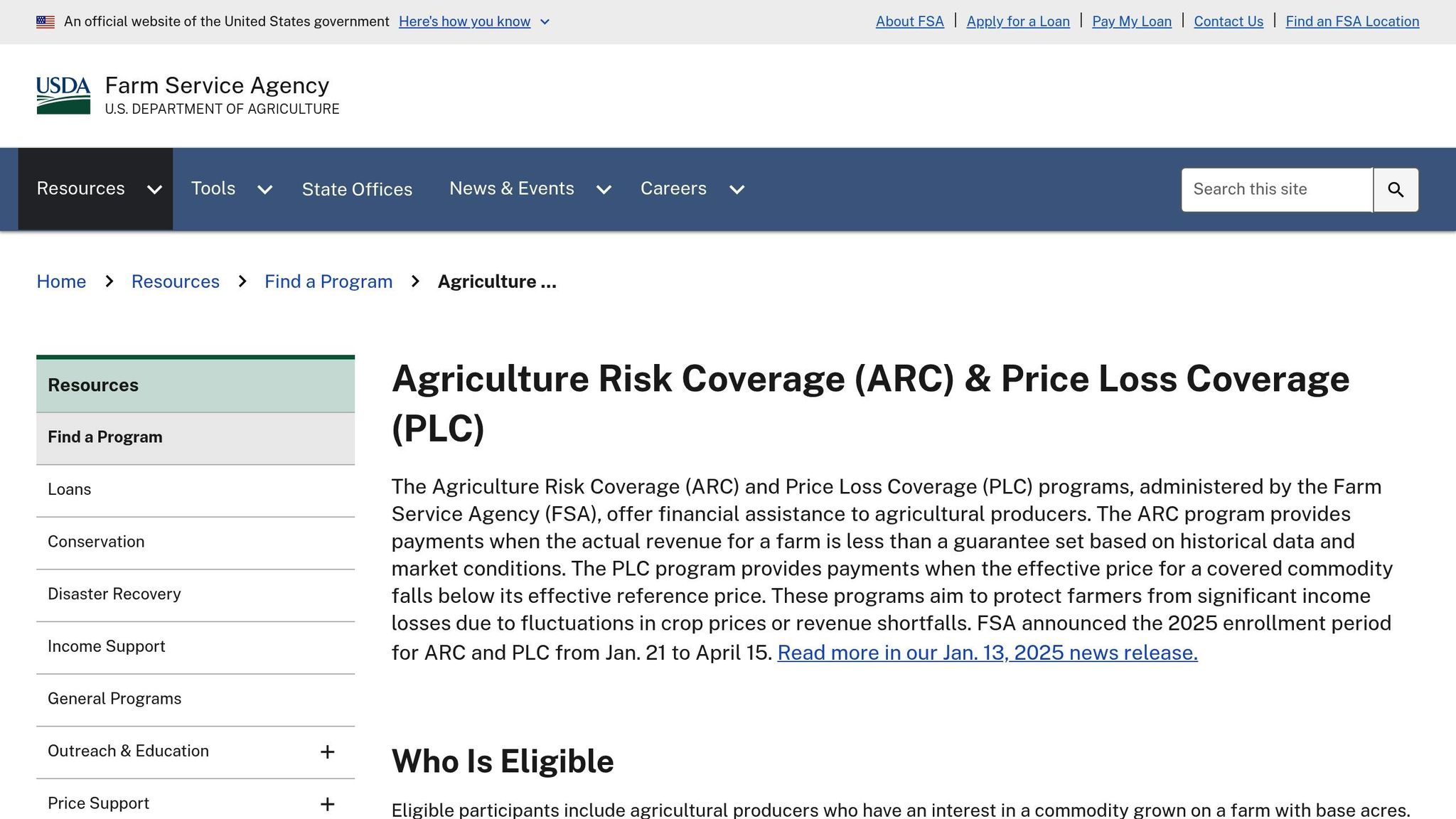
Price Loss Coverage (PLC) and Agricultural Risk Coverage (ARC) programs play a critical role in stabilizing cotton farmers’ incomes during tough market conditions. These programs influence planting and marketing decisions, which, in turn, affect the local supply and price of cotton. PLC payments kick in when the national average cotton price drops below the reference price set by law, while ARC payments are triggered by revenue declines at the county or farm level.
In December 2025, policy changes bolstered the safety net for farmers. The Trump Administration raised statutory reference prices by 10–21% and expanded eligibility to include over 30 million additional base acres. This adjustment led to more frequent and higher PLC and ARC payments starting with the 2026 crop year.
The financial impact has been noticeable. Cotton subsidies are expected to hit $89.1 million in 2025, a significant rebound from the mere $0.6 million allocated in 2023. However, projections suggest subsidies will drop to $61.0 million in 2026, indicating that the current spike may be short-lived. Over the five years leading up to 2025, total subsidy levels have declined at an annual rate of –31.0%. Looking at the bigger picture, U.S. cotton subsidies have dropped dramatically - from nearly $2.5 billion annually between 2000 and 2009 to just over $700 million per year between 2010 and 2019.
Payment Triggers and Regional Differences
The way PLC and ARC payments are triggered reveals their impact on cotton markets. PLC payments depend on national average price levels, while ARC payments are based on revenue losses at the county or farm level. This creates different financial incentives depending on the region.
In areas like the Texas High Plains - where yields are generally stable - PLC payments act as a reliable safety net. When national cotton prices decline, farmers in these regions receive consistent per-acre payments, helping them maintain production even during extended periods of low prices.
On the other hand, in newer cotton-growing regions like the Southeast, where yields can be more unpredictable, ARC payments are especially valuable. Counties with lower yields or prices tend to receive higher ARC payments, allowing farmers to sustain cotton acreage even in less favorable growing conditions.
These payment structures work alongside marketing assistance loan programs, which have been extended through 2031. Starting with the 2026 crop year, updated loan rates for cotton will further support farmers. These loans provide a price floor by allowing farmers to store their cotton and access credit at fixed rates, directly influencing planting and marketing strategies.
Effects on Planting and Marketing Decisions
Subsidy expectations significantly shape planting and marketing choices. Cotton farmers can receive economic assistance payments averaging $87.26 per acre - the highest among major crops. This level of support makes cotton a more appealing option, even when market prices alone might not justify the investment.
Marketing decisions are also impacted. With marketing assistance loans in place, farmers can store their cotton and access credit at prearranged rates, giving them the flexibility to delay sales until prices improve. These adjusted planting and marketing strategies affect local supply dynamics, creating irregular delivery schedules and fluctuating storage demands at cotton gins. Despite generally low price expectations - with U.S. cotton acreage and production projected to remain limited in 2025 and prices anticipated to range between 74 and 79 cents per pound - subsidy payments help offset the gap between market prices and production costs, keeping cotton production viable.
Rising production costs add to the pressure. Farm production expenses are projected to climb to $467.4 billion in 2025, an increase of $12 billion from the previous year. With cotton receipts expected to stay near 2024 levels in 2025, government subsidies are becoming an increasingly vital component of farm income, helping farmers navigate the financial challenges of cotton production.
Crop Insurance Effects on Cotton Supply and Prices
Federally subsidized crop insurance has reshaped how cotton farmers approach production, especially in areas where growing cotton is new or less predictable. By lowering the financial risks tied to planting cotton, these programs create supply-side pressures that ripple through local cotton prices and ginning operations. With the federal government covering 70–80% of insurance premiums, farmers face much lower out-of-pocket costs to protect their crops. This reduced risk encourages more planting, as highlighted in the following breakdown of premium subsidies.
Premium Subsidies Encourage Planting
The Stacked Income Protection Plan (STAX), designed specifically for upland cotton, is a clear example of how federal support influences planting decisions. Under the 2025 One Big Beautiful Bill, the STAX subsidy rate was raised to 80%, meaning farmers only pay 20% of their insurance premiums. This level of support surpasses the 60–65% subsidies typically offered for crops like corn and soybeans. The higher subsidy makes cotton an appealing choice, particularly in regions where farmers might otherwise lean toward less risky crops. For instance, in parts of the Southeast, heavily subsidized STAX has encouraged farmers to plant cotton even when market trends signal caution.
Lower insurance costs make planting cotton viable even when prices are relatively modest. The projected U.S. upland cotton price for 2025/26 is just 64 cents per pound. In areas where cotton was previously a minor crop, this insurance-driven expansion has resulted in larger-than-expected local supplies. This has led to increased competition among gins for cotton lint and has put downward pressure on local market prices.
The impact extends beyond regional markets. By reducing the financial risks of planting in less traditional areas, insurance programs have allowed cotton acreage to grow beyond what market prices alone would typically justify. In 2025, federal subsidies for cotton insurance reached $89.1 million, fueling this expansion. The resulting increase in overall supply has contributed to price suppression, both regionally and nationally.
Insurance Payouts and Price Volatility
Crop insurance payouts add another layer of complexity to local cotton markets. While these payouts stabilize farm income during tough years, they also encourage continuous production, regardless of market signals. Research shows that these programs transform production risk into predictable income, which makes farmers more likely to maintain or even expand cotton acreage - even in areas where cotton-growing infrastructure is still developing.
At the county level, the effects can be pronounced. In regions heavily reliant on insurance, local cotton supply often becomes less responsive to price fluctuations. Farmers who consistently receive insurance payouts are more willing to accept lower local prices because their overall income is safeguarded. The timing of these payouts also plays a role. Payments made after a poor crop year provide farmers with the capital needed for the next planting season, enabling production to continue even when market conditions are weak. This cycle of regular payouts can lead to oversupply and delayed sales, further contributing to price volatility.
For gin operators in emerging cotton-growing regions, these insurance-driven supply patterns present both challenges and opportunities. On one hand, the predictability of insurance programs ensures that local cotton supplies remain steady or even grow, even during years of bad weather or low prices. On the other hand, this stability can squeeze margins as increased supply meets limited local demand, forcing gins to compete more aggressively on price and service to attract business.
The relationship between crop insurance and local prices becomes even more intricate when combined with other federal programs. For instance, the marketing assistance loan rate of $0.55 per pound for 2026 provides a price floor, while insurance protects farmers from revenue losses above that level. Together, these programs create a safety net that sustains cotton production but also adds to the supply pressures that can keep local prices low.
sbb-itb-0e617ca
Price Fluctuations in New Cotton-Growing Areas
Subsidy-Driven Overproduction and Lower Prices
Recent changes in agricultural policy have caused cotton subsidies to swing dramatically - from $847.3 million in 2021 to just $0.6 million in 2023, with a projected rebound to $89.1 million by 2025. These shifts create uncertainty, especially for farmers in emerging cotton-growing regions. When subsidies increase or crop insurance programs cover up to 80% of premiums, cotton becomes a more appealing, lower-risk crop. For example, the USDA's marketing assistance loan rate of $0.55 per pound for 2026 encourages planting even when market conditions are less favorable.
The move from steady annual payments to countercyclical programs - designed to provide support when market prices drop - has led to ongoing production in times of low prices. This approach has resulted in overproduction, particularly in areas where infrastructure is still developing, further straining local processing capabilities.
Local Supply and Demand at Cotton Gins
Overproduction driven by subsidies brings logistical headaches for cotton gin operators. In established regions, decades of experience and well-built networks offer a clearer picture of processing capacities. But in newer cotton-growing areas, such institutional knowledge is still in its infancy.
Resources like cottongins.org provide a crucial tool for navigating these challenges. This directory lists cotton gin locations across the U.S. by county, giving operators a way to map regional capacity and track new gin openings. Such visibility can help anticipate when rapid increases in acreage might overwhelm local infrastructure.
However, logistical barriers in newer regions add another layer of difficulty. These areas often lack direct connections to major buyers or established export routes, which drives up transportation costs and eats into profits. When national cotton prices hover between $0.74 and $0.79 per pound, as projected, local oversupply can squeeze margins at cotton gins even further. These imbalances in supply and demand not only amplify price volatility but also highlight the broader operational challenges tied to federal subsidy policies, which continue to shape production decisions and market dynamics at both regional and local levels.
What Cotton Gin Operators Need to Know
Using Subsidy Data to Predict Market Conditions
For cotton gin operators, staying on top of federal program data can provide a clearer picture of seasonal market dynamics. Monitoring PLC (Price Loss Coverage) and ARC (Agricultural Risk Coverage) reference prices, along with payment histories for seed cotton, offers insights into how often safety-net programs activate when market prices drop. These activations can significantly influence farmers' planting decisions.
Another key indicator is local crop insurance participation and coverage levels. High participation often signals that farmers feel confident planting more cotton, even when market prices are uncertain. Similarly, marketing loan rates and redemption patterns can help predict bale volumes, timing of sales, and whether storage will be necessary - all factors that affect your gin's bargaining power.
Gathering local cotton acreage estimates from growers and USDA projections in the spring is another critical step. By factoring in local yield data and the impact of subsidies - such as expanded insurance coverage and safety-net programs - you can better anticipate acreage trends. These subsidies often reduce acreage abandonment and prevent planting cuts.
With these volume estimates, you can adjust your operations accordingly. For example, plan seasonal hiring and gin run hours to handle mid- to high-case volumes, and arrange for extra trucks and storage if capacity might be exceeded. These forecasts also play a key role when negotiating seasonal financing with lenders, helping you secure the working capital needed to meet demand. Regular updates to your forecast, based on weather and market developments, can help avoid both understaffing and unnecessary fixed costs.
Understanding local basis patterns - the difference between futures prices and local cash bids - is another crucial factor. Subsidies can sometimes lead to higher production in new cotton-growing areas before local demand catches up, which can widen the basis. If high acreage persists despite weak global prices, competition among nearby gins or warehouses can increase. Tracking seasonal basis levels in neighboring counties and established regions can highlight whether local oversupply is squeezing margins. In such cases, strategies like investing in better classing and contamination control or coordinating with growers to create larger, uniform lots can make a difference.
You can also use resources like cottongins.org to map regional gin capacity and monitor new openings. Knowing where gins are opening or closing helps you assess whether local capacity constraints might support stronger margins or if new competition could pressure grower volumes.
These predictive insights are essential for managing risks in a fluctuating cotton market.
Managing Risk in New Cotton Regions
Managing risk in regions driven by subsidies requires flexibility, especially as acreage can swing significantly from year to year. Policy changes, such as shifts in the Farm Bill, or competition from more profitable crops can cause acreage to surge one year and decline the next. This volatility makes it difficult to justify large, fixed investments in equipment or capacity.
Credit and counterparty risks are another concern. Growers who rely heavily on federal payments may face cash flow challenges if policy changes delay or reduce PLC or ARC payments. This could lead to postponed ginning fees or defaults on storage agreements.
Accurate subsidy and yield forecasts can help you structure your operation to handle these risks. Start by building flexible cost structures. For instance, use transparent per-bale or per-pound fees to cover operating costs instead of depending on speculative income streams like quality premiums or storage fees, which may vanish during price downturns. Seasonal labor and leased equipment are also smart choices, as they allow you to scale operations up or down without the burden of fixed overhead costs in lean years.
Partnering with lenders who understand Farm Bill programs can also be a game-changer. These lenders can help you secure operating lines that account for potential delays or variability in government payments. Diversifying your customer base across multiple counties can further reduce your exposure to policy shifts in any one area.
When growers have strong safety nets - such as higher reference prices, larger payment limits, or enhanced crop insurance subsidies - they may delay selling cotton at harvest when cash prices are low. Instead, they might store cotton on-farm or in warehouses, relying on marketing loans to postpone pricing decisions. For gins, this could weaken short-term pricing power if multiple operators compete for a limited pool of cotton. In such cases, factors like fast turnaround times, quality premiums, and strong grower relationships become critical for attracting volumes.
Lessons from established cotton regions offer valuable guidance. Avoid assuming that current subsidy levels or reference prices will remain unchanged. Instead, design your investments and debt schedules to remain viable even if acreage declines. Use high-throughput periods supported by subsidies to pay down debt rather than expanding fixed capacity excessively. Focus on efficiency and quality improvements that will benefit your operation when volumes return to normal. Building strong relationships with growers and maintaining transparent pricing can also ensure your gin remains competitive, even when others offer short-term incentives.
Incorporating federal program data into your financial planning strengthens your operation’s ability to adapt. Align borrowing with policy cycles, using public projections to justify larger seasonal credit lines when new policies, such as a Farm Bill, raise reference prices or subsidies. Time capital investments wisely - invest in capacity or quality upgrades when policy changes suggest sustained support for cotton. If support appears temporary or uncertain, consider leasing equipment or using modular add-ons as a safer alternative. Tailor your contracts and services to growers' expected PLC, ARC, and insurance payouts. For example, offer early-sign ginning contracts with volume discounts or tie charges to fiber quality metrics that help growers maximize revenue, even when safety nets are in place.
Conclusion
U.S. cotton subsidies have seen dramatic changes over the years, dropping from $847.3 million in 2021 to just $0.6 million in 2023, before climbing back to approximately $89.1 million in 2025. Over the last two decades, annual support fell from nearly $2.5 billion during 2000–2009 to just over $700 million between 2010–2019. These shifts highlight the unpredictable nature of subsidy policies and the challenges they bring for cotton gin operators.
For operators, keeping a close eye on subsidy triggers and market trends has become essential. The 2025 forecast shows cotton prices ranging between $0.74 and $0.79 per pound, which remains below production costs. The marketing assistance loan rate for the 2026 crop is set at $0.55 per pound. These benchmarks are critical for understanding when safety-net programs might kick in and how growers could react.
Subsidized crop insurance and safety-net payments play a key role in reducing risks for growers, often encouraging cotton planting even when market prices are weak. However, this can lead to localized oversupply in newer cotton-growing regions, outpacing demand infrastructure and squeezing gin margins. Recognizing these trends allows operators to adjust costs, plan capital investments strategically, and use public program data to better predict seasonal volumes.
As U.S. cotton subsidies continue to decline, with a compound annual growth rate of –31.0% projected through 2025, operators who monitor PLC/ARC reference prices, insurance participation rates, and loan redemption trends will be better equipped to navigate risks. While federal programs still hold influence, their impact is more conditional and variable than ever before, requiring operators to regularly reassess their strategies.
For more information on market trends and local cotton gin data referenced in this analysis, visit cottongins.org.
FAQs
How do federal subsidies like Price Loss Coverage (PLC) and Agricultural Risk Coverage (ARC) affect cotton planting decisions in emerging production areas?
Federal subsidies like Price Loss Coverage (PLC) and Agricultural Risk Coverage (ARC) are key to influencing planting choices in newer cotton-growing regions. These programs offer financial support to farmers when market prices or revenues dip below specific levels, helping to cushion the impact of unpredictable cotton prices.
In areas where cotton production is still developing, these subsidies act as a safety net, making it less daunting for farmers to venture into cotton cultivation. By offsetting potential financial losses, they make cotton farming a more practical and appealing choice for growers looking to tap into new markets or expand their operations.
How does subsidized crop insurance affect cotton prices and supply in new production areas?
Subsidized crop insurance plays a key role in shaping cotton prices and supply, especially in regions where cotton production is still developing. By lowering the financial risks farmers face, these subsidies often motivate them to plant more cotton, which can boost overall supply. However, this uptick in production can also lead to price swings in local markets.
The impact of these subsidies depends on several factors, including regional demand, global market trends, and the size of the subsidy programs. For farmers, suppliers, and policymakers in the cotton industry, understanding these shifting dynamics is essential for making informed decisions.
How can cotton gin operators use insights from federal subsidies to anticipate market trends and reduce risks?
Cotton gin operators can dive into federal subsidy data to uncover how government support shapes cotton prices and production trends. By spotting patterns - like the way subsidies may influence planting choices or stabilize prices in emerging production areas - operators can refine their approach to inventory management and operational planning.
Keeping an eye on subsidy-related developments also helps operators prepare for potential market changes. This foresight allows them to tweak strategies, reduce risks, and capitalize on new opportunities. Tools such as industry reports and directories, including those available on cottongins.org, offer targeted resources to help operators make well-informed decisions in the cotton industry.