Fair Trade cotton ensures better wages, safer working conditions, and eco-friendly farming practices for cotton farmers. It guarantees a minimum price to protect farmers from market fluctuations and provides additional funds for community projects like education and healthcare. By choosing Fair Trade cotton, you directly support ethical production and reduce the environmental harm caused by conventional cotton farming.
Key Highlights:
- Farmers earn a Fairtrade Premium for community improvements.
- Certified organic Fair Trade cotton reduces greenhouse gas emissions by 45% and uses 14% less water.
- Two main certifications: Fairtrade International (focus on fair wages and worker rights) and GOTS (focus on organic production and supply chain integrity).
- Ethical brands like Patagonia, People Tree, Pact, and Everlane are leading the way with Fair Trade cotton products.
When shopping, look for the Fairtrade Mark or GOTS label to ensure your purchase supports fair labor and sustainable practices. Small choices make a big difference for farmers and the planet.
Benefits of Fair Trade Cotton
Better Wages and Community Support for Farmers
Fair Trade cotton provides farmers with a safety net through the Fairtrade Minimum Price, ensuring they receive a guaranteed floor price even when market rates drop below production costs. This initiative currently supports over 45,000 Fairtrade certified cotton farmers across eight countries.
On top of this, farmers earn a Fairtrade Premium, an extra payment added to the selling price. These funds are placed in a community-controlled pool, where democratically elected committees decide how to use them for local projects [9,10]. Over the last decade, Fairtrade producers worldwide have collectively earned more than $1.5 billion in these premiums.
These funds have transformed communities. For instance, in Capulí Grande, Colombia, the premium financed a water treatment plant that now benefits 70 families. Similarly, at the Pratima cooperative, the funds have been used to provide 600–700 annual scholarships, build a community center, and offer loans for small businesses [9,13].
"Fairtrade helps our community become more autonomous and stronger. It allows us to invest money and energy in projects that support our real needs." - Leonardo Mena Arias, Worker and Mechanic, UBPC Bermejal
This combination of fair wages and community investments not only improves livelihoods but also supports the development of sustainable farming practices.
Reduced Environmental Impact
Fair Trade cotton farming also emphasizes environmental responsibility. When paired with organic practices, it significantly reduces harm to the environment. A study by Global Agrisystem in October 2024, covering 850 farms across six Indian states, revealed that Fairtrade organic cotton produces 45% fewer greenhouse gas emissions compared to conventional cotton - 862 kg CO2e per hectare versus 1,563 kg CO2e [16,17].
Water conservation is another key benefit. Fairtrade organic farmers use 14% less water than conventional cotton farmers, requiring 4,410 liters of water per kilogram of cotton compared to 5,156 liters. Additionally, they achieve 20% higher water productivity [16,17]. The use of chemicals is drastically reduced as well: 96% of Fairtrade organic farmers avoid chemical pesticides entirely, compared to 60% of conventional farmers, and only 5% use synthetic nitrogen fertilizers versus 91% of conventional farmers [16,17].
"The findings provide tangible evidence that the combination of Fairtrade and organic standards not only enhances environmental outcomes but also supports the economic wellbeing of farmers for long-term sustainability." - Abhishek Jani, CEO of Fairtrade India
These environmental benefits show how ethical farming practices can have a broader, positive impact on both the planet and the farmers who depend on it.
How Consumers Drive Change
Every time you purchase Fair Trade cotton, you're directly contributing to the Fairtrade Premium, which funds community projects. These choices also send a strong message to brands that ethical sourcing matters. This consumer-driven demand has already made an impact - Fairtrade certified cotton sales surged by 39% between 2016 and 2017.
Buying products with the Fairtrade Mark promotes supply chain transparency and encourages brands to adopt fairer contracting practices. You can take it a step further by supporting advocacy efforts like the "Good Clothes, Fair Pay" campaign, which pushes for laws ensuring living wages for workers. To put things in perspective, the average worker’s wage accounts for just 0.6% of the total cost of a t-shirt - leaving plenty of room for improvement by brands.
Unravelling the Thread | The Story of Fairtrade Cotton
Fair Trade Cotton Certifications
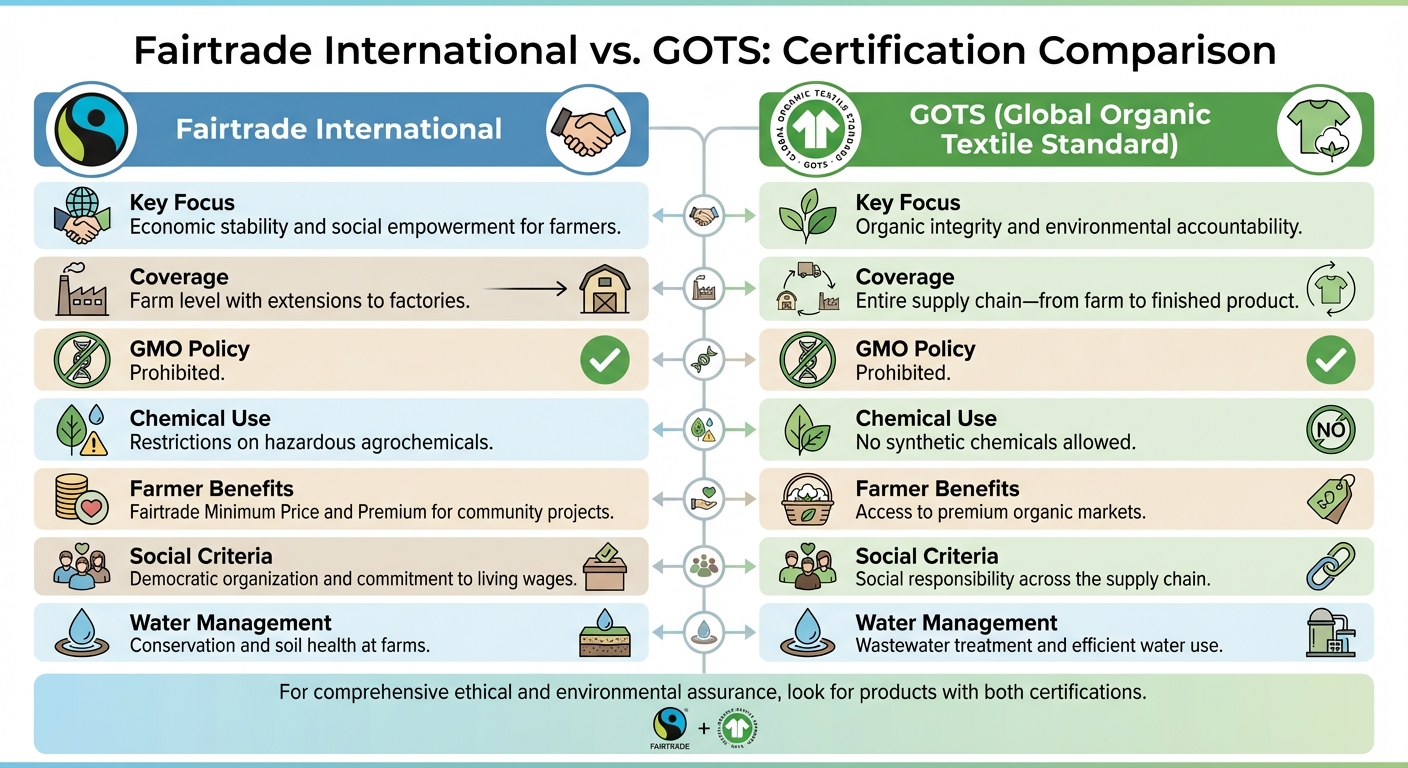
Fairtrade International vs GOTS Certification Comparison for Fair Trade Cotton
Fair Trade cotton is backed by two main certifications - Fairtrade International and GOTS (Global Organic Textile Standard) - each addressing different aspects of the production process.
Fairtrade International
Fairtrade International's standards focus on social, economic, and environmental aspects of cotton production. For instance, producers are encouraged to form democratic organizations, empowering them to make collective decisions. The certification also strictly prohibits child labor, forced labor, and discrimination, while protecting workers' rights to organize and negotiate collectively.
Economically, Fairtrade provides two key safeguards: the Fairtrade Minimum Price, which ensures farmers are protected when market prices drop below production costs, and the Fairtrade Premium, which offers additional funds for community development projects.
"When selling their products through Fairtrade, producers can rely on the safety net of the Fairtrade Minimum Price and will receive the additional Fairtrade Premium to invest in projects of their choice." – Fairtrade International
The Fairtrade Textile Standard extends these protections beyond farms to include factory conditions and garment workers. This standard sets goals like achieving a living wage within six years, ensuring freedom of association, and requiring registration and audits for all subcontractors. Environmental guidelines also restrict hazardous agrochemicals and GMOs. Compliance is monitored through regular audits by an independent ISO 17065–accredited certifier.
Next, let's look at GOTS, which ensures organic practices throughout the production chain.
GOTS (Global Organic Textile Standard)
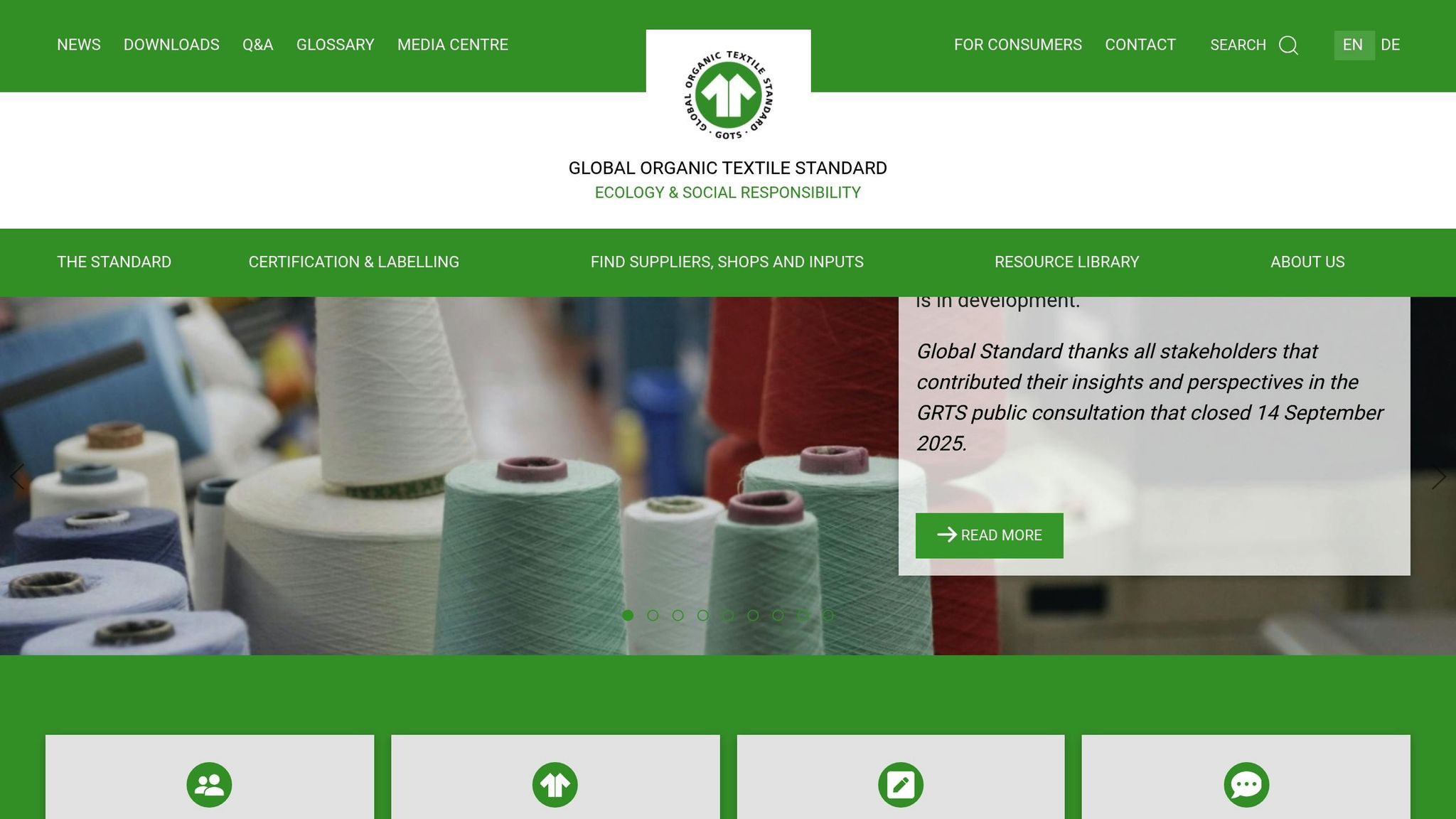
GOTS certification guarantees organic practices and environmental accountability across the entire supply chain, from harvesting raw cotton to manufacturing, packaging, and labeling. To qualify, cotton must be cultivated using crop rotation methods that enhance soil health and biodiversity.
The standards prohibit synthetic chemicals and GMOs, ensuring no synthetic pesticides, fertilizers, or toxic dyes are used. GOTS also enforces proper wastewater treatment and efficient water use in production facilities. Social responsibility is another cornerstone, with requirements aligned with International Labour Organization (ILO) conventions. Products with the GOTS label clearly indicate their organic content: "Organic" signifies at least 95% organic material, while "Made with organic" means the product contains at least 70% organic components.
Between 2018 and 2023, over 85% of Fairtrade Certified Cotton Producer Organizations in the Asia Pacific region transitioned to 100% organic production, with many pursuing both Fairtrade and GOTS certifications.
The table below highlights the key differences between these certifications:
Fairtrade International vs. GOTS: A Comparison
| Feature | Fairtrade International | GOTS (Global Organic Textile Standard) |
|---|---|---|
| Key Focus | Economic stability and social empowerment for farmers | Organic integrity and environmental accountability |
| Coverage | Farm level with extensions to factories | Entire supply chain - from farm to finished product |
| GMO Policy | Prohibited | Prohibited |
| Chemical Use | Restrictions on hazardous agrochemicals | No synthetic chemicals allowed |
| Farmer Benefits | Fairtrade Minimum Price and Premium for community projects | Access to premium organic markets |
| Social Criteria | Democratic organization and commitment to living wages | Social responsibility across the supply chain |
| Water Management | Conservation and soil health at farms | Wastewater treatment and efficient water use |
For a comprehensive approach, consider products with both certifications to ensure fair compensation for farmers and adherence to organic processing standards.
sbb-itb-0e617ca
Brands Using Fair Trade Cotton
More and more brands are embracing Fair Trade cotton, not just for its ethical appeal but also to promote transparency and worker-focused initiatives in their supply chains. These companies are setting an example by actively contributing to programs that empower workers and improve their livelihoods.
Patagonia

Patagonia has been a trailblazer in Fair Trade apparel since it launched its Fair Trade Certified program in 2014. The company channels premiums directly into Community Development Funds, which factory workers manage democratically. Over the years, Patagonia has contributed more than $40 million to these funds, positively impacting over 80,000 workers and their families. Workers often use these funds for essentials like healthcare, childcare, or education.
"The Fair Trade program uniquely empowers workers to speak up for their needs and drive solutions to address those needs. They get to make choices that are best for their communities and families through collective decision making and implementation." – Thuy Nguyen, Director of Supply Chain Social Impact, Patagonia
Patagonia’s Fair Trade Certified line includes outdoor gear, everyday basics, and activewear, all clearly labeled for easy identification.
People Tree
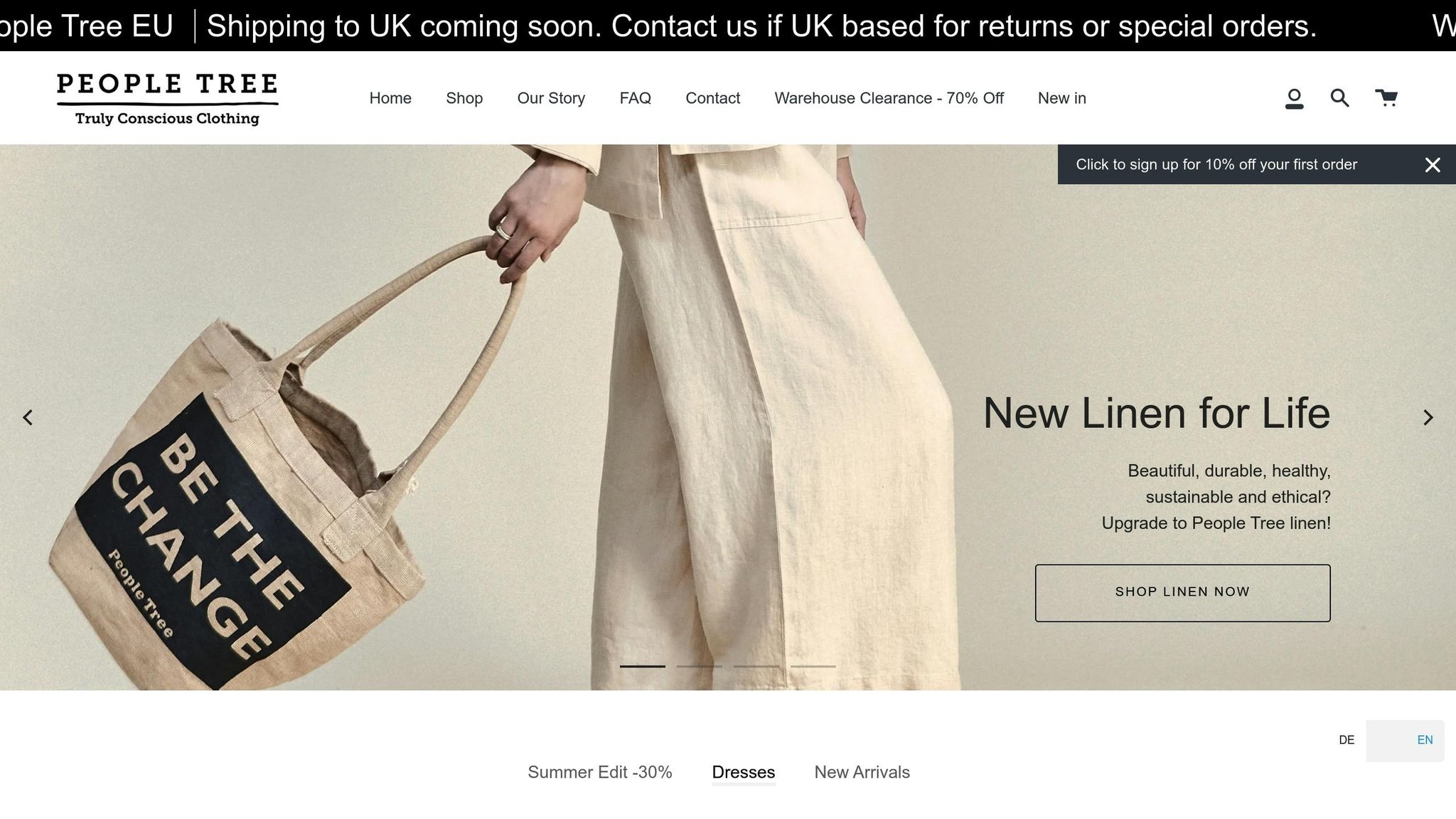
People Tree has been championing Fair Trade practices for decades and is one of the longest-standing Fair Trade fashion brands. Partnering with the Fairtrade Foundation, the company ensures fair wages, safe working conditions, and ethical practices throughout its cotton supply chain. Its offerings range from women’s clothing and accessories to home textiles, all designed with a focus on social responsibility and environmental care.
Pact
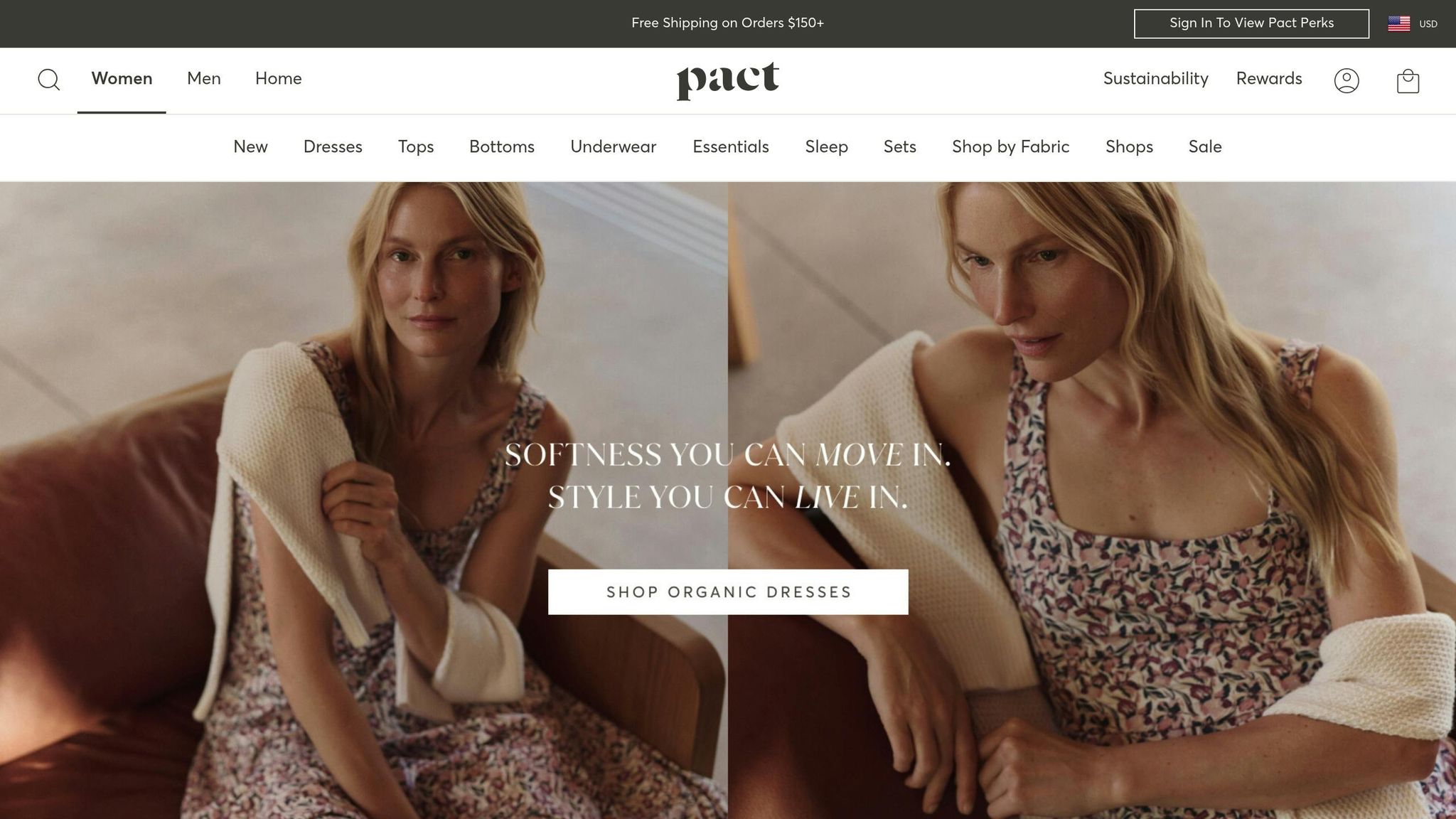
Pact makes ethical clothing accessible by offering affordable basics crafted from GOTS-certified organic cotton. Combining GOTS standards with Fair Trade principles, Pact ensures its cotton is grown without synthetic pesticides or GMOs while maintaining fair labor practices throughout production. The brand is transparent about its factory relationships and the environmental impact of its manufacturing, offering products like underwear, loungewear, and socks.
Everlane
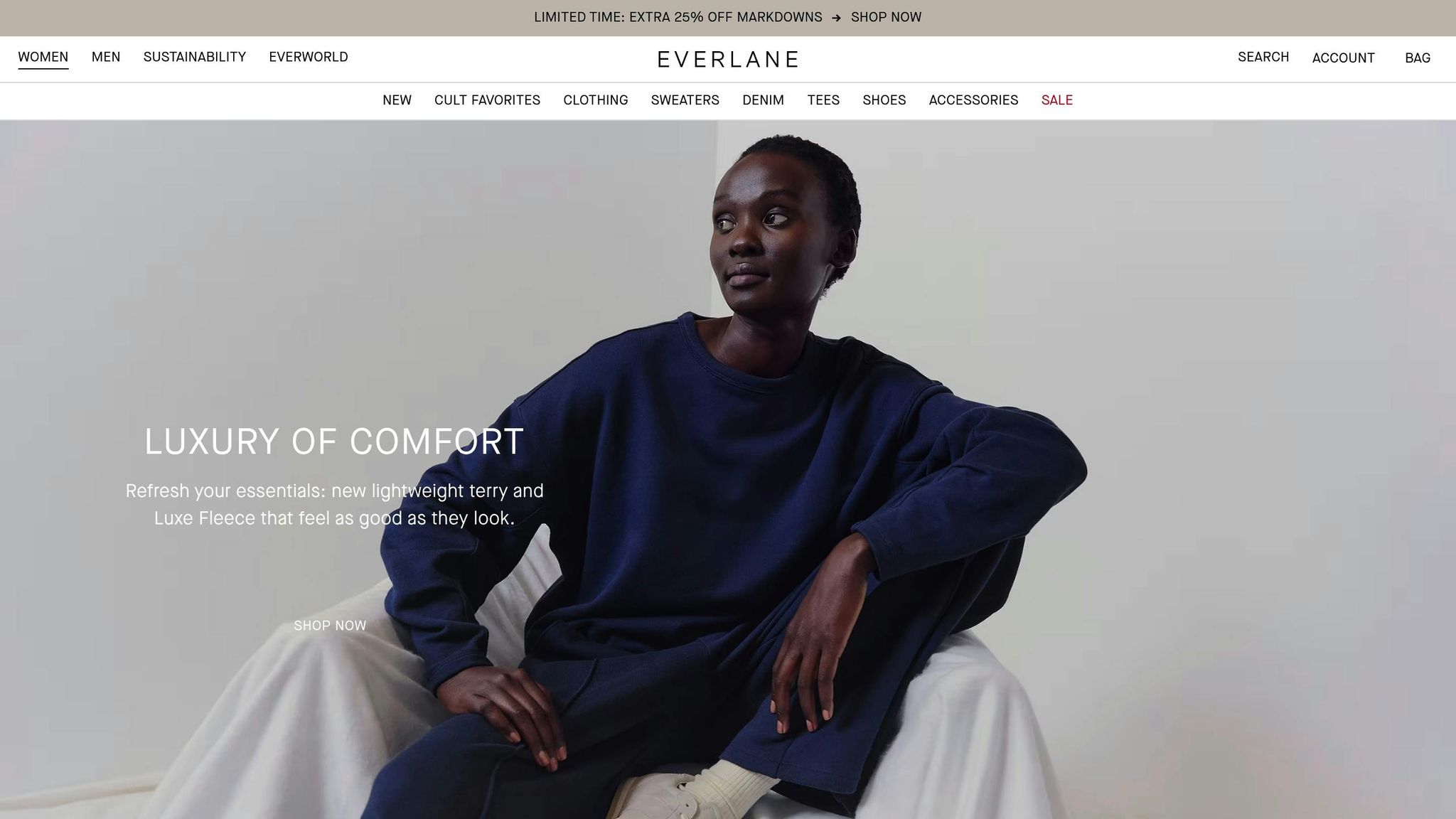
Everlane is known for its "radical transparency", offering detailed breakdowns of production costs and markups. The brand sources cotton from Fair Trade Certified facilities and ensures living wages and safe conditions for its workers. Everlane’s commitment to ethical practices extends beyond cotton to other materials, with wardrobe staples like jeans, t-shirts, sweaters, and outerwear forming the core of its product line.
Brand Comparison Table
| Brand | Certifications | Key Fair Trade Cotton Products |
|---|---|---|
| Patagonia | Fair Trade Certified | Outdoor gear, everyday basics, activewear |
| People Tree | Fairtrade International | Women's clothing, accessories, home textiles |
| Pact | GOTS, Fair Trade Certified | Underwear, basics, socks, loungewear |
| Everlane | Fair Trade Certified | Jeans, t-shirts, sweaters, everyday essentials |
When shopping, check for the Fairtrade Mark (a blue, green, and black logo) or GOTS certification on product labels. These symbols confirm that the products meet strict ethical standards and have undergone independent third-party audits.
Conclusion
Opting for Fair Trade cotton is more than just a shopping choice - it’s a step toward supporting farmers, safeguarding the planet, and encouraging ethical practices. By ensuring farmers receive a guaranteed minimum price along with the Fairtrade Premium, certifications like the FAIRTRADE Mark or Fair Trade Certified label empower communities. In 2023 alone, these premiums funded essential projects such as healthcare and education, directly benefiting thousands of farmers.
The harsh reality is that garment workers earn only about 0.6% of a t-shirt’s retail cost. Fair Trade certifications tackle this imbalance through initiatives like the Fairtrade Textile Program, which requires factories to implement living wages within six years of certification. These standards also prohibit forced labor, child labor, and unsafe working conditions. On top of that, Fair Trade emphasizes environmental responsibility by banning harmful chemicals and GMOs while encouraging organic farming techniques that enrich soil and protect ecosystems.
The impact of these choices is echoed by industry leaders:
"Fair Trade Certified is an amazing initiative. What it does is it raises consciousness around what is possible when you use business as a force for good in the world." – Helen Russell, CEO, Equator Coffees
Consumer behavior is shifting, too. With over 25% of global shoppers prioritizing sustainable products and the sustainable clothing market projected to grow beyond 6% by 2026, the momentum away from fast fashion is undeniable. Supporting brands like Patagonia, People Tree, Pact, or Everlane - featured in this guide - means using your purchasing power to demand transparency and empower workers. These collective actions play a crucial role in shaping a fairer, more sustainable cotton industry.
As you shop, look for certifications like the FAIRTRADE Mark or GOTS, and ask yourself a simple yet powerful question: "Will I wear this at least 30 times?" This mindset ensures you’re choosing durable, ethically produced clothing that supports the 1.9 million farmers and workers across more than 70 countries who rely on fair trade partnerships. Each purchase contributes to building a more equitable and sustainable future for the cotton industry.
FAQs
Is Fair Trade cotton always organic?
Fair Trade cotton doesn’t automatically mean it’s organic. It can carry certifications like Fairtrade or GOTS (Global Organic Textile Standard), but these certifications differ in their criteria. While some Fair Trade cotton is grown organically, other types prioritize ethical labor practices and responsible production methods without strictly following organic farming guidelines.
Which label should I trust: Fairtrade or GOTS?
Fairtrade prioritizes fair pricing, ethical labor practices, and social standards for farmers, particularly in developing nations. On the other hand, GOTS centers on organic production, enforcing strict chemical restrictions and requiring at least 70% organic fibers, while also addressing social accountability.
If your focus is on equitable trade and fair labor, Fairtrade is the way to go. If organic farming and environmentally conscious production matter more to you, GOTS is the better choice. Both certifications address different needs but can work together to support ethical and sustainable goals.
How can I verify a product is really Fair Trade cotton?
To ensure a product is made from Fair Trade cotton, check for the official Fairtrade Cotton Mark on its label or packaging. This mark guarantees the product adheres to strict Fairtrade standards, promoting ethical practices and responsible sourcing.