Executive summary (TL;DR)
- Dryland cotton is a risk‑management game first and a yield game second; your real job is limiting disasters, not chasing record bales.
- The right mix of variety, residue, planting discipline, and conservative inputs often outperforms “swing for the fences” strategies over a decade.
- Treat each field’s water, soil, and history differently—some acres should be managed for survival, some for upside, and almost none for perfection.
sbb-itb-0e617ca
Why dryland cotton demands a different mindset
If you’ve ever watched a promising cotton stand bake away while the radar lied to you, you know dryland farming can feel like a bad joke. When the only irrigation system you own is called “prayer,” you can’t manage cotton the same way as a full‑circle pivot.
Dryland cotton demands a different mindset:
- Protect the downside first.
- Build systems that survive bad years and still leave you a shot in the good ones.
This isn’t about magic products. It’s about stacking a lot of small, boring decisions in your favor so that when it doesn’t rain, you lose less—and when it finally does, you’re ready.
Start with the field: soil, slope, and history
Not all dryland acres are equal. Before you think seed or herbicide, be honest about:
- Soil depth and texture – deeper, heavier soils can store more water; sand burns it off faster.
- Slope and erosion risk – fields that blow or wash easily need extra residue and gentler tillage.
- Historical yield and stand success – your own records are better than any brochure.
Classify fields loosely into:
- A‑fields: best soil and water‑holding; where you have the most upside.
- B‑fields: average ground; manage for solid survival and modest upside.
- C‑fields: thin, hot, or erosion‑prone; goal is protecting soil first, cash flow second.
Everything else in this playbook assumes you know which bucket a field lives in.
Residue and tillage: armor for your soil
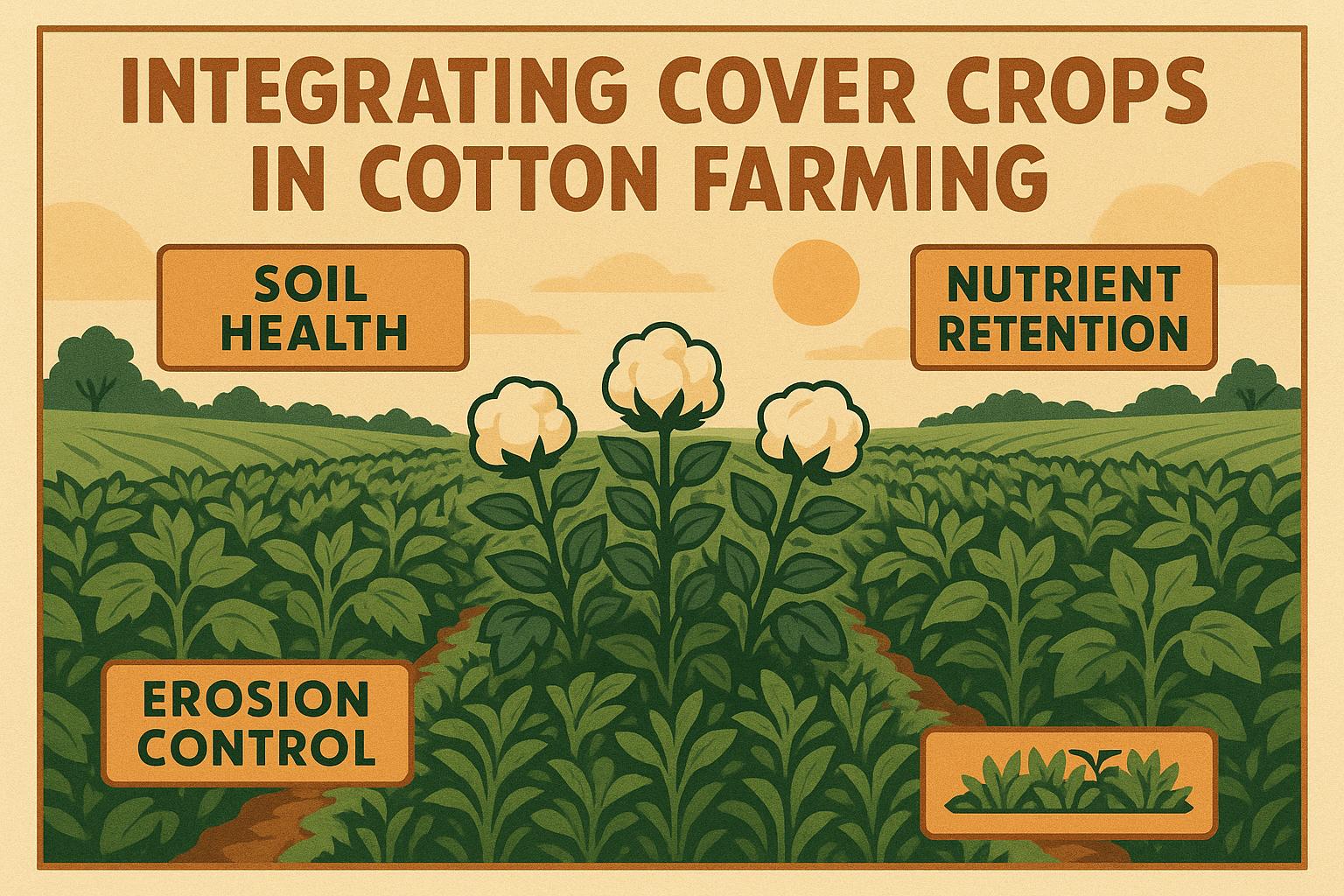
On dryland cotton, bare dirt is the enemy. Residue is your armor.
Key principles:
-
Leave as much cover as you realistically can.
- Strip‑till or no‑till into last year’s stalks or rotation residue when possible.
- Avoid deep tillage that burns moisture and leaves the soil naked before spring winds.
-
Use rotations that build residue.
- Grain sorghum, small grains, or other high‑residue crops ahead of cotton can make a big difference.
- Even a simple one‑year break from continuous cotton can improve infiltration and reduce evaporation.
-
Time any necessary tillage to moisture and wind.
- Work the ground after a rain when you can firm it back down.
- Skip cosmetic passes—every trip costs diesel and moisture.
The less you disturb the soil, the more water you keep, and the more consistent your stands become.
Variety selection: matching genetics to dryland reality
Dryland isn’t the place to bet on varieties that only pay at the top end.
Look for:
- Proven performance in dryland or limited‑irrigation trials in your region.
- Early‑ to mid‑maturity to reduce the odds of running into late‑season heat or cold.
- Strong disease and root‑rot tolerance if those are issues locally.
- Good fiber package—because in low‑yield years, quality often matters even more.
Talk to neighbors and local trials, not just sales sheets. You want varieties that:
- Hold fruit under stress.
- Cut out in time.
- Harvest cleanly even when the year goes sideways.
Planting strategy: patience pays more than aggression
Dryland makes planting‑date decisions harder. Plant too early and you risk a cold snap or crusting. Wait too long and you can miss the best moisture shot of the year.
Guidelines:
-
Wait for real planting conditions.
- Soil temperature, moisture at seeding depth, and a halfway decent forecast.
- Don’t chase calendar dates just because the neighbor rolled.
-
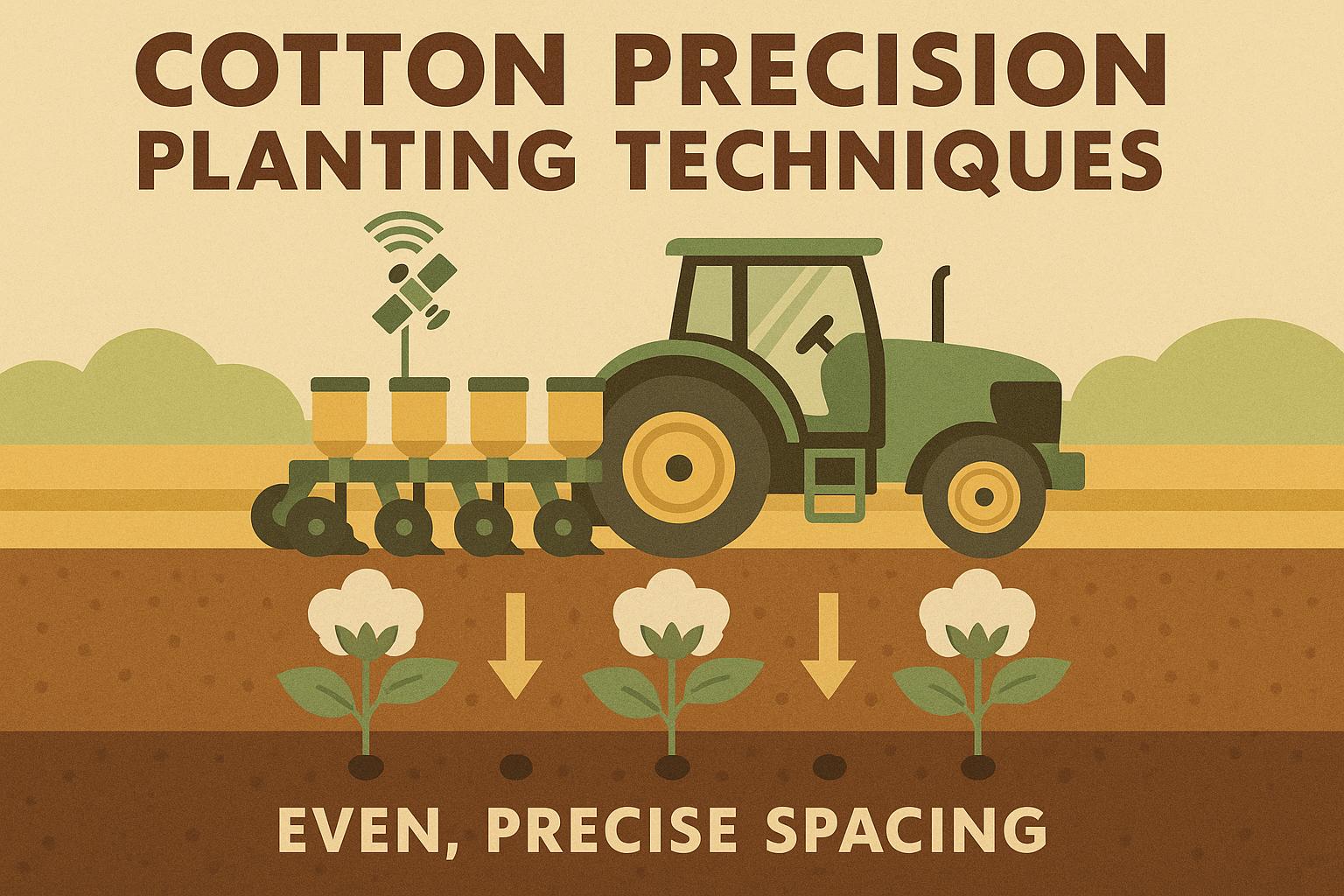
Aim for a solid stand, not a perfect one.
- On C‑fields especially, a slightly thinner but uniform stand can be better than burning moisture trying to replant.
-
Have a replant line in your head first.
- Decide ahead of time: “If I’m below X plants/ft with poor spacing, I’ll replant; otherwise I’ll live with it.”
- That keeps you from making emotional, expensive replant decisions.
Patience at planting is one of the cheapest forms of risk management you have.
Fertility: feed the crop you can grow, not the one you wish you could
Over‑fertilizing dryland cotton is like filling a racecar with premium fuel and then parking it in a traffic jam. The limiting factor is usually water, not nutrients.
- Base fertility on realistic yield goals for each field, not the best year you’ve ever had.
- Consider split applications or more conservative fronts if weather is uncertain.
- Avoid creating a big, lush plant early that you can’t support with moisture later.
Under‑fertilizing has a cost, but over‑fertilizing in a water‑short year can hurt both yield and fiber quality, and it always hurts your bank account.
Weed and pest control: don’t let stress multiply
Weeds, insects, and disease hit harder when cotton is already moisture‑stressed.
-
Stay ahead on weeds. They steal water, and late clean‑ups are expensive.
- Use effective pre‑emerge programs where practical.
- Keep escapes from going to seed; tomorrow’s weed bank is next year’s headache.
-
Scout pests, but be realistic.
- Some years, spraying a marginal field twice to protect a low potential yield is a bad trade.
- On your A‑fields, protecting fruit might easily pay; on C‑fields, you might accept a little damage in a truly bad year.
The point isn’t to cut corners. It’s to align intensity with each field’s realistic payoff.
Growth management: small, efficient plants beat monsters
On dryland, the last thing you want is a rank, overgrown plant that runs out of fuel in August.
-
Use growth regulators conservatively but purposefully on better fields to:
- Keep plants manageable.
- Encourage early fruiting and cutout.
-
Avoid driving excessive vegetative growth with:
- Too much early N.
- Overly aggressive early watering on limited‑irrigation corners.
You’re trying to grow a compact plant that finishes on time, not a jungle that still wants to bloom when the profile is empty.
Harvest timing: don’t turn a bad year into a worse one
When yield is light, it’s tempting to wait “just a little longer” for every possible boll. That can:
- Increase weather risk.
- Add staining, bark, or leaf issues.
- Cause more lint loss from storms and wind.
On marginal dryland fields, it’s often better to:
- Defoliate and harvest when the crop is clearly finished, rather than play chicken with the calendar.
- Protect fiber quality and avoid extra field losses.
You won’t feel good about the yield, but you’ll feel better about the check than if you overstayed your welcome.
Financial and marketing strategy: smoothing the ride
Dryland cotton doesn’t just need agronomic risk management; it needs financial and marketing risk management:
- Build cash flows assuming average‑to‑rough yields, not the good years.
- Use crop insurance, where available, as a genuine safety net instead of an afterthought.
- Market cotton in stages—contract some on decent rallies based on realistic production, not dream yields.
Your whole operation will feel calmer when your books assume rough years as normal and good years as the bonus, not the other way around.
Putting it all together: a practical dryland checklist
By field:
- Classify as A/B/C based on soil, water, and history.
- Choose varieties proven in dryland / limited irrigation.
- Protect residue and minimize unnecessary tillage.
- Plant only when conditions are truly fit.
- Fertilize to a realistic yield, not the best case.
- Match weed, pest, and growth‑regulator intensity to field potential.
- Harvest on time, with quality in mind.
Dryland cotton will always be a gamble. But a disciplined playbook turns it from a wild bet into a manageable, long‑term part of your farm’s portfolio—one where survival in the bad years is just as important as the bragging rights in the good ones.