Cotton aphids are a major problem for farmers, but tackling them effectively requires more than just pesticides. Integrated Pest Management (IPM) combines multiple strategies - like field monitoring, natural predators, and selective insecticides - to control aphid populations while protecting crops and reducing resistance. Here’s what works:
- Scouting and Monitoring: Check fields twice a week for aphids and honeydew. Use economic thresholds to decide when treatment is necessary.
- Plant Choices and Fertilizer Management: Resistant cotton varieties and balanced nitrogen levels reduce aphid attraction.
- Natural Predators: Lady beetles, lacewings, and parasitic wasps naturally manage aphids. Preserve these insects by avoiding broad-spectrum sprays.
- Biopesticides: Options like Beauveria bassiana and neem oil kill aphids without harming helpful insects.
- Selective Insecticides: Use targeted chemicals like afidopyropen and rotate modes of action to prevent resistance.
Combining these methods has reduced pesticide use by two-thirds in Texas while increasing cotton yields by 50%. The key is regular monitoring, using thresholds, and balancing natural and chemical controls.
Aphid sampling and management in cotton
sbb-itb-0e617ca
Scouting and Monitoring for Aphid Management
Keeping aphid populations in check starts with regular and thorough scouting. This ensures timely decisions and reduces unnecessary treatments.
Field Scouting Protocols for Cotton Aphids
Make it a habit to scout your fields at least twice a week during the growing season. Aphid numbers can escalate quickly, especially in warm weather, so once-a-week scouting might not be enough to stay ahead of potential infestations.
When entering the field, walk in at least 50 paces before starting your checks. This avoids skewed results from edge effects and gives a better sense of what’s happening across the field. Examine 60 leaves per field, selecting leaves evenly from the canopy. Focus on the undersides of leaves located 3–5 nodes below the top node, as this is where aphids typically gather.
Keep an eye out for these telltale signs:
- Sticky or shiny leaves caused by honeydew deposits
- Downward curling leaf edges
- Black sooty mold on leaves or stems
Don’t forget to inspect field edges closely, as winged aphids often arrive from surrounding areas first. While scouting, look for beneficial insects like lady beetles, lacewing larvae, and syrphid fly larvae. These natural predators can help manage aphid populations. If you spot aphids with a moldy or "crashed" appearance, it could be the work of the parasitic fungus Neozygites fresenii, which can significantly reduce aphid numbers without chemical treatments.
For a quick assessment of field-wide aphid pressure, you can use NC State's 0–5 rating scale:
| Rating | Field Condition |
|---|---|
| 0 | No aphids present |
| 1 | Occasional plants with low numbers |
| 2 | Low numbers common; honeydew visible occasionally |
| 3 | Most plants with some aphids; honeydew in spots |
| 4 | Heavily infested plants common; honeydew in much of the field |
| 5 | Many heavily infested plants; honeydew throughout the field |
By integrating these observations into your integrated pest management (IPM) strategy, you can make informed decisions based on real-time field conditions.
Using Economic Thresholds to Guide Treatment Decisions
Not every aphid sighting calls for action. Economic thresholds help determine when the potential damage justifies treatment costs.
The threshold varies with crop stage. For instance, before the first cracked boll, treatment is recommended at 40–70 aphids per leaf. Once bolls start opening, the threshold drops to 5–10 aphids per leaf, as open lint is more susceptible to contamination.
Environmental factors also play a role. Plants under drought stress are less tolerant of aphid feeding, so earlier intervention might be necessary. On the other hand, if you notice parasitized "mummy" aphids or fungal activity, a natural population decline could already be in progress, making treatment unnecessary.
Context matters. A field with 60 aphids per leaf might not need treatment if there are plenty of lady beetles and no honeydew buildup. However, the same aphid count on stressed plants with no natural predators might require immediate action. Combine aphid counts with observations of plant health, honeydew levels, and beneficial insect activity to make well-rounded, effective decisions.
Cultural Practices to Reduce Aphid Pressure
To limit aphid activity, consider adopting farming techniques that make your fields less appealing for aphids to settle, feed, and reproduce. These cultural strategies work well alongside other Integrated Pest Management (IPM) methods.
Planting Dates and Variety Selection
Choosing cotton varieties that are naturally resistant to aphids can be an effective and economical way to protect your crops. Traits such as higher lignin levels, waxy leaf surfaces, and dense trichomes make cotton plants less attractive to aphids for feeding and reproduction.
"Cotton cultivars with higher lignin content exhibit significantly greater resistance to aphids than susceptible cultivars." - MDPI Review, 2026
While Bt cotton is designed to target lepidopteran pests, it can indirectly affect aphid management by reducing the activity of natural predators. For this reason, regular aphid monitoring is essential when growing Bt cotton.
In addition to selecting the right variety, nutrient management plays a crucial role in influencing aphid populations.
Managing Fertilizer and Irrigation to Deter Aphids
Nitrogen application can significantly affect aphid pressure, and many growers unintentionally worsen the problem with excessive use. A study featured in Frontiers in Plant Science (2024) by Junyu Luo, Lixiang Guo, and colleagues found that extremely high nitrogen levels (8.1 g/kg) led to aphid populations reaching 313 individuals per sample area within 30 days. In contrast, moderate nitrogen levels (0.9 g/kg) helped suppress aphid growth. High nitrogen also raised the soluble sugar content in leaves by up to 30%, making plants more appealing and nutritious for aphids.
"The medium level of nitrogen fertilizer (0.9 g/kg) effectively facilitated the growth of Bt cotton plant and suppressed the population expansion of aphids, whereas high and extremely high nitrogen application (2.7 and 8.1 g/kg) significantly increased the population size of aphids." - Lixiang Guo, Researcher, Zhengzhou University
To avoid over-fertilization, rely on soil testing to determine the appropriate nitrogen levels. Excessively lush, dark green plants often signal too much nitrogen, which can attract winged aphids. Additionally, using drip chemigation with systemic insecticides like sulfoxaflor can extend control periods while preserving beneficial insects.
Field Sanitation and Crop Rotation
Field sanitation and crop rotation are key components of an effective IPM plan. Aphids often survive between growing seasons by feeding on volunteer cotton plants and weeds. Species like the green peach aphid, which can feed on a variety of plants, use these alternative hosts as reservoirs, ensuring their survival until new crops are planted. Removing volunteer cotton and managing weeds can eliminate these reservoirs.
Crop rotation further disrupts the continuous availability of host plants that aphids rely on to establish colonies. Early-season seedlings are particularly vulnerable, as cowpea aphids and green peach aphids often attack during this stage. Clearing nearby host plants before planting gives your crop a better chance to thrive. Since aphids produce winged forms to disperse when conditions become unfavorable, coordinating sanitation efforts with neighboring farms can greatly enhance the effectiveness of these measures.
Biological Control and Protecting Beneficial Insects
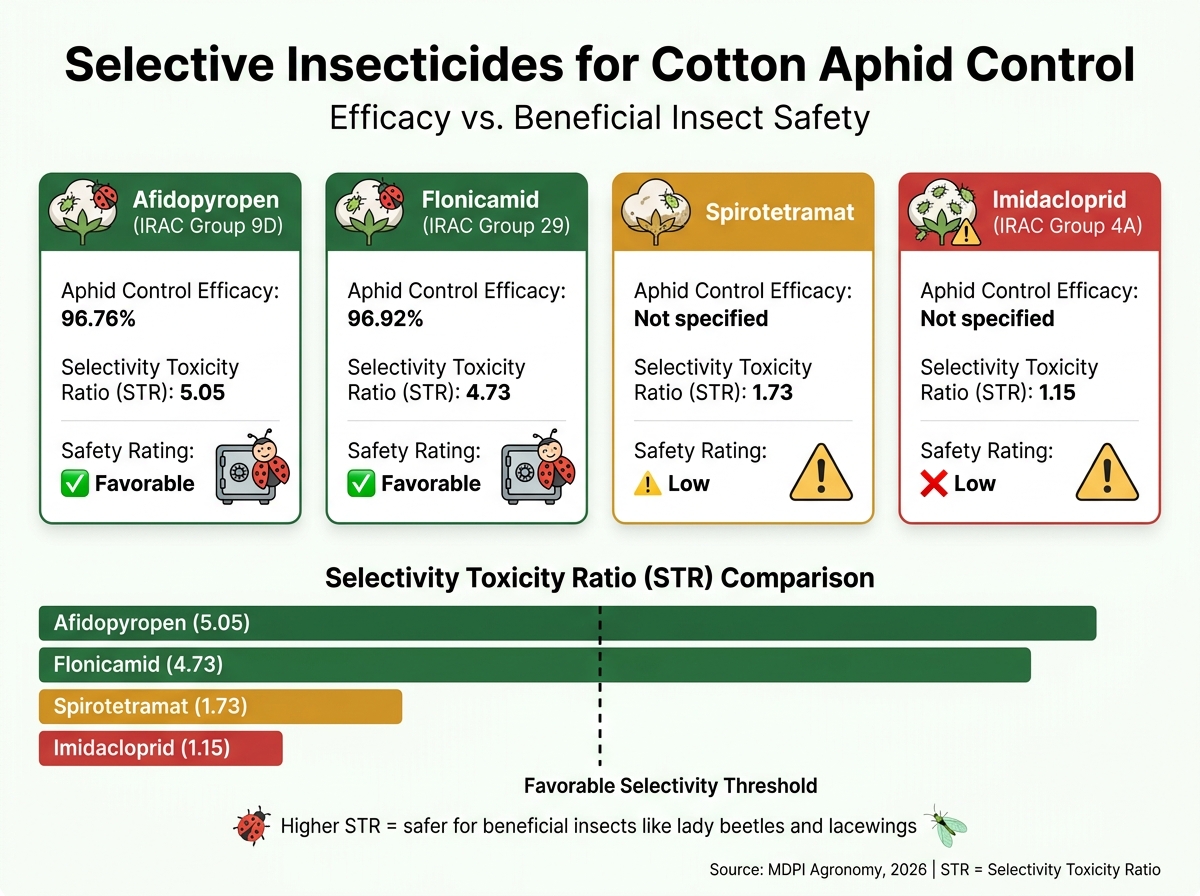
Selective Insecticides for Cotton Aphid Control: Efficacy & Safety Compared
Biological methods work hand-in-hand with cultural and chemical approaches, creating a well-rounded strategy to combat cotton aphids.
Natural Enemies of Cotton Aphids
Nature provides an impressive lineup of predators to keep cotton aphids in check. Beneficial insects such as lady beetles, lacewings, spiders, and parasitic wasps play a major role in reducing aphid populations. Among parasitoids, species like Aphidius gifuensis and Trioxys spp. stand out. These wasps lay their eggs inside aphids, which eventually leads to the aphids' demise through mummification.
Field studies in Bt cotton have demonstrated the effectiveness of these natural enemies, showing a 60–87% reduction in aphid populations over three growing seasons. When natural enemies were excluded in cage experiments, aphid populations skyrocketed by up to 5,703 times - clearly underscoring their importance. For example, the lady beetle Hippodamia variegata is a voracious predator, capable of consuming over 215 aphids daily during its third-instar larval stage.
How to Protect Beneficial Insects in Cotton Fields
Preserving beneficial insect populations is essential for sustainable aphid management, and it starts with regular field monitoring. Avoid using insecticides in the early growth stages of cotton to allow these natural predators to establish themselves. This ensures robust aphid control later in the season. If chemical intervention becomes necessary, opt for insecticides that target aphids while sparing beneficial insects. For instance, afidopyropen and flonicamid are effective against aphids and less harmful to lady beetle larvae. Here's a closer look at their performance:
| Insecticide | Aphid Control Efficacy | Selectivity Ratio (STR) |
|---|---|---|
| Afidopyropen | 96.76% | 5.05 (Favorable) |
| Flonicamid | 96.92% | 4.73 (Favorable) |
| Spirotetramat | - | 1.73 (Low) |
| Imidacloprid | - | 1.15 (Low) |
(Source: MDPI Agronomy, 2026)
Another effective approach is planting flower strips along field edges. These strips attract and sustain beneficial insects, reducing aphid populations by 34–57% up to 48 feet into the field. As Yang et al. explained:
"Our study demonstrates a high degree of effectiveness of flower strips in promoting natural enemy abundances and aphid suppression, and reducing the need for insecticide use in cotton crops." - Yang et al., Entomologia Generalis
By adopting these practices, you create a foundation for incorporating biological pesticides into your integrated pest management (IPM) plan.
Using Biological Pesticides
Biopesticides add an extra layer of control without disrupting beneficial insect populations. One standout option is the entomopathogenic fungus Beauveria bassiana. This fungus attacks aphids by attaching its spores to their surface, penetrating their bodies, and ultimately killing them through internal colonization. Research in Tamil Nadu, India (2022–2023), demonstrated the effectiveness of an indigenous isolate of B. bassiana (isolate B5, accession PP503009). At a concentration of 1×10⁸ spores/mL, it achieved a 96.67% mortality rate in cotton aphids within seven days. Microscopic analysis revealed spore attachment within 24 hours, hyphal penetration by 48 hours, and complete mummification at 72 hours.
Neem oil, containing the active ingredient azadirachtin, is another eco-friendly solution. It aligns well with IPM strategies and supports beneficial insect communities rather than harming them. Applying biopesticides based on scouting data ensures that aphids are targeted at their most vulnerable stages, preserving natural enemies and promoting long-term pest control across your cotton fields.
Chemical Control Within an IPM Plan
When biological and cultural strategies aren't enough, chemical control can play an important role in an Integrated Pest Management (IPM) plan. Used correctly, chemicals can complement other methods without undermining the balance of the ecosystem.
Choosing Selective Insecticides for Aphid Control
Not all insecticides are created equal, especially when it comes to protecting beneficial insects. Selective insecticides like afidopyropen (IRAC Group 9D) and flonicamid (IRAC Group 29) are highly effective against cotton aphids while being less harmful to beneficial species. Field trials have shown afidopyropen achieving over 96% control of Aphis gossypii, with selectivity toxicity ratios (STR) of 5.05 and 4.73, respectively.
"Afidopyropen and flonicamid provided excellent control of A. gossypii." - Pengfei Li et al., Tarim University
Another strong option is sulfoxaflor (Group 4C), especially for farms utilizing drip irrigation. This insecticide provides a longer residual effect and is less disruptive to beneficial insects compared to broad-spectrum options like lambda-cyhalothrin. While imidacloprid and other Group 4A neonicotinoids can deliver quick results, they increase the risk of resistance and can negatively impact beneficial insect populations. Timing and application techniques are just as important as the choice of insecticide for achieving effective control.
Application Timing and Techniques
Timing is everything when applying insecticides. Treatments should be applied before honeydew builds up, as this sticky residue can interfere with the absorption of chemicals. Since cotton aphids tend to gather on the undersides of leaves, thorough coverage of these areas is critical for foliar sprays. Proper calibration of equipment ensures that sprays reach the target surfaces effectively.
For farms with drip irrigation, systemic insecticides can be applied through this method for better results. A study conducted in Bole County, Xinjiang, during 2016 and 2017, found that sulfoxaflor delivered via drip irrigation at 700 g active ingredient (a.i.) per hectare (around 0.63 lb/acre) controlled aphids for 40 days. In contrast, foliar sprays at 75 g a.i. per hectare (approximately 0.07 lb/acre) provided only 20 days of control. The drip application also supported higher populations of beneficial insects like ladybird beetles and lacewings and boosted cotton yields by 5% over multiple years. To maintain effectiveness throughout the season, it’s essential to rotate modes of action.
Rotating Modes of Action to Prevent Resistance
Cotton aphids reproduce quickly, making them prone to developing resistance. Using the same mode of action (MoA) repeatedly increases the likelihood of resistance. To combat this, avoid applying products from the same MoA group more than twice in a single season. Always check the IRAC Group Number on product labels to plan a proper rotation. For example, a rotation that includes carbosulfan, diafenthiuron, furathiocarb, and deltamethrin has proven more effective than relying on single applications or mixtures for controlling Aphis gossypii.
It’s important to note that carbamates (Group 1A) and organophosphates (Group 1B) share cross-resistance mechanisms, so alternating solely between these two groups won’t adequately prevent resistance. Resistance, however, can sometimes be reversed. Research shows that related aphid populations regained susceptibility to imidacloprid and sulfoxaflor after a year without exposure. Rotating MoAs is a critical strategy to preserve the effectiveness of chemical tools in your IPM plan for the long term.
Conclusion: Building a Cotton Aphid Management Plan
Key Takeaways for Cotton Farmers
Managing cotton aphids effectively requires a mix of strategies rather than relying on a single solution. The best results come from combining cultural practices, biological conservation, and targeted chemical treatments into a unified plan. Texas serves as a great example of this approach in action: since 2000, the use of foliar insecticides in Texas cotton fields has dropped by two-thirds, while cotton yields have increased by 50%. This progress reflects the adoption of Integrated Pest Management (IPM) practices across approximately 5 million acres of cotton.
The foundation of successful aphid management is proactive field monitoring. Regular scouting, guided by established economic thresholds, ensures timely interventions. Acting based on these thresholds not only improves treatment timing but also prevents honeydew buildup, which can severely impact lint quality and complicate the ginning process.
Another critical component is the careful selection and rotation of insecticides based on their IRAC group classification. This approach helps maintain the effectiveness of treatments while protecting beneficial insect populations. A well-coordinated plan that connects field practices to the ginning process is key to long-term success.
Collaborative Management Across the Cotton Value Chain
Beyond field-level strategies, collaboration across the entire cotton value chain plays a vital role in controlling aphid infestations. Cotton growers, crop consultants, and gins all have a shared interest in minimizing late-season infestations, as honeydew buildup can significantly degrade lint quality. Sharing scouting data with neighbors and consultants creates a better understanding of regional pest pressures, enabling more effective area-wide suppression efforts.
Resistance to insecticides is a growing regional issue. Resistance to pyrethroids, neonicotinoids, and organophosphates has been recorded across multiple continents, emphasizing the need for coordinated rotations of chemical treatments between farms. Working together on a regional scale amplifies the benefits of integrated management practices. Additionally, partnering with local extension services to monitor resistance trends provides an edge when planning for the next growing season. This collective approach ensures a stronger, more sustainable defense against cotton aphids.
FAQs
How do I pick the right aphid threshold for my crop stage?
To determine the right aphid threshold for your crop, align your scouting data with the crop's growth stage and expected yield. Before the first cracked boll, the threshold typically falls between 40–70 aphids per leaf. If your yield potential is over 1,000 lbs of lint per acre, you may need to act at the lower end of that range. After bolls crack, the threshold drops significantly to 10–15 aphids per leaf to minimize the risk of honeydew accumulation and lint damage. Don’t forget to factor in predator activity, plant stress levels, and the presence of fungal pathogens when making adjustments.
When should I spray to protect beneficial insects?
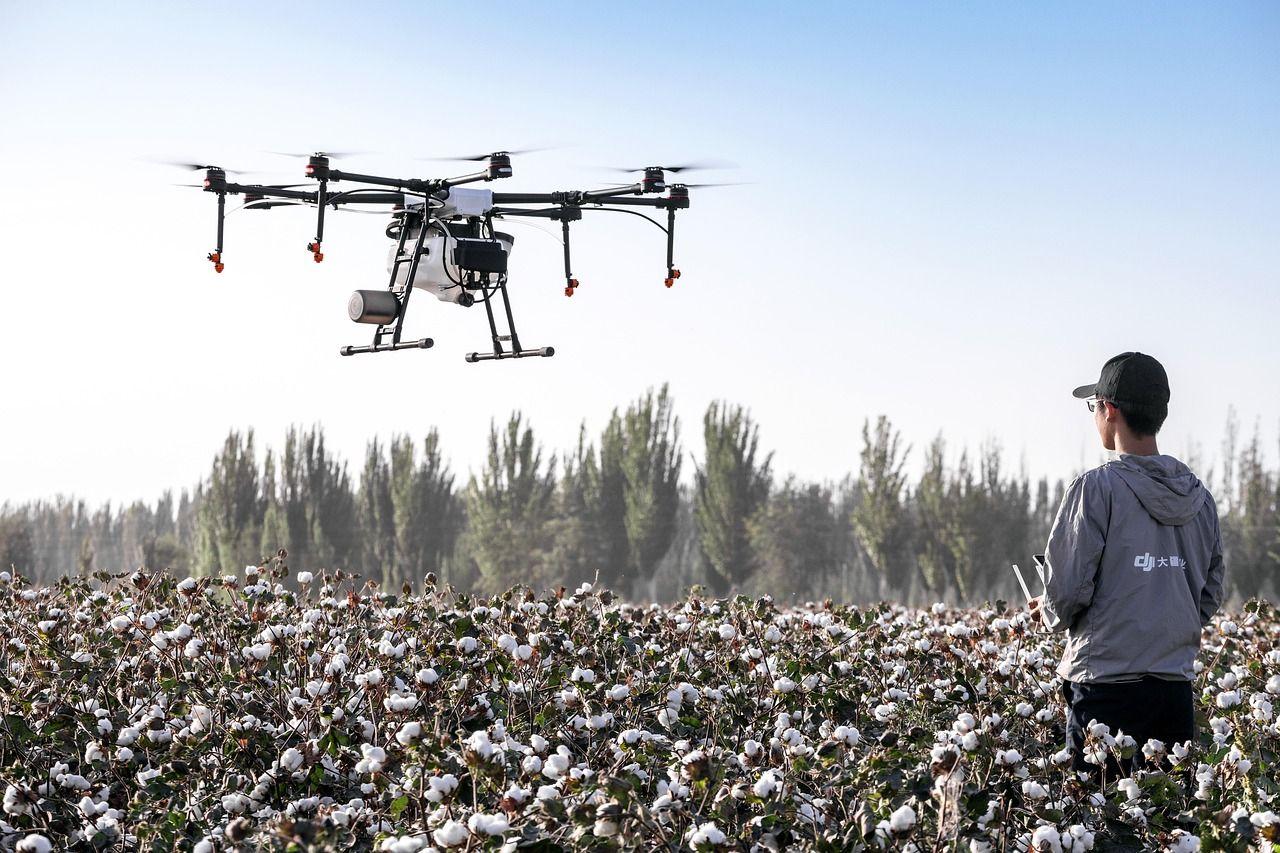
To safeguard helpful insects, begin with non-chemical approaches such as cultural practices, insecticidal soaps, or oils. If chemical solutions become necessary, opt for selective insecticides rather than broad-spectrum types, which can harm natural predators. Only spray when pest populations surpass economic thresholds - avoid routine applications. Be precise with treatments, using methods like spot spraying or drones, and focus on the pests' most vulnerable stages to reduce harm to beneficial insects.
How do I rotate IRAC groups to slow aphid resistance?
To help prevent aphids from developing resistance, it's crucial to rotate insecticides from different Insecticide Resistance Action Committee (IRAC) mode of action (MoA) groups. Here are some key steps to follow:
- Avoid back-to-back applications: This includes seed treatments and sprays from the same MoA group. Repeated use increases the chance of resistance.
- Time applications wisely: Plan your treatment windows around the aphid generation cycle, which typically lasts 15–30 days. After each window, switch to a different MoA group.
- Respond to spray failures carefully: If an application doesn't work, don’t reapply an insecticide from the same MoA group. Instead, choose a product from a different group.
Lastly, consult with local experts to understand specific resistance patterns in your region. Their insights can guide your strategy and help you stay ahead of potential resistance issues.