You know that weather patterns aren't what they used to be. Erratic rainfall, prolonged dry spells, and extreme temperatures are becoming the norm, challenging even the most established operations. Building climate resilience in cotton farming isn't about chasing trends—it's about safeguarding your yields, soil, and bottom line against these shifts. This guide dives deep into practical, field-tested strategies to enhance your farm's adaptability, drawing on proven agronomic practices to help you thrive in an unpredictable environment.
We'll focus on integrating resilience into your existing systems, assuming you're already versed in basics like variety selection and nutrient management. Instead, we'll explore advanced techniques for water optimization, soil enhancement, pest adaptation, and risk diversification. By the end, you'll have actionable steps to fortify your operation for long-term productivity.
Understanding Climate Impacts on Cotton Production
Cotton is a resilient crop, but climate variability amplifies risks like drought stress, heat-induced boll shedding, and altered pest cycles. In regions like Texas and Arizona—major cotton hubs—drought has historically shaped planting decisions, with shifting markets adding economic pressure. Tool-sourced insights from industry reports highlight how high input costs and weather uncertainty push growers toward adaptive practices.
For experienced farmers, the key is recognizing subtle signs: reduced boll development during heat waves or increased vulnerability to pests like stink bugs in warmer conditions. Climate resilience in cotton farming means proactive measures that maintain fiber quality and yield potential, even when conditions turn adverse. Let's break down core strategies.
Assessing Your Farm's Vulnerability
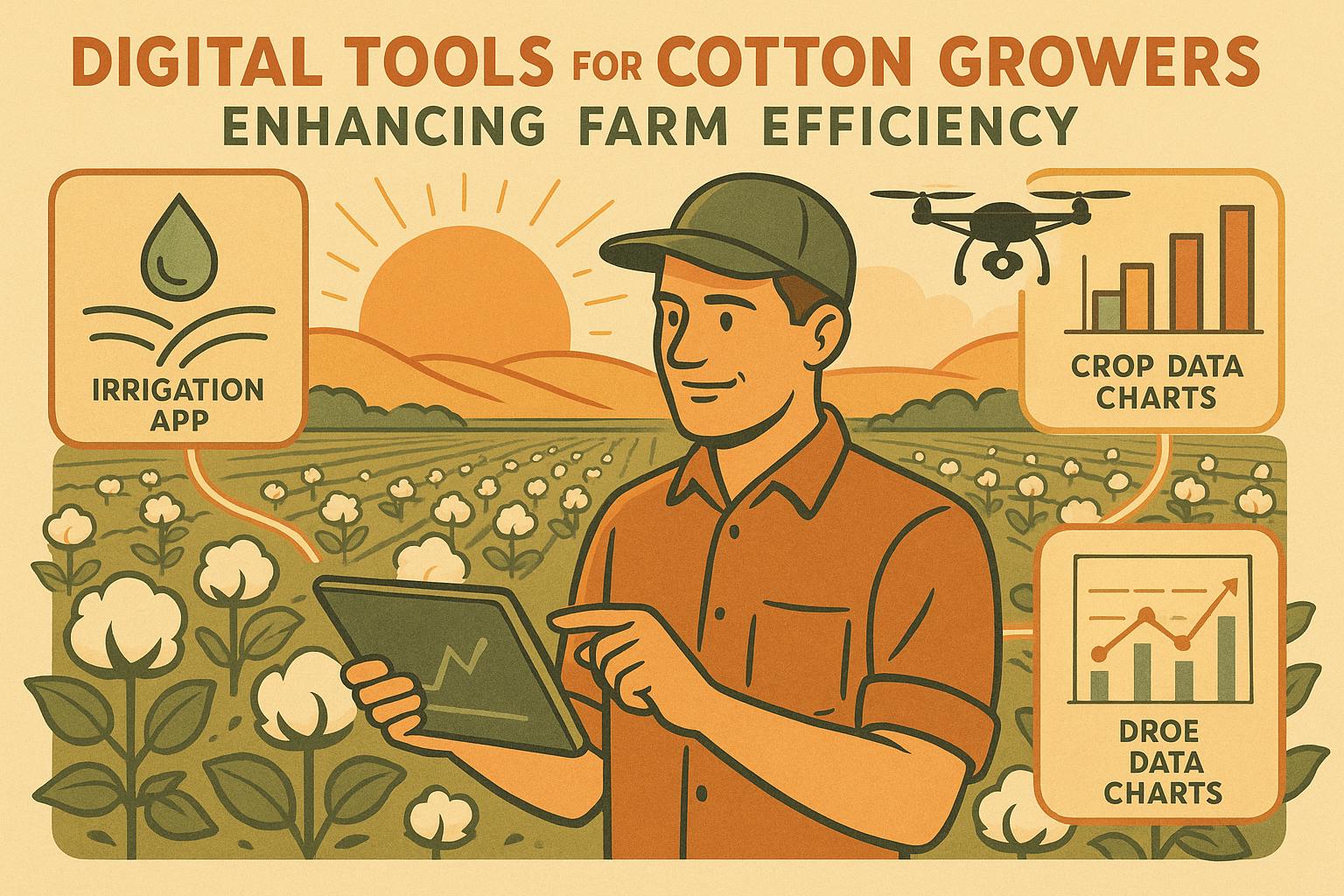
Start with a site-specific audit. Map your fields for soil types, topography, and historical yield data to identify weak spots. Use precision tools like soil moisture sensors or drone imagery to pinpoint areas prone to water stress. In drought-prone areas, this data reveals where resilience efforts will yield the highest ROI.
Link this to broader trends: Industry analyses show global cotton stocks rising when production outpaces use, but local climate events can disrupt this balance. For your farm, vulnerability assessment guides targeted interventions, ensuring resources aren't wasted on low-impact changes.
sbb-itb-0e617ca
Water Management: Optimizing Every Drop
Water is cotton's lifeblood, and with increasing scarcity, efficient use is non-negotiable. Beyond basic irrigation, advanced strategies focus on retention and timing to build drought tolerance.
Advanced Irrigation Techniques
Shift from flood or furrow systems to drip or pivot irrigation with variable rate technology. This allows precise application based on real-time soil data, reducing runoff and evaporation by up to 30%. For seasoned growers, integrate weather forecasting apps with automated systems—adjusting flows ahead of dry spells preserves root zone moisture without overwatering.
Incorporate deficit irrigation: Intentionally stressing plants during vegetative stages encourages deeper roots, enhancing resilience during reproductive phases. Studies from arid cotton regions demonstrate this boosts water use efficiency, maintaining yields while cutting usage by 20-25%. Pair it with mulching to minimize soil evaporation.
Rainwater Harvesting and Storage
Capture runoff in on-farm reservoirs or contour bunds. In high-evaporation zones, line ponds with impermeable materials to extend storage life. This supplemental source bridges gaps during dry periods, reducing reliance on groundwater. Experienced operators can scale this by integrating it with crop rotation—fallowing fields to recharge aquifers.
Tool insights from sustainability research emphasize innovative water management as key to transforming cotton farming for a greener future. By harvesting every rain event, you create a buffer against prolonged droughts.
Soil Health: The Foundation of Resilience
Healthy soil acts as a shock absorber against climate extremes. For veteran growers, this means going beyond standard nutrient plans to foster microbial life and structure.
Regenerative Practices for Soil Structure
Incorporate no-till or minimum-till methods to preserve organic matter and reduce erosion. This builds aggregate stability, improving water infiltration during heavy rains and retention in dry times. Data from Mid-South research projects, funded by industry bodies, show these practices enhance grower profitability through sustained yields.
Add biochar or compost from agricultural byproducts—like processed cotton waste—to boost carbon sequestration. A UC Merced study on turning cotton waste into climate-smart compost highlights how this creates soil-like material rich in nutrients, improving water-holding capacity by 15-20%. For your fields, apply at 5-10 tons per acre in off-seasons.
Cover Crops Integration
Plant winter cover crops like rye or legumes between cotton cycles. These prevent soil compaction, add nitrogen, and suppress weeds, reducing herbicide needs. In cotton systems, covers like crimson clover fix 50-100 pounds of nitrogen per acre, cutting fertilizer inputs. They also enhance microbial activity—use the cotton strip soil test to measure decomposition rates as a proxy for soil health.
From tool results, rapid assessments like the cotton strip test reveal microbial vitality through fabric breakdown, guiding adjustments. Rotate covers based on your soil's needs: Legumes for nitrogen-poor sands, grasses for erosion-prone clays.
Pest and Disease Adaptation
Warmer climates extend pest lifecycles, demanding evolved integrated pest management (IPM).
Monitoring and Threshold Adjustments
Deploy pheromone traps and scouting apps for early detection of stink bugs or bollworms. Adjust economic thresholds downward in heat-stressed fields, as weakened plants tolerate less damage. Industry warnings urge watching for stink bugs in 2026, noting their shield-shaped bodies and crop risks.
Incorporate biological controls: Release beneficial insects like ladybugs to target aphids, reducing chemical reliance. This aligns with sustainability initiatives, fostering ecosystem balance.
Variety Selection for Resilience
Choose varieties with built-in tolerances, like those from Deltapine or PhytoGen lines emphasizing heat and drought resistance. Tool-sourced variety updates for 2026 highlight proven performers in leading trait systems. For your operation, trial hybrids with strong boll retention under stress—machine learning research from UGA is refining genetics for better bolls.
For more on selecting resilient varieties, check our Guide to Cotton Insurance with Weather Data for risk mitigation tips.
Crop Diversification and Risk Management
Don't put all bolls in one basket. Diversify to spread climate risks.
Rotational Systems
Alternate cotton with drought-tolerant crops like sorghum or peanuts. This breaks pest cycles and rebuilds soil nutrients. In volatile markets, rotations stabilize income—tool analyses note shifting commodity prices influencing 2026 outlooks.
Financial Hedging Tools
Use futures contracts or options to lock in prices amid uncertainty. Advanced hedging techniques, like spreads, protect against downside risks while capturing upsides. Industry marketing news questions if 2026 will outperform 2025, citing improved safety nets, but experienced growers know hedging is key.
Incorporate crop insurance tailored to climate perils, such as revenue protection policies. This cushions losses from yield dips due to extremes.
Leveraging Technology for Predictive Insights
Embrace data-driven tools to stay ahead.
AI and Machine Learning Applications
Machine learning models predict boll development under varying climates, as seen in UGA collaborations. Input your field data for customized forecasts, optimizing planting windows.
Remote Sensing and Analytics
Use satellite imagery for early stress detection—platforms like those in precision ag research flag issues before visual symptoms. This enables targeted interventions, saving resources.
Measuring and Refining Your Resilience Plan
Track progress with key metrics: Yield stability across seasons, water use per bale, and soil organic matter levels. Annual reviews refine strategies—perhaps adjusting cover crop mixes based on microbial tests.
Industry-funded research underscores the value: Cotton Incorporated's Mid-South projects boost profitability through adaptive innovations. For your farm, this means iterative improvements, ensuring long-term viability.
Actionable Takeaways for Seasoned Growers
- Conduct a Vulnerability Audit: Map fields and integrate sensor data for targeted resilience builds.
- Optimize Water Systems: Adopt variable-rate irrigation and harvesting to maximize efficiency.
- Enhance Soil Vitality: Use covers, compost, and no-till to create a resilient foundation.
- Adapt IPM: Monitor pests closely and select tolerant varieties.
- Diversify Risks: Rotate crops and hedge financially.
- Leverage Tech: Employ AI for predictions and sensing for early action.
- Monitor Metrics: Track yields and soil health to refine approaches.
Building climate resilience in cotton farming equips your operation to weather any storm—literally. By implementing these strategies, you'll not only protect your yields but also position your farm as a leader in sustainable production. Share your experiences in the comments—what resilience tactics have worked on your acres?
Explore: Integrated Pest Management in Cotton Farming for complementary pest strategies.