Biological pesticides are transforming cotton farming by offering safer, natural alternatives to synthetic chemicals. Derived from bacteria, fungi, plants, and minerals, they target pests like bollworms and aphids while protecting pollinators and reducing environmental harm. Farmers are switching to these solutions due to stricter pesticide regulations, rising pest resistance, and cost advantages. For example, Arizona cotton farmers cut insecticide use from 11 sprays per season to fewer than two, saving $700 million and preventing 40 million pounds of chemical pesticides from entering the environment.
Key benefits include:
- Lower toxicity: Minimal risk to humans and beneficial insects.
- Reduced resistance: Multi-faceted actions slow pest adaptation.
- Cost savings: Comparable or lower costs per acre over time.
- Short re-entry intervals: 0–4 hours compared to 12–48+ hours for synthetics.
- Environmental impact: 80–90% fewer greenhouse gas emissions.
Biological pesticides like Bacillus thuringiensis (Bt), Beauveria bassiana, neem extracts, and pheromones work by disrupting pest growth, feeding, or reproduction. They are most effective when used early and integrated into broader pest management strategies. Though adoption faces challenges like higher initial costs and farmer education, their long-term benefits are reshaping pest control in cotton farming.
Bt Crops | Biotechnology and its Applications | Biology | Khan Academy

sbb-itb-0e617ca
Problems with Synthetic Pesticides in Cotton Farming
The challenges posed by synthetic pesticides highlight the pressing need to explore safer and more sustainable practices in cotton farming.
Although cotton occupies just 2.4% of the world’s cultivated land, it accounts for a disproportionate 6% of all pesticides and 16% of insecticides used globally. This heavy reliance on chemicals harms the environment, endangers human health, and accelerates pest resistance, creating a cycle that becomes harder to break over time.
Damage to the Environment
Synthetic pesticides wreak havoc on ecosystems. A two-year study conducted at Aydın Adnan Menderes University in Turkey (June 2021–September 2022) exposed the harmful effects of clothianidin seed treatments on beneficial insects. According to researcher Melis Yalçin, this widely used pesticide reduced populations of predators like ladybugs, lacewings, and spiders by 43% in 2021 and an alarming 75% in 2022 compared to untreated areas. These natural predators play a vital role in controlling pests without relying on chemicals.
Systemic pesticides also infiltrate nectar, pollen, and even water droplets, endangering pollinators and soil organisms. Beyond their ecological impact, these chemicals add to the carbon footprint, especially when compared to biological alternatives. This environmental damage is closely tied to risks for human health.
Health Risks
Synthetic pesticides are responsible for approximately 200,000 deaths worldwide every year, with farmworkers facing the highest exposure due to the chemicals’ nerve-targeting properties. These risks often necessitate extended waiting periods before workers can safely return to treated fields.
A tragic incident in the Yavatmal region of India underlines these dangers. In 2017, dozens of cotton farmers died, and nearly 1,000 others were hospitalized after suffering acute pesticide poisoning during one season. The event underscored the dangers of overusing toxic chemicals, especially when farmers lack access to protective gear or clear instructions - issues that disproportionately affect illiterate workers. Devanand Pawar, a farmers' rights activist, summed up the situation:
"The companies say that spraying pesticides brings you a good crop, but we only see deception. Our people are losing their lives."
Residues from these chemicals also pose risks to consumers and can lead to export restrictions when contamination exceeds allowable limits. While human health suffers, pests continue to adapt, rendering synthetic treatments less effective.
Pest Resistance
Over time, pests develop resistance to synthetic pesticides. Genetic mutations and changes in gene expression allow them to survive treatments, with resistance building faster the more a pesticide is used. This creates a vicious cycle where farmers must apply higher doses or switch to stronger chemicals.
The pink bollworm in India is a striking example. Resistance to the Cry1Ac toxin was first detected in Gujarat in 2008. By 2015, the pest had developed widespread resistance across central India, forcing a complete overhaul of pest management strategies. Excessive pesticide use not only accelerates resistance but also reduces populations of natural predators. This imbalance can lead to outbreaks of secondary pests, like spider mites, which were previously kept under control . The result? A system that demands ever-greater chemical inputs just to maintain the same level of pest control.
These issues underscore the promise of biological pesticides as a safer, more sustainable solution for managing pests in cotton farming.
How Biological Pesticides Work on Cotton Pests
Biological pesticides function by using natural processes to target specific pests, offering an alternative to the harmful effects of synthetic chemicals. Instead of relying on toxic substances that disrupt pest nervous systems, these solutions utilize living organisms or plant-derived compounds to mimic nature's pest control methods. This approach directly addresses the environmental and health concerns linked to traditional pesticides. Below, we’ll explore how different biological agents work to control cotton pests with precision.
Main Mechanisms of Action
Biological pesticides deploy various methods to tackle cotton pests. Microbial agents, such as Bacillus thuringiensis (Bt), produce proteins known as Cry and Cyt. These proteins are only effective when ingested by specific insects. Once inside the caterpillar's gut, they bind to receptors, causing gut damage, paralysis, and eventually death. This mechanism is highly selective, targeting only pests with the right receptors and leaving other organisms unharmed.
Entomopathogenic fungi, like Beauveria bassiana, follow a completely different strategy. They first attach to the insect's outer shell, then germinate, penetrate the cuticle using enzymes, and spread throughout the insect's body. Certain strains of B. bassiana can even colonize cotton plants without harming them, creating a protective barrier against pests like aphids and other piercing-sucking insects.
Plant extracts, such as neem, interfere with pest growth and feeding, while pheromones disrupt mating by confusing reproductive signals. Some biological pesticides go a step further by activating the cotton plant's immune system through processes like Induced Systemic Resistance (ISR) or Systemic Acquired Resistance (SAR), making the plant tougher against future pest attacks. Additionally, products containing Chromobacterium subtsugae halt pest feeding within one minute of contact, preventing immediate crop damage, even though the pests may take 7–10 days to die.
Targeted Pest Control
The precision of biological pesticides sets them apart. Unlike synthetic options that often kill both pests and beneficial insects, biological pesticides are designed to target specific pests while preserving helpful species.
For example, Bacillus thuringiensis is highly effective against lepidopteran pests, such as bollworms, loopers, and leafworms, without harming beneficial species like bees or ladybugs, which lack the necessary receptors. Meanwhile, Beauveria bassiana is particularly effective against sucking pests, including aphids (Aphis gossypii), thrips (Thrips tabaci, Frankliniella occidentalis), and whiteflies. Field trials have shown that specific strains of B. bassiana achieved 69% to 96% mortality against western flower thrips within 10 days.
This targeted approach also allows natural predators to thrive and assist in controlling secondary pests. For instance, a study by Rincon-Vitova Insectaries, published in the Chinese Journal of Biological Control, revealed that releasing Trichogramma on just 667 acres of vegetables provided biological control for 3,500 acres of nearby cotton fields, achieving 60% to 90% parasitism of cotton caterpillars [[8]](https://www.rinconvitova.com/bulletins_crop_htm/Cotton BUL.htm). Such extended benefits are not achievable with broad-spectrum synthetic pesticides, which often decimate beneficial insect populations.
"Unlike chemical pesticides, biopesticides often exert their effects selectively, having limited impact on beneficial flora and fauna. This reduces negative side effects." - Emeritus Distinguished Professor Dame Alison Stewart, NZIAHS
Biological Pesticide Products for Cotton Crops
Cotton farmers now have access to biological pesticide products that effectively manage pests while reducing the environmental impact of synthetic chemicals. These solutions work by targeting specific pests, leaving beneficial insects and pollinators unharmed. They represent a shift toward more natural and sustainable pest control methods in cotton farming.
Bacillus thuringiensis (Bt) Cotton
Bt cotton is a standout example of biological pest control in modern agriculture. It uses Bacillus thuringiensis, a naturally occurring soil bacterium that produces insecticidal proteins (Cry and Vip) to target pests like bollworms, budworms, and leafworms. These proteins are highly selective, ensuring precise pest control.
The widespread adoption of Bt cotton highlights its success. In the U.S., Bt cotton coverage expanded from 15% in 1996 to 85% by 2019. In India, Bt cotton now accounts for 93% of the total cultivated cotton area, with over 7 million farmers using it across 26 million acres by 2014. Products like DiPel, developed by Valent BioSciences, utilize Bacillus thuringiensis subsp. kurstaki (Btk) strain ABTS-351 and have been in use for nearly 50 years to combat lepidopteran pests. DiPel also offers practical benefits, including a 0-day Pre-Harvest Interval (PHI) and a 4-hour Restricted-Entry Interval (REI), allowing farmers to harvest immediately after application.
Safety studies have shown that Bt toxins are harmless to humans and non-target insects since these organisms lack the specific midgut receptors needed for toxin activation. Even at doses as high as 5,000 mg/kg of body weight in mouse feeding studies, no adverse effects were observed. To delay pest resistance, modern Bt cotton varieties use pyramided approaches, combining multiple toxins. For instance, Bollgard II employs Cry1Ac and Cry2Ab toxins for enhanced bollworm protection. By 2019, Bt hybrids like Bollgard II covered 94% of India's 13 million hectares of cotton, signaling a move toward more environmentally conscious farming practices.
Neem Extracts (Azadirachtin)
Neem-based products, derived from the neem tree, offer a versatile approach to pest management. The active ingredient, azadirachtin, works as an insect growth regulator, antifeedant, and repellent, making it effective against sap-sucking pests like aphids and whiteflies. By disrupting insects' hormonal systems, neem prevents proper development and feeding. Its non-toxic nature ensures safety for both farm workers and consumers.
Farmers typically apply neem extracts as foliar sprays to manage pest populations. Thanks to its multiple mechanisms of action, neem reduces the risk of pests developing resistance while sparing beneficial insects and pollinators.
Gemstar and Vivus Products
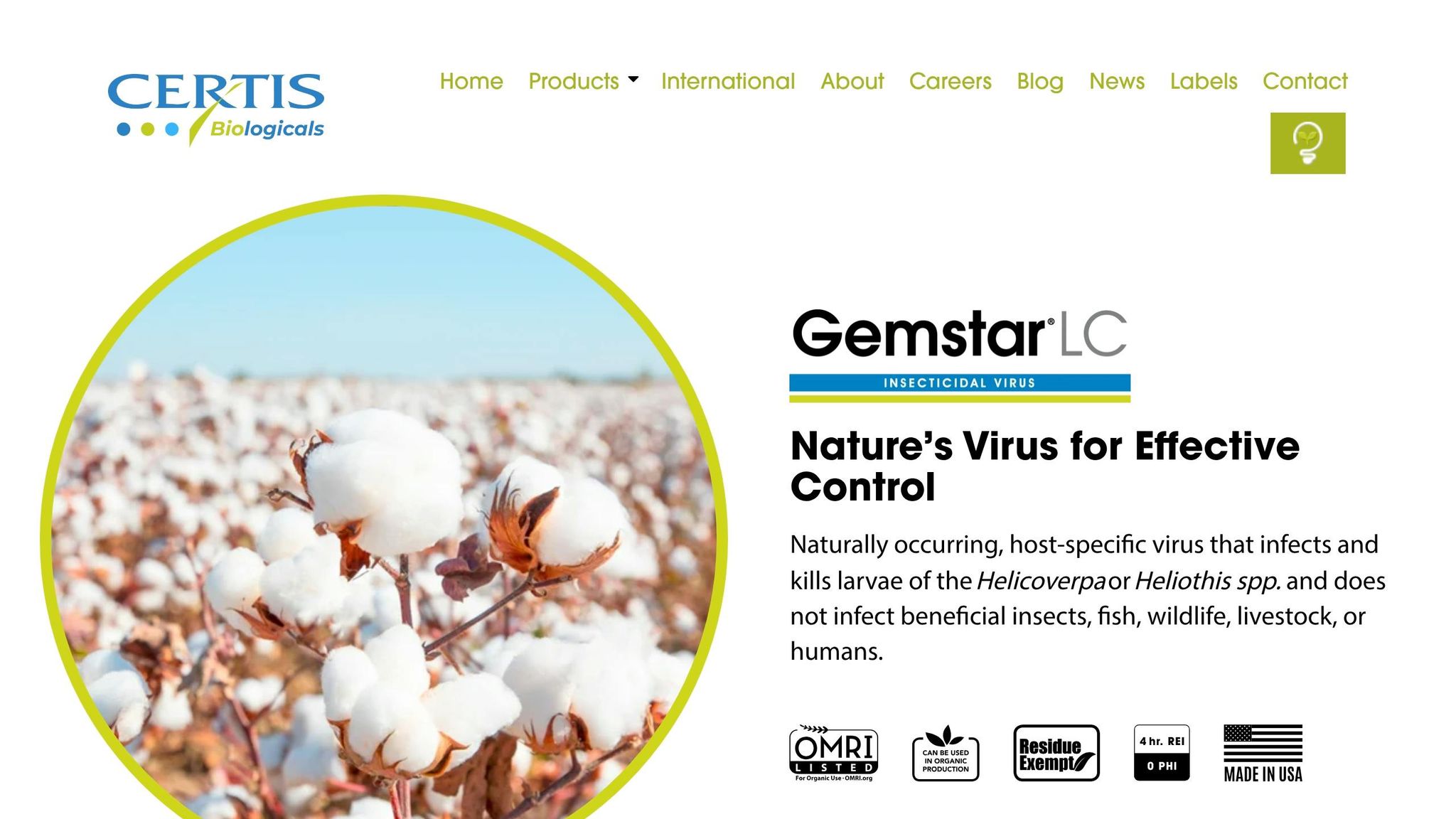
Other biopesticides, such as Gemstar and Vivus, are also advancing sustainable cotton farming. These products rely on microorganisms, including viruses, that specifically target pests without harming beneficial insects or natural predators. This makes them ideal for integrated pest management programs.
In May 2026, NewLeaf Symbiotics expanded the use of its TS201 bioinsecticide for cotton. This product, registered with the EPA, employs Pink Pigmented Facultative Methylotroph (PPFM) technology to colonize plant roots and activate the plant's immune system. In small-plot trials, TS201 protected against root-knot nematodes and thrips. When paired with the biostimulant Terrasym 410, it achieved yield results comparable to traditional chemical pesticides. Adam Baumann from The Digital Farmer remarked:
"Being on the cutting-edge of this biofungicide is really exciting".
Farmers can also turn to fungal agents like Beauveria bassiana, which targets whiteflies and aphids, or Trichoderma spp., used as seed treatments to combat soil-borne diseases and nematodes. These early interventions help protect crops from pest infestations and soil-related issues.
Advantages of Biological Pesticides Over Synthetic Options
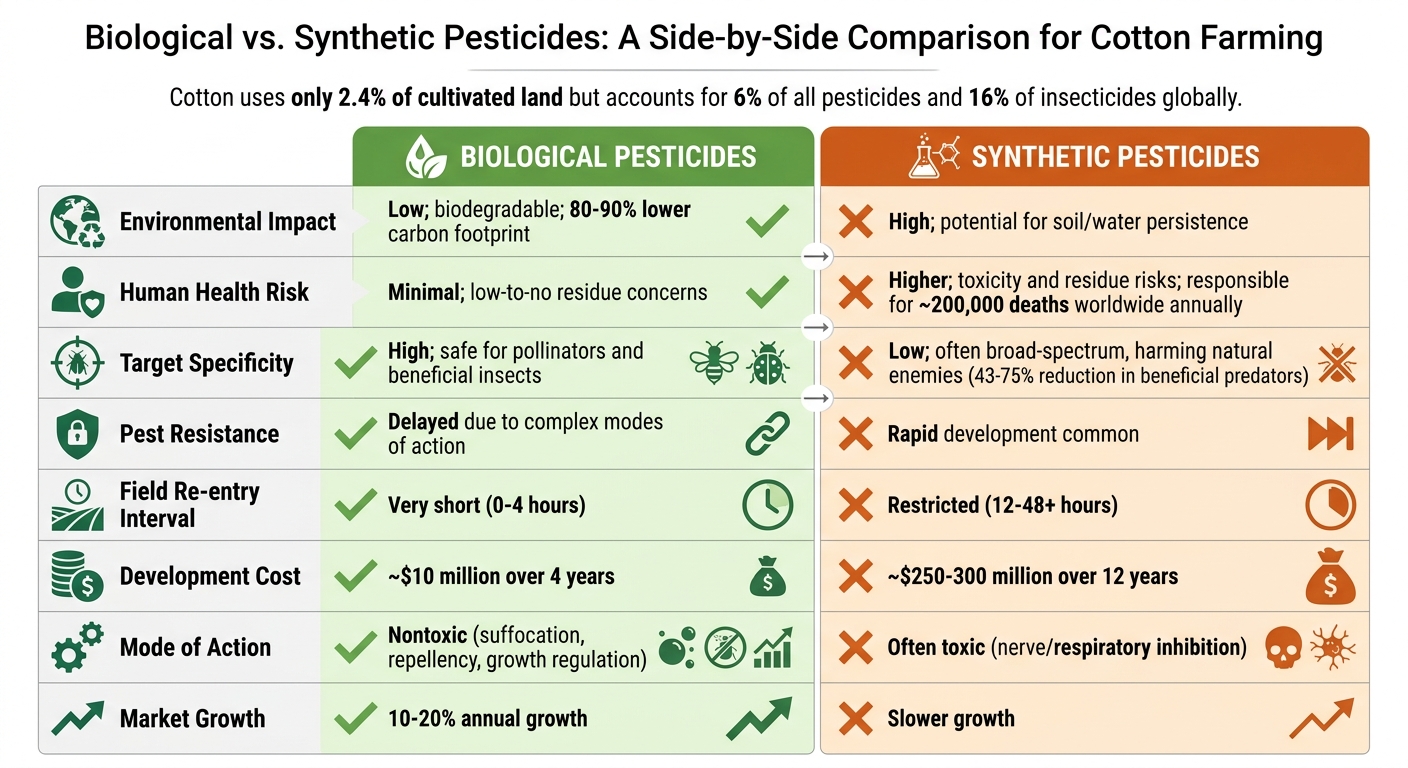
Biological vs Synthetic Pesticides in Cotton Farming: Environmental Impact and Safety Comparison
Biological pesticides present a practical and safer alternative for cotton farmers, addressing many of the issues tied to synthetic pesticides. These benefits extend beyond environmental considerations, touching on worker safety, pest resistance, and economic sustainability.
One standout feature of biopesticides is their biodegradability. They can cut greenhouse gas emissions by as much as 90%. Classified as the least toxic category of pesticides, they leave minimal or no residue, making them safer for consumers. For farm workers, the advantages are immediate - fields treated with biopesticides typically allow re-entry within 0–4 hours, compared to the 12–48+ hours required for synthetic chemicals. This shorter interval not only improves safety but also enables quicker harvesting and more efficient labor use.
Biopesticides also address pest resistance more effectively. Unlike synthetic options, which often lead to rapid resistance, biological pesticides rely on complex, multi-faceted actions. For example, a two-year cotton study showed that the synthetic insecticide clothianidin reduced predator populations by 75% in treated fields. Biological alternatives, on the other hand, preserve beneficial insects, which naturally help control pests. This approach supports a more sustainable pest management system.
While initial costs for biopesticides can be higher, their long-term economic benefits are compelling. By maintaining pest control efficacy over time, they reduce the likelihood of expensive resistance issues. In Brazil, biological nematicides have grown from just 6% of the total market in 2015 to an impressive 75% today. Globally, the biopesticide market is expanding at an annual rate of 10%–20%, far outpacing the slower growth of synthetic pesticides.
Comparison Table: Biological vs. Synthetic Pesticides
Here's a quick side-by-side look at how biological and synthetic pesticides differ across key factors:
| Feature | Biological Pesticides | Synthetic Pesticides |
|---|---|---|
| Environmental Impact | Low; biodegradable; 80–90% lower carbon footprint | High; potential for soil/water persistence |
| Human Health Risk | Minimal; low-to-no residue concerns | Higher; toxicity and residue risks |
| Target Specificity | High; safe for pollinators and beneficial insects | Low; often broad-spectrum, harming natural enemies |
| Pest Resistance | Delayed due to complex modes of action | Rapid development common |
| Field Re-entry Interval | Very short (0–4 hours) | Restricted (12–48+ hours) |
| Development Cost | ~$10 million over 4 years | ~$250–$300 million over 12 years |
| Mode of Action | Nontoxic (suffocation, repellency, growth regulation) | Often toxic (nerve/respiratory inhibition) |
This comparison highlights the practical and long-term advantages of biological pesticides, making them an increasingly attractive option for sustainable cotton farming.
Adding Biological Pesticides to Modern Cotton Farming
Incorporating biological pesticides into cotton farming requires a shift from the traditional reliance on chemical methods. The primary adjustment lies in timing. Unlike synthetic pesticides, which are applied when pest populations reach critical levels and act quickly, biological pesticides are most effective when applied early - before pests become a major threat. Many of these products work by disrupting pest feeding or reproduction rather than providing an immediate kill. Waiting for pests to hit traditional thresholds often results in missing the ideal application window. Additionally, fine-tuning application techniques can further improve the effectiveness of biopesticides.
Farmers should also pay close attention to water volume during application. Using too much water can dilute the product’s effectiveness. It’s equally important to ensure that any adjuvants used are compatible with the biopesticide.
Biopesticides can also be particularly useful near harvest. With most products offering zero-day pre-harvest intervals (PHI) and field re-entry times of just 0–4 hours, they address the challenges of residue management in late-season pest control. When evaluating their success, it’s essential to look beyond immediate pest mortality and focus on improvements in marketable yield and crop quality.
Combining Biological Pesticides with IPM
Biological pesticides perform best when integrated into a broader Integrated Pest Management (IPM) strategy. IPM enhances the effectiveness of these products by creating a more balanced approach to pest control.
A critical component of this integration is conservation biological control, which involves protecting beneficial insects like big-eyed bugs, Collops beetles, lacewing larvae, and minute pirate bugs. By preserving these natural predators, farmers can maintain higher pest tolerance levels without suffering economic losses [[8]](https://www.rinconvitova.com/bulletins_crop_htm/Cotton BUL.htm).
This highlights a unique aspect of biopesticides:
"Biopesticides are often not used appropriately based on their unique modes of action. The established rules on IPM often do not apply."
- Pamela G. Marrone, Invasive Species Corporation
One effective strategy is tank mixing biopesticides with low doses of synthetic pesticides. This approach combines the immediate knockdown provided by synthetics with the sustained pest suppression of biological products. Rotating between biopesticides and synthetics also helps manage pest resistance - biopesticides are most effective when pest pressure is low, while synthetics can be used when higher pest levels demand immediate action.
Finally, field monitoring is essential for success. Regular scouting using tools like shake sheets or sweep nets helps track both pest populations and beneficial insect activity. This ensures that products are applied at the right time, maximizing their effectiveness and avoiding unnecessary treatments.
Success Stories from U.S. Cotton Farms
U.S. cotton farming has seen remarkable benefits from adopting biological pest control methods. Take Arizona, for example: since 1996, the state's cotton industry has saved over $700 million and slashed average insecticide use from 11 sprays per season to fewer than two. This shift has kept more than 40 million pounds of active ingredients out of the environment. These gains come from a combination of transgenic Bt cotton, selective insecticides, and conservation biological control - collectively known as the "Arizona IPM Advantage". The payoff? Arizona now boasts the highest-yielding cotton in the U.S. while using the least insecticide in the Cotton Belt.
One standout example of these efforts is the targeted eradication of the pink bollworm, a pest that plagued cotton farmers for decades.
Bt Cotton Varieties: Bollgard II, WideStrike, and Bollgard III
The eradication of the pink bollworm is a testament to the power of biological pest control. Before the widespread use of Bt cotton in the 1990s, this pest caused $32 million in losses annually for Arizona growers, who also spent $16 million more on chemical insecticides. The challenge? Pink bollworm caterpillars burrow into cotton bolls, making them hard to reach with traditional sprays.
Bt cotton, introduced in 1996, was a game-changer. These varieties produce Bacillus thuringiensis proteins that target and kill feeding larvae. But the real breakthrough came with the addition of sterile insect release. Between 2006 and 2014, Arizona fields were flooded with 11 billion sterile moths. By 2010, the ratio of sterile moths to wild ones hit an astonishing 2,000-to-1, effectively wiping out the wild population.
Bruce Tabashnik, Ph.D., Head of the Department of Entomology at the University of Arizona, highlighted the program's success:
"2012 was the last year a wild pink bollworm moth was caught in Arizona. One was caught, and the ratio was 600,000 steriles to that one."
In October 2018, the USDA declared the pink bollworm eradicated from all commercial cotton-growing areas in the U.S.. This achievement was possible because growers consistently planted at least 25% of their cotton acreage as non-Bt "refuge" crops, exceeding the requirements to prevent pest resistance.
The combined use of advanced biological tools and strategic farming practices has not only protected the environment but also set a new standard for pest management in U.S. agriculture.
Challenges and Cost Analysis of Biological Pesticides
Biological pesticides come with clear safety and environmental advantages, but their adoption in cotton farming faces some practical and economic hurdles.
Addressing Common Challenges
One of the biggest obstacles is the lack of awareness among farmers. Studies show that nearly half of all farmers avoid biopesticides simply because they don’t know how to use them effectively. This knowledge gap keeps synthetic pesticides in widespread use, despite the potential long-term benefits of biological alternatives.
Timing is another critical issue. Unlike synthetic pesticides, which act quickly and are applied when pests are at peak levels, biological pesticides work best when used preventively. They need to be applied early to disrupt pest reproduction and feeding cycles. This shift from reactive to proactive pest management often goes unnoticed or unappreciated.
Pamela G. Marrone, Founder of Invasive Species Corporation, points out that evaluating biological pesticides requires looking beyond pest mortality rates. She suggests focusing on factors like marketable yield and crop quality since biologicals often protect plants from damage, even if pest mortality appears slower.
Apart from these operational challenges, economic factors also play a significant role in their adoption.
Cost Comparison: Biological vs. Synthetic
Biological pesticides tend to be far more expensive than their synthetic counterparts. For example, in South African cotton trials conducted in 2018, biological products like Delfin® ($602.32/ha for 10 sprays), Bolldex® ($495.74/ha), and Eco-Bb® ($226.44/ha) were significantly pricier than synthetic options such as Chlorpyrifos® ($27.93/ha), Karate® EC ($58.87/ha), and Bandit® 350 SC ($46.80/ha). This puts the cost of biological solutions at more than 20 times that of some synthetic alternatives.
However, when it comes to cost-benefit ratios, biological pesticides can hold their own. Bollworm trials demonstrated that while Karate® achieved a cost-benefit ratio of 2.0, biological options like Bb endophyte (1.8) and Eco-Bb® (1.7) were close behind. Additionally, biological treatments offer long-term savings by delaying pest resistance, reducing chemical residues for easier export compliance, and allowing shorter field re-entry intervals, which improves labor flexibility.
Beyond financial considerations, biological pesticides also reduce greenhouse gas emissions by 80%–90%. With the global biopesticide market growing at an annual rate of 10%–20%, projections suggest that biologicals could rival the chemical pesticide market by 2040. This points to a potential economic shift in their favor over time.
Conclusion: The Future of Pest Control in Cotton Farming
The move from synthetic to biological pesticides marks a major shift in how U.S. cotton farmers manage pests. This isn't just a passing trend - it's a complete rethinking of pest control strategies. With the biopesticide market growing at an impressive 10%–20% annually and projections suggesting biologicals could rival chemical pesticides in market size by 2040, this shift is gaining momentum.
For decades, Integrated Pest Management (IPM) strategies have shown clear benefits, delivering measurable improvements in crop yields and reducing environmental risks. These aren't just theoretical advantages - they're backed by real-world farming results.
The next step in pest management involves a major change in mindset. Instead of relying on reactive "calendar sprays", farmers are encouraged to adopt preventative measures. This means using biological pesticides as early-season tools to protect crops proactively, rather than as last-minute solutions for pest outbreaks. This approach also requires adjusting pest thresholds to focus on long-term yield and crop quality rather than immediate pest elimination.
As highlighted earlier, these biological solutions not only tackle pests effectively but also protect beneficial species. Advances in technology are speeding up this transition. For instance, artificial intelligence and machine learning are revolutionizing the discovery of new biological active ingredients, boosting success rates from under 2% to over 30% in certain categories. Additionally, biologicals offer significant environmental benefits, including an 80%–90% reduction in greenhouse gas emissions and minimal disruption to beneficial predators.
Biological pesticides prove that cotton farming can balance productivity with sustainability. Pamela G. Marrone predicts that by 2040, biological pesticides will stand on equal footing with chemical ones. For cotton farmers ready to embrace preventative strategies and fully integrate biologicals into IPM programs, the future of pest control is already within reach.
FAQs
Which cotton pests do biopesticides control best?
Biopesticides work exceptionally well against pests such as the cotton bollworm (Helicoverpa armigera), whiteflies, leafminers, aphids, and spider mites. Their effectiveness has been demonstrated in actual field conditions, providing a natural and eco-friendly method to safeguard cotton crops while minimizing harm to the environment.
When should I spray biopesticides for best results?
For the best outcomes, use biopesticides during the cooler times of the day, such as early morning or evening. This helps prevent damage to plants (phytotoxicity) and ensures that leaves dry before temperatures climb above 85–90°F. Avoid applying them during periods of intense heat, surface temperature inversions, or unfavorable weather. Timing your application correctly not only improves pest control but also makes the pesticide work more effectively while reducing stress on your plants.
How can I cut costs when switching to biopesticides?
To cut costs when switching to biopesticides, consider these approaches:
- Create homemade formulations: Neem-based biopesticides can be crafted at home using neem extracts, offering a cost-effective alternative to store-bought options.
- Implement integrated pest management (IPM): Combine biopesticides with other methods, such as crop rotation or introducing natural predators, to enhance pest control without over-relying on commercial products.
- Focus on specific pests: Opt for well-researched biopesticides like Bacillus thuringiensis to target particular pests efficiently.
These methods help maintain effective pest control while keeping expenses in check.